

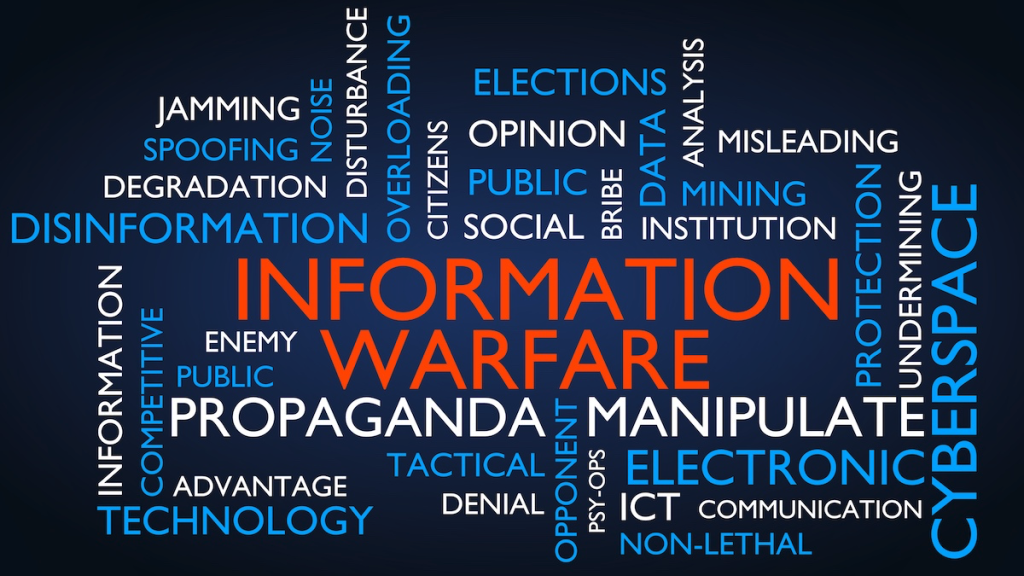
In the age of technology, the battlefield is no longer just in the fields, but also in the digital domain.
The war for truth has taken on new dimensions, where the power of information—whether accurate or fabricated—can determine the course of entire conflicts.
For the government of the Democratic Republic of Congo (DRC), this has become a deliberate strategy: to spin lies, obscure reality, and manipulate the world’s perception of the ongoing crisis.
It’s an information warfare campaign aimed at tarnishing Rwanda’s reputation, demonizing M23 rebels, and justifying atrocities committed by the DRC itself.
But as history has shown, the consequences of such tactics are far-reaching and ultimately self-defeating.
Information warfare isn’t a new phenomenon.
It’s a tactic as old as war itself, but in the digital age, it’s far more potent. The DRC has chosen the darker path: spreading disinformation, distorting facts, and deliberately framing the narrative in ways that suit their interests.
The government has used fabricated photos, doctored videos, and false claims to shape global perceptions. They’ve blamed Rwanda for everything from mineral exploitation to the alleged support of M23, while sweeping their own military atrocities under the rug. This strategy, however, is more than just a political tool; it’s a dangerous game with real-world consequences.
Take the false claim, for example, that half of Rwanda’s army is fighting in Congo. This blatant lie was spread by the DRC’s Foreign Minister and its UN Ambassador. With no evidence to back it up, this inflammatory rhetoric inflamed regional tensions, painted Rwanda as an aggressor, and stoked ethnic divisions.
This wasn’t just misinformation; it was a deliberate effort to shift the blame and provoke hostilities. But while the lie traveled far, it was also unsustainable. Countries and journalists that originally echoed the government’s claims have now begun to question the narrative. The credibility of those who push such falsehoods is now in jeopardy.
Similarly, DRC officials have perpetuated the narrative that captured FDLR militia members are “Rwandan agents,” despite these individuals being responsible for heinous crimes in the region, including the 1994 genocide.
The FARDC’s alliance with the FDLR, often conveniently ignored by DRC authorities, is another example of how disinformation is used to disguise uncomfortable truths.
When FARDC commits atrocities, these are blamed on M23, a group that is itself fighting for survival amid an environment of immense hostility.
The result of such disinformation is disastrous for both the people and the economy. Communities are torn apart by ethnic violence, fueled by fabricated claims that sow division.
The Congolese Tutsi population, caught in the middle of this narrative, is labeled as “traitors” simply because of their ethnicity, and many are subjected to mob violence, torture, and displacement.
This inflames local and international resentment and keeps the region in a state of perpetual instability.
But disinformation, especially when it’s so deeply woven into the fabric of a state’s strategy, never remains unchecked.
It has a tendency to come back and haunt those who use it. Just like a lie that travels fast, the truth—when it inevitably catches up—can hurt just as deeply.
The government’s manipulation of the media and the international community might win short-term support, but in the long run, it’s a strategy that erodes credibility.
The truth, no matter how painful, can be just as damaging. When falsehoods are exposed, the harm is far-reaching.
The DRC’s repeated false claims are now being scrutinized by international observers and journalists, who have started questioning the validity of the official narrative.
The more the government continues down this path of deception, the more it risks losing its allies, both locally and globally.
For instance, many diplomatic representatives and lobbyists who once supported Kinshasa’s stance are now distancing themselves from these disingenuous claims, recognizing that no amount of spin can obscure the truth.
We’ve seen similar tactics in other conflicts.
During the Balkan Wars, for example, a constant stream of misinformation was used to inflame ethnic tensions and justify military actions.
The lies spread by certain factions were so effective that they fueled violence on a massive scale.
But eventually, when the truth emerged, those who had spun the lies lost their legitimacy.
They were left with no moral authority, and their allies, who had been duped, had to retreat and reassess their positions.
The aftermath of such deceit was disastrous for both the perpetrators and the victims.
Closer to the region, the genocide against the Tutsis itself is a stark reminder of how dangerous narratives can be manipulated to justify unspeakable acts.
The orchestrators of that genocide used propaganda to frame the Tutsi population as enemies of the state, traitors who had to be exterminated.
That campaign of lies fueled one of the most horrific genocides in history, and even today, the scars are still visible.
The truth, which eventually came out, served to expose the perpetrators, but at what cost? The damage was irreversible for millions of lives.
The DRC’s current strategy risks repeating this mistake. By promoting hate speech, framing an entire community as “traitors,” and spinning false narratives of invasion or plunder, the government is setting itself on a dangerous course.
Short-term gains might be achieved by fanning the flames of conflict, but in the long term, these lies will leave the government isolated.
Its credibility will be irreparably damaged, and it will have to face the consequences of the very hatred it has nurtured.
In this war of words, those who have chosen to manipulate the truth might one day find themselves alone, surrounded by the wreckage of their own deceit.
As the saying goes: What is done in the dark will always come to light. And when it does, it will be the people who suffer most—caught in the crossfire of a battle fought with lies.
Awesome https://short-url.org/10VGf