

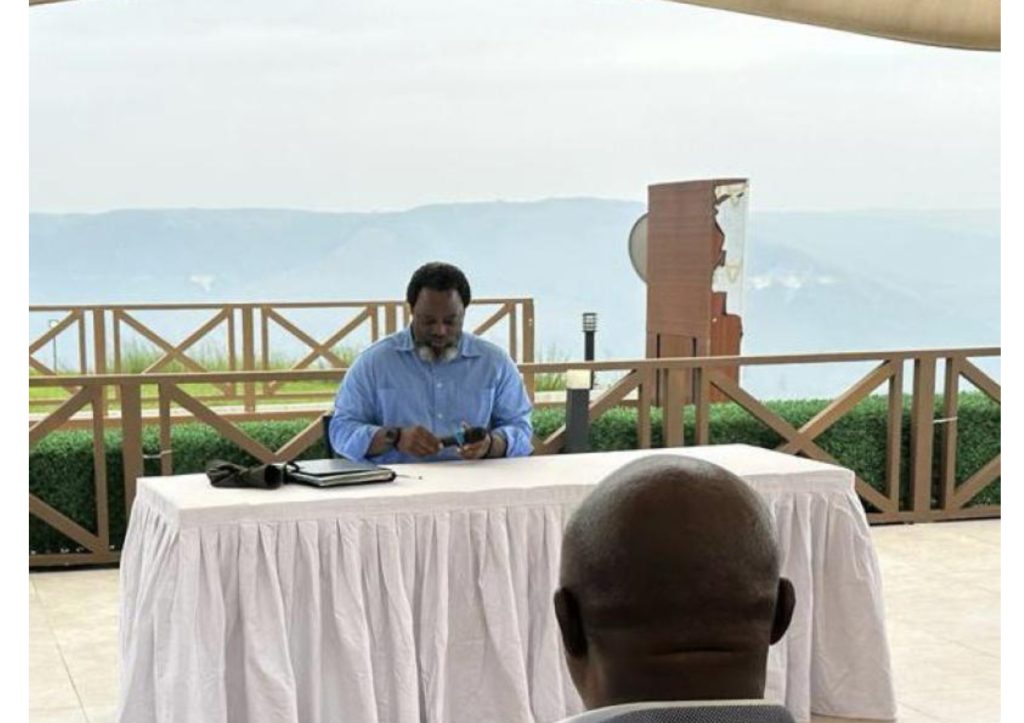
Former Congolese President and lifelong senator Joseph Kabila has returned to the public stage with a bold political move in Goma, North Kivu, signaling his intention to play a more active role in resolving the Democratic Republic of Congo’s deepening crisis.
His arrival comes just days after the Senate lifted his immunity, opening the door to possible prosecution over alleged links to the Rwanda-backed AFC/M23 rebellion.
Despite the looming legal cloud, Kabila wasted no time getting to work. According to sources close to his political platform, the Common Front for Congo (FCC), he has finalized a comprehensive agenda for his stay in eastern DRC.
On Tuesday, May 27, his team is expected to officially launch a series of high-level consultations with political actors, civil society groups, religious leaders, youth and women’s associations, and professional organizations including doctors, lawyers, and journalists.
“The planning phase is over,” a source involved in the initiative told ACTUALITE.CD. “We are now implementing the program.
President Kabila wants to hear from all sectors of society. This is about listening and laying the groundwork for a lasting solution to the national crisis.”
Kabila’s reemergence marks a sharp turn from the silence he has maintained since stepping down in 2019. In a rare and scathing critique, he lashed out at the administration of President Félix Tshisekedi, accusing it of mismanagement, authoritarianism, and a breakdown of rule of law.
He cited worsening corruption, public fund embezzlement, and rising insecurity as signs of what he termed “unorthodox governance.”
“The will of the Head of State has become the supreme law, superseding the Constitution,” Kabila reportedly said in internal consultations, painting a bleak picture of the country’s current sociopolitical and economic state.
He pointed to rising unemployment, salary arrears, deteriorating living standards, and growing famine as consequences of poor leadership.
On security, Kabila expressed concern over escalating violence in North Kivu, South Kivu, Ituri, and Mai-Ndombe provinces.
He blamed these issues on “bad governance” and called for a “citizens’ pact” based on twelve key points aimed at restoring stability, democracy, and development in the DRC.
The timing of Kabila’s initiative is politically sensitive. His renewed activity coincides with mounting legal pressure after the Senate’s decision to strip him of parliamentary immunity, following a request from the military’s top prosecutor.
The case relates to allegations of collaboration with the M23 rebel group, which has destabilized parts of eastern Congo in recent months.
Observers are now watching closely to see whether Kabila’s consultations will shift the political landscape — or if they are a calculated attempt to reclaim public sympathy and political leverage as judicial proceedings loom.
Kivu Today will continue to follow this developing story.