

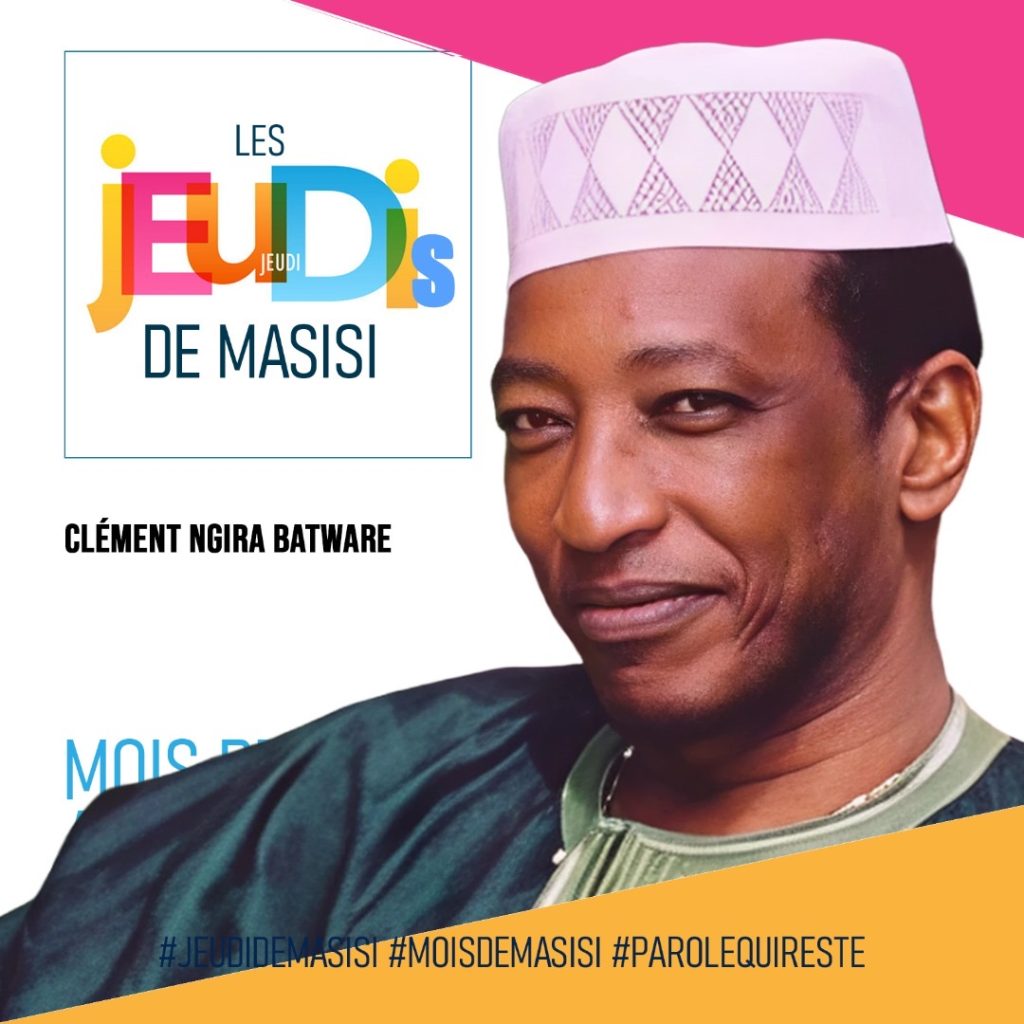
In the hills of Kitchanga, in Masisi territory, 1941 marked the birth of a man who would later become one of the most steadfast guardians of Banyarwanda memory in the Congo.
Clément Ngira-Batware, historian and professor at the National Pedagogical Institute, understood from the beginning that history was more than a school subject.
For him, it was a weapon; a shield to defend dignity, a voice to affirm existence, and a bridge to connect generations.
Those who knew Clément recall a man of rare character; jovial, chivalrous, generous. He could move effortlessly from laughter to depth, from lighthearted banter to profound reflection.
“He knew how to reach everyone, without ever losing his nobility of spirit,” remembers one of his contemporaries. This balance of conviviality and wisdom made him not only respected, but deeply loved.
Yet beneath the warmth was a life scarred by hardship. Clément endured discrimination and arbitrary arrests, a fate many Banyarwanda in Congo shared. Still, he refused to let bitterness take root.
His resilience became his signature, his endurance a moral compass for others. In the face of storms, he remained unshaken; a symbol of courage and constancy for his community.
At his side stood an equally remarkable presence: his wife, Fêté Ngira-Batware Kimpiobi. Quiet but decisive, she embodied courage and generosity in the most difficult of times.
“Her gestures of love and bravery will remain in our collective memory,” testify those who lived through those moments. In celebrating Clément, the community also whispers gratitude to the woman who made his strength possible.
Clément’s life was also marked by an enduring friendship with Dr. Gaston Rwasamanzi, the historian whose writings have revived the memory of Masisi’s heroes.
Their conversations, often rich and impassioned, spoke of history, identity, and the longing for their homeland. Together, they believed that preserving memory was not just an intellectual pursuit, but a moral duty.
Today, through the initiative known as Thursdays of Masisi and the posthumous works of Dr. Rwasamanzi, the legacy of Clément Ngira-Batware has regained its rightful place.
His story reminds us that beyond suffering, the values of dignity, generosity, and courage can form a heritage strong enough to guide an entire community.
Clément Ngira-Batware’s name is more than history; it is a testament. A reminder that even in the shadows of injustice, a man can stand tall, and in doing so, leave behind a legacy that outlives him.