

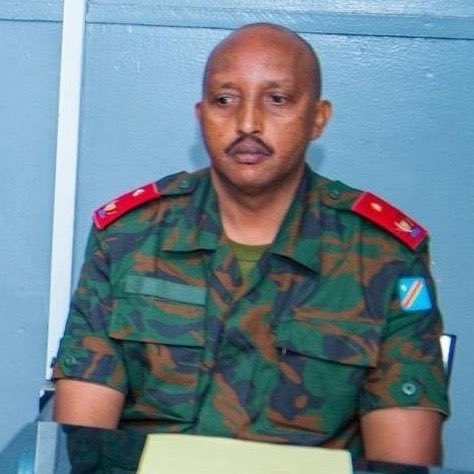
Uvira, South Kivu — President Félix Tshisekedi faces a mounting dilemma in eastern DRC as the deployment of General Olivier Gasita has inflamed local tensions and put the government in a precarious position.
Gasita, a Munyamulenge native of the region, has been tasked with leading operations against the M23 rebels in his own home territory, a move that has sparked outrage on multiple fronts.
Local Banyamulenge communities see him as a traitor for siding with Kinshasa against their kin, while the Wazalendo militia, aligned with government forces against M23, views him as a dangerous rival.
Meanwhile, the FARDC considers him a strategic asset in the fight against the rebels. This intersection of loyalties has created a volatile triangle in which every move risks further escalation.
Residents of Uvira have issued stern warnings, barricading key roads such as Mulongwe Bridge to prevent Gasita’s entry.
Statements circulated locally declare: “We are ready to die for the patriotic cause… Gasita is alone among millions of Congolese. We will not allow thousands to suffer because of a single person.”
The warnings underscore the deep mistrust between Kinshasa and local communities, who argue that civil society groups are far more aware of on-the-ground security realities than the central government.
For Tshisekedi, the situation is a political and military tightrope. Removing Gasita risks alienating the FARDC and undermining government authority in the fight against M23; keeping him risks igniting local revolt, potentially triggering widespread unrest in a key eastern province.
The president must navigate competing pressures from military strategy, local ethnic dynamics, and militia interests, all while facing accusations of complicity in a regional conflict that has already fractured communities.
As tensions mount, the mood in Uvira is defiant. Locals rally under the slogan “La patrie ou la mort — nous vaincrons” (“The homeland or death — we will prevail”), signaling that any misstep by Kinshasa could escalate the standoff into open confrontation.
Tshisekedi’s challenge now is not only military but deeply political, reflecting the complexities of governance in a region where local, ethnic, and national interests collide.