

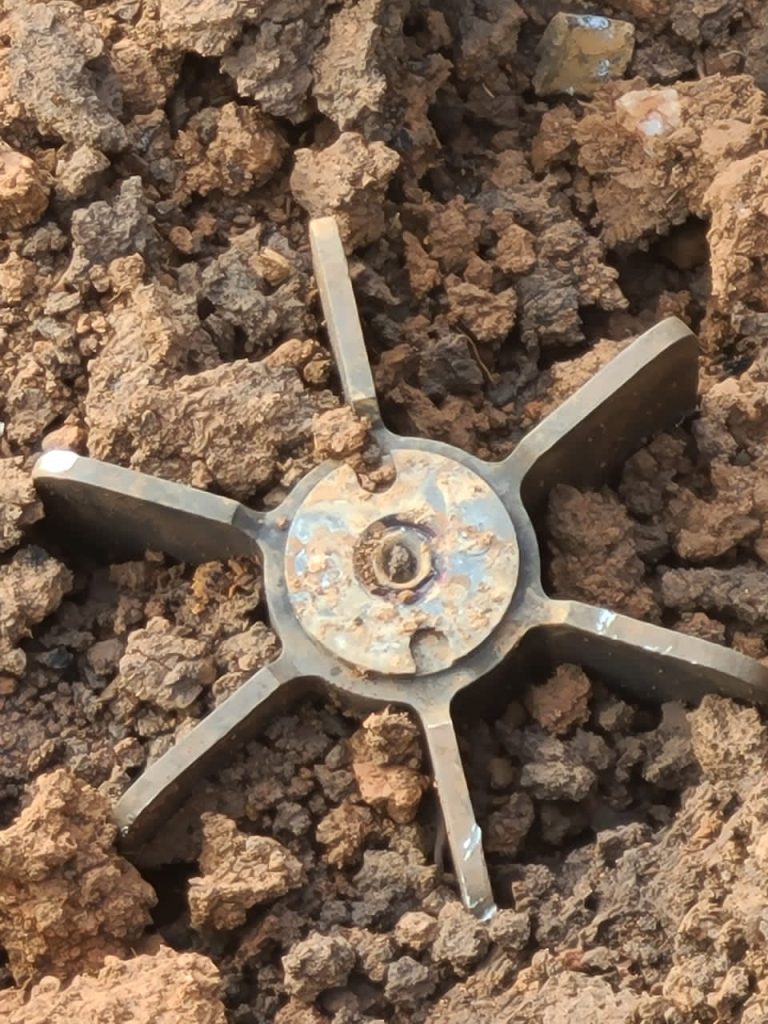
In the remote villages of Lopa and Kpadole in Djugu territory, daily life has turned into a deadly gamble. Displaced families now walk in fear, knowing that every step could trigger an explosion.
Once-safe paths have been transformed into silent killers, allegedly rigged with anti-personnel mines by those meant to protect them.
According to reports, Colonel Chomarry, a senior officer in the Armed Forces of the Democratic Republic of Congo (FARDC), is at the center of these allegations. He is accused of planting mines near camps for displaced persons—areas where women and children seek refuge—putting already vulnerable lives in grave danger.
Hidden beneath the soil of Ituri, one of the most hostile provinces in the Democratic Republic of Congo and among the deadliest places in the world, these mines have created a new layer of terror.
Ituri has endured decades of violence, plagued by militia groups such as the Allied Democratic Forces (ADF), an Islamist extremist group notorious for its brutality. The ADF, originally a Ugandan rebel faction, has waged a reign of terror in eastern Congo for years, slaughtering civilians in massacres that often defy comprehension.
Their tactics include mass killings, kidnappings, and sexual violence.
Recent atrocities underline their barbarism: in this week alone, the ADF attacked a villages in Ituri, killing about 30 people—mostly women and children—by beheading.
Such attacks have become chillingly common, leaving communities in perpetual fear. These militants often strike at night, torching homes, abducting civilians, and leaving behind scenes of horror that testify to their unchecked cruelty.
Now, the threat in Ituri has taken an even darker turn. Serious allegations suggest that Colonel Chomarry and his FARDC faction are not acting alone.
Local civil society networks claim the group is working in coordination with elements of the ADF. The alliance, if confirmed, would mark a dangerous convergence of state security forces and a notorious insurgent group.
Three months ago, reports emerged implicating Ituri Governor Johnny Luboya Nkashama in what observers described as a premeditated plan to attack civilians in the Lopa groupement of Djugu.
According to credible information, Governor Luboya allegedly gave direct orders to Colonel Chomarry to carry out a military assault on the local population, reportedly to intimidate residents ahead of the governor’s visit to Bunia.
Alarmingly, sources reported that ADF fighters arrived in Lopa the night before the planned assault, allegedly to reinforce FARDC units on the ground.
Civil society leaders warned that a targeted attack on civilians was imminent, sparking urgent calls for intervention from national and international actors.
“The population is defenseless, abandoned to the very forces meant to protect them,” a local activist said at the time. “If this continues, civilians will have no choice but to resort to self-defense.
This risks accelerating the emergence of non-state armed responses in a region already destabilized by the army’s failures.”
These revelations have deepened distrust between local communities and the state security apparatus, further eroding public confidence in government authority.
Observers warn that the alleged collusion between FARDC and ADF represents not only a grave violation of international law but also a tipping point that could plunge the region into even greater instability.
Failure to act, experts caution, has permanently damaged the Congolese government’s credibility on the global stage.
Calls for an independent international investigation into Governor Luboya, Colonel Chomarry, and their alleged ties to the ADF are growing louder, alongside demands for accountability for crimes that could amount to crimes against humanity.
In Ituri, where survival has always been fraught with risk, the simple act of walking through a village has now become a test of fate.
Paths that once led to water, firewood, or a neighbor’s home are now lined with unseen killers. This stark reality underscores the urgent need for accountability and protection for civilians trapped in one of the world’s most dangerous war zones.