

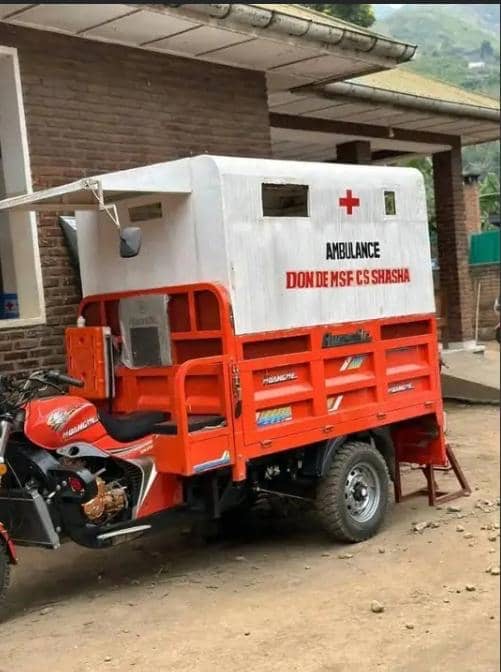
A humanitarian gesture by Médecins Sans Frontières (MSF) has turned into a storm of controversy after the organization donated a makeshift ambulance described by critics as a three-wheeled coffin to a community in Shasha, North Kivu.
Photos of the donation ceremony, widely shared on social media, show a tricycle modified with a small compartment meant to transport patients. The scene sparked outrage after residents were seen applauding during what many have called a media circus designed for publicity.
“This is the height of humiliation, well packaged,” one viral post fumed. “Not only do they give Congolese a coffin on three wheels disguised as an ambulance, but they also stage a show where people clap like extras, while the benefactors flaunt their trophies on Facebook and LinkedIn.”
Critics have gone further, calling the act an example of institutionalized racism. According to activists, the donation reflects a deeply condescending approach to humanitarian aid.
“If this isn’t racism—treating a whole people as sub-humans to whom you give leftovers and then self-congratulate—then what word fits?” the post added.
The backlash comes amid growing criticism of foreign NGOs operating in eastern Congo, where locals accuse aid organizations of prioritizing visibility over dignity.
Social media is flooded with hashtags such as #RespectCongoleseDignity and #AidWithoutHumiliation, calling for a rethinking of aid practices.
MSF has not yet issued an official response to the controversy, but the debate has raised uncomfortable questions about the ethics of donations in conflict zones and whether humanitarian gestures sometimes reinforce stereotypes rather than restore dignity.