

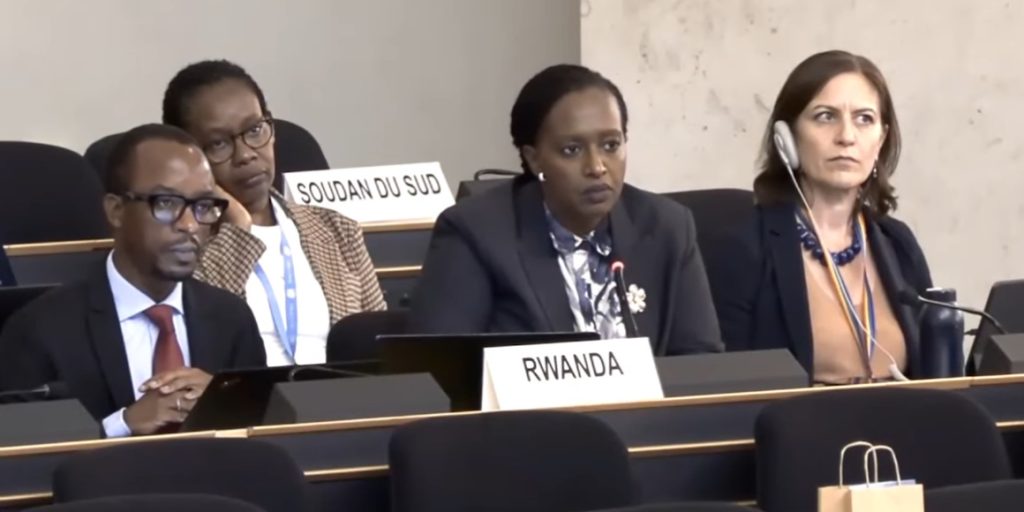
Geneva – Tensions flared at the UN Human Rights Council this week as Rwanda’s Permanent Representative, Ambassador Urujeni Bakuramutsa, delivered a blistering rebuttal to accusations by the Democratic Republic of Congo (DRC) that Kigali is complicit in genocidal acts in eastern Congo.
The clash erupted after DRC’s Minister of Human Rights, Samuel Mbemba Kabuya Tanda, accused Rwanda of responsibility for atrocities in the troubled east. Bakuramutsa shot back immediately, demanding clarification and calling the allegation a “red line” for Rwanda.
“Did the Minister of Human Rights from the DRC government accuse my delegation and my country of being genocidal in their territory?” she asked, stressing that such grave charges must be backed by international legal standards. “There’s no mechanism that has called for that, and I will not allow for that to be mentioned here in the UN premises and accept that this happens under your watch.”
Her intervention came after Council President Jürg Lauber dismissed her point of order, advising the two countries to resolve the issue bilaterally. But Bakuramutsa insisted the matter be aired publicly, arguing that accountability must rest on “objective, verified results” rather than what she described as biased UN reporting.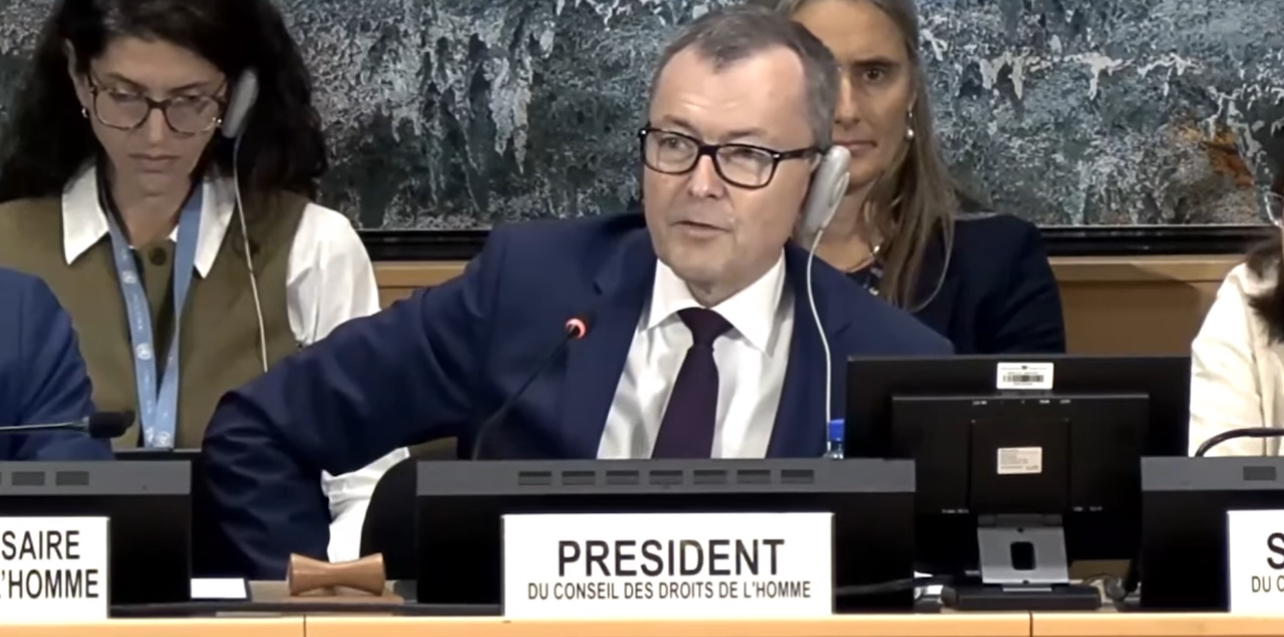
The flashpoint stems from an August 11 report by the Office of the UN High Commissioner for Human Rights (OHCHR), which accused the Rwanda Defence Force (RDF) and the M23 movement of killing civilians between July 9 and 21 in eastern DRC. Both Kigali and M23 have rejected the report as politically motivated and lacking evidence.
Bakuramutsa blasted the report’s “pre-cooked narrative,” noting its lopsided focus: M23 was cited 110 times, Rwanda/RDF 65 times, FARDC 42 times, Wazalendo 43 times, FDLR just 15 times, and other armed groups 23 times.
“This imbalance shapes a narrative and skews the reality on the ground,” she argued, pointing to more than 260 armed groups — including foreign mercenaries and private contractors — operating in eastern DRC but barely mentioned in the report.
Rwanda maintains its security presence is purely defensive, aimed at neutralizing the Democratic Forces for the Liberation of Rwanda (FDLR), a militia made up of perpetrators of the 1994 Genocide against the Tutsi.
Kigali accuses Kinshasa of enabling the FDLR, despite repeated regional commitments under the Washington Peace Agreement, Nairobi and Luanda dialogues, and African Union processes.
Meanwhile, the European Union, represented by Pierre Minard, urged swift action to operationalize a Commission of Inquiry on the DRC, citing “widespread human rights violations, including possible war crimes and crimes against humanity.”
Bakuramutsa countered that the UN was ignoring verified cases of hate speech and targeted attacks on Congolese Tutsi communities in places like Minembwe, South Kivu. She warned these were “early warning” signs of deeper ethnic violence being overlooked.
She also attacked MONUSCO, the UN’s decades-old peacekeeping mission, saying billions of dollars and 25 years of deployment had failed to protect civilians while the FDLR remained active.
In closing, she issued three demands: a pause on new mandates in favor of streamlined, effective protection; a single evidentiary standard for all UN reports with state consultation before publication; and the outright rejection of all recommendations targeting Rwanda in the OHCHR report.
“We will not accept being continuously subjected to baseless accusations,” Bakuramutsa said firmly. “Rigorous evidence is non-negotiable, and any breach of that standard will be challenged every single time.”