

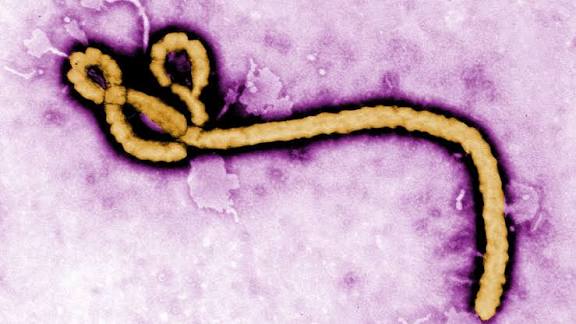
Ugandan health authorities have begun mobilizing resources and tightening border surveillance after news emerged that Ebola has broken out in the Kasaï region of the Democratic Republic of Congo (DRC), claiming at least 15 lives.
Although the epicenter lies some 2,000 kilometers from Kampala, experts warn that the highly contagious nature of the virus and the heavy cross-border movement of people and goods between Uganda and DRC pose significant risks.
Uganda shares extensive trade and social ties with its western neighbor, making the possibility of transmission a major concern.
Dr. Charles Olaro, Director of Clinical Services at Uganda’s Ministry of Health, told The Monitor that the country is drawing on past experience to act quickly. “Uganda has battled Ebola before and understands how deadly it is. We cannot afford to relax once we hear of an outbreak, no matter how far. We are strengthening surveillance, especially along our borders, and preparing to treat any cases if they arise,” he said.
The latest outbreak comes just five months after Uganda declared itself Ebola-free in April 2025. That flare-up, the third in just three years, saw 14 people infected—12 confirmed and two suspected—with four fatalities and ten recoveries. At the time, health officials tracked and monitored 534 contacts to prevent wider spread.
In the DRC, Ebola has reappeared repeatedly over the past two decades. While the 2022 outbreak hit Equateur province in the northwest, Kasaï has also been a hotspot, with cases recorded there in 2007 and 2008. In total, the country has experienced 16 outbreaks since Ebola was first identified.
Ebola is caused by a rare but deadly virus that spreads through contact with bodily fluids—including blood, saliva, urine, semen, sweat—and often originates from fruit bats. Transmission can occur through close physical contact with an infected person, or even by handling the body of someone who has died from the disease.
As of now, Rwanda’s Ministry of Health has not issued an official statement or precautionary guidance in response to the Kasaï outbreak.