

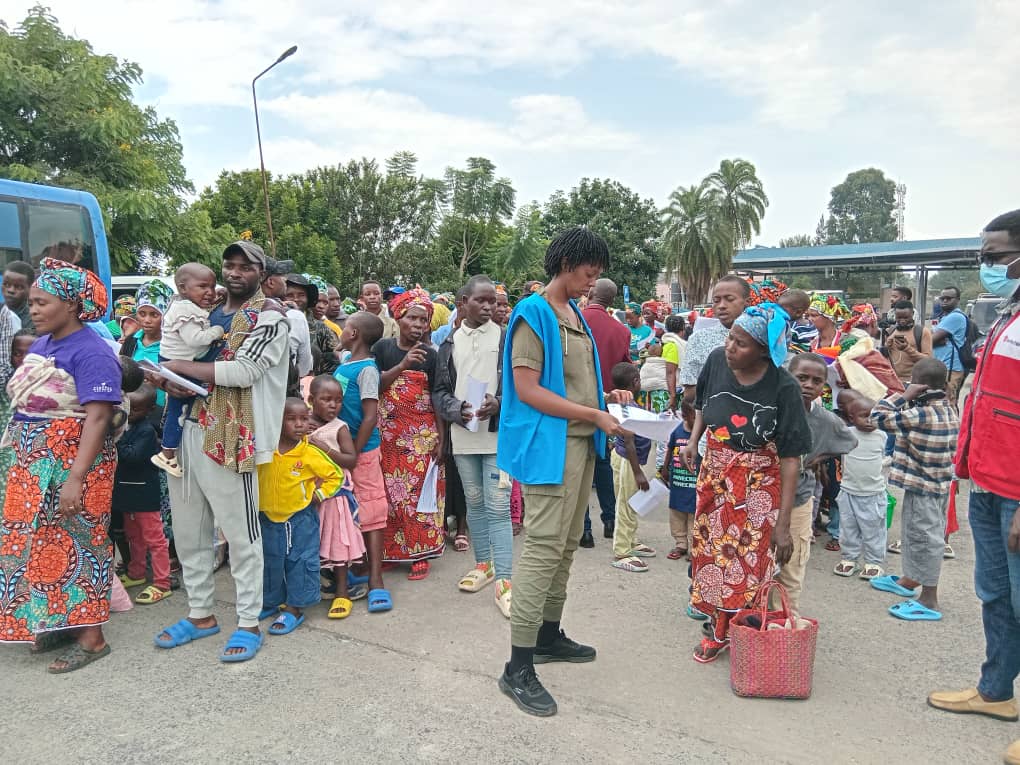
More than 300 Rwandan refugees have returned home after spending decades in camps and villages across the Democratic Republic of Congo (DRC), where they lived under the control of armed groups and in constant fear.
The group of 314 men, women, and children arrived in Rwanda this week with the support of the United Nations High Commissioner for Refugees (UNHCR) and were welcomed by officials from the Ministry of Emergency Management (MINEMA) and Rubavu District.
Their return is part of a wider trend. Since the beginning of 2025, over 4,000 Rwandans have come back from the DRC, with at least 1,700 returning since May as fighting continues to displace civilians. Rwanda has received more than 3.5 million returnees since 1994, many of whom had been trapped under the influence of the Democratic Forces for the Liberation of Rwanda (FDLR), a militia linked to the 1994 Genocide against the Tutsi.
Among the latest arrivals are people like Ezra, a 49-year-old who fled Rwanda as a teenager during the genocide. He spent 31 years moving between camps in Kisangani and Mugunga, constantly manipulated by the FDLR and other groups.
“They told us if we returned, we’d be jailed or even killed,” he recalled. “We were lied to for years, forced to work for them, and many of our children were recruited.” Ezra finally decided to return after a former soldier in his family, who had already gone back, reassured him that Rwanda was peaceful.
Another man, now 56, shared a similar story. He had lived in the Kibati area of Nyiragongo, where the FDLR convinced refugees they would one day “retake Rwanda by force.” But after the militia was driven out of the area, he saw a chance to leave. “Life there was like being treated as cattle. Fear and lies kept us trapped,” he said.
For many families, especially women and children related to FDLR fighters, leaving was complicated by ties to men accused of genocide crimes. Some were stuck in rebel-held areas, used as human shields alongside thousands of other civilians until recent military offensives freed them.
On arrival in Rubavu, Mayor Prosper Mulindwa assured the returnees of Rwanda’s commitment to helping them rebuild their lives. “You made the right choice,” he said. “This is no longer a country of exile. Rwanda today is safe, developed, and full of opportunities.”
The new arrivals are being housed temporarily at Nyarushishi transit camp in Rusizi District, where they are receiving food and medical care. Each adult will receive $188 in support, while children will get $113, along with three months of food rations and health insurance for a year. Identity cards are also being issued by the National Identification Agency (NIDA) to help them integrate quickly.
Mayor Mulindwa urged them to spread the message to those still in the forests of eastern Congo. “Go and tell others—Rwanda is not the same place you left. Visit those who already returned; their lives are proof of the change.”
For Ezra, now reunited with his family, the plan is clear. Once settled, he wants to travel back to the DRC to bring his late brother’s children home. “I will tell them Rwanda is peaceful. It is time to come back,” he said.