

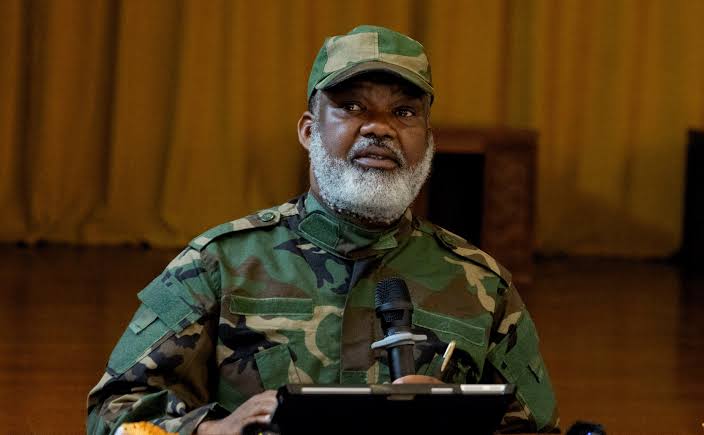
Corneille Nangaa, President of the Alliance Fleuve Congo (AFC/M23) movement and former head of the Democratic Republic of Congo’s electoral commission (CENI), has accused the Central Bank of deliberately manipulating the exchange rate to exploit citizens, calling the move “an act of mockery against the population.”
In a recent address, Nangaa said the government’s so-called monetary stabilization efforts have instead deepened poverty and weakened public confidence in the national currency.
“Before this operation, the exchange rate in Kinshasa was around 1 dollar for 290,000 francs. They brought it down from there. That means if you had 100 dollars, you could get 290,000 francs. But now, you only get 180,000,” he explained.
Nangaa, who once served at the heart of state institutions as the head of the electoral commission before falling out with President Félix Tshisekedi, accused the Central Bank of profiting from exchange rate manipulation.
“What they actually did was take 100 dollars to the market, withdraw 290,000 francs, and then reintroduce the same dollars at a new rate of 180,000 francs. The difference — that’s what they pocketed,” he said.
He argued that the move, presented as a stabilization measure, has in practice stripped Congolese citizens of purchasing power.
“The people are the ones losing. Before, I could exchange 100 dollars for 280,000 francs and buy two bags of rice. Now, with 100 dollars, I only get 180,000 francs, which can’t buy the same amount. Prices haven’t changed; only the value of our money has,” Nangaa added.
Once a close ally within the system he now criticizes, Nangaa’s political shift has been marked by outspoken attacks on President Tshisekedi’s administration and its economic management.
His remarks tap into growing public frustration over the franc’s volatility, inflation, and the widening gap between government policy and citizens’ realities.
While the Central Bank of Congo insists its interventions are designed to strengthen monetary stability, critics like Nangaa argue that these operations merely serve elite interests while pushing ordinary Congolese deeper into hardship.