

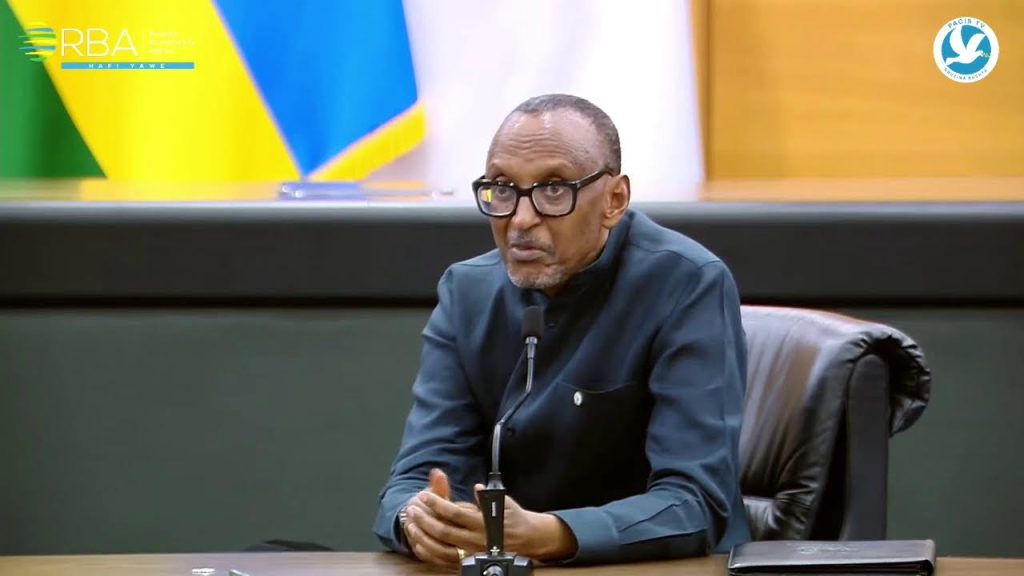
President Paul Kagame has sharply criticized what he described as deliberate efforts by some international actors to downplay the threat posed by the FDLR, warning that even small groups of terrorists are capable of inflicting serious harm.
Speaking during a press conference on Friday, Kagame said Rwanda continues to face a security challenge that the world often prefers to minimize or ignore.
“Terrorists, even when they are five, actually do harm, and people take that seriously,” Kagame said. “So FDLR—why would no one take them seriously, knowing their history, and knowing they are associated with a government in DRC?”
He noted that despite the FDLR’s long and well-documented record of genocide ideology, hate speech, and violence, global responses remain muted.
He pointed to recurring questions from foreign leaders who ask how many FDLR fighters remain—questions he said are designed to dismiss the threat rather than confront it.
“I have been asked by some leaders of Europe, how many are they likely to be? When somebody asks me that, I know he is interested in covering up the problem,” Kagame said. “It is falsifying the issue of numbers; they are many, that’s a fact. But the essence of saying ‘how many’ is like saying you are exaggerating.”
Kagame criticized the tone and weight of international statements on the FDLR, particularly at the United Nations, saying they fail to reflect the group’s role in past atrocities and ongoing destabilization.
“When you talk about FDLR, the resolutions and statements at the UN are like a whisper,” he said. “It is as if Rwanda should not be taking action against them, as if they are not connected with the whole history or their responsibility in what they did here.”
The President’s remarks come amid heightened tensions in eastern DRC, where the FDLR continues to operate alongside Congolese forces, according to Rwanda.
Kigali has repeatedly accused Kinshasa of working with the genocidal militia, while the DRC government denies the claims.
Kagame’s latest comments underline Rwanda’s frustration with what it sees as selective international engagement—one that condemns insecurity in the region but avoids addressing the FDLR’s central role in it.