Controversial remarks by General Sylvain Ekenge, spokesperson for the Congolese army (FARDC), have drawn attention for echoing the infamous “Ten Hutu Commandments,” a set of extremist directives historically associated with anti-Tutsi ideology.
Originally published in September 1959 by Joseph Habyarimana Gitera, an extremist Hutu political leader, the commandments were linked to the 1959 pogroms against the Tutsi and the 1963 Gikongoro genocide.
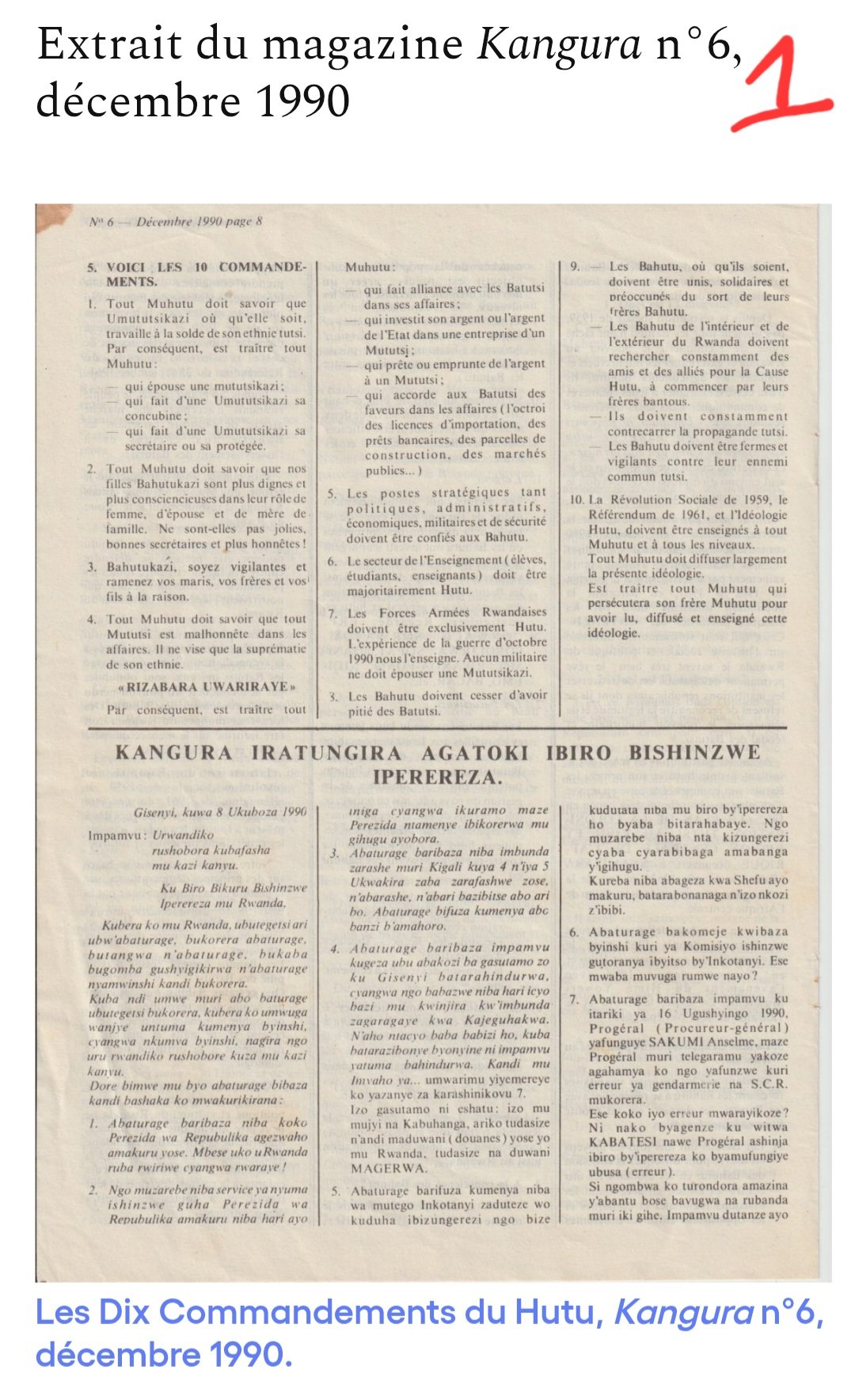
They resurfaced in December 1990 when Hassan Ngeze, editor of the Hutu-supremacist newspaper Kangura, republished them, solidifying their influence on the ideology that fueled the 1994 genocide against the Tutsi in Rwanda.
The first commandment in particular, which General Ekenge referenced, is widely regarded as promoting extremist Hutu supremacy.
Human rights observers have criticized the comments as a dangerous echo of a genocide ideology that should have no place in contemporary discourse, especially when voiced by a military spokesperson.
The resurgence of these ideas raises concerns about the persistence of historical ethnic animosities in the region and underscores the need for vigilance against rhetoric that can incite violence.
The original Kangura publication, issue 6 from December 1990, remains a stark reminder of how propaganda was used to mobilize hate and facilitate one of the most devastating genocides of the 20th century.