

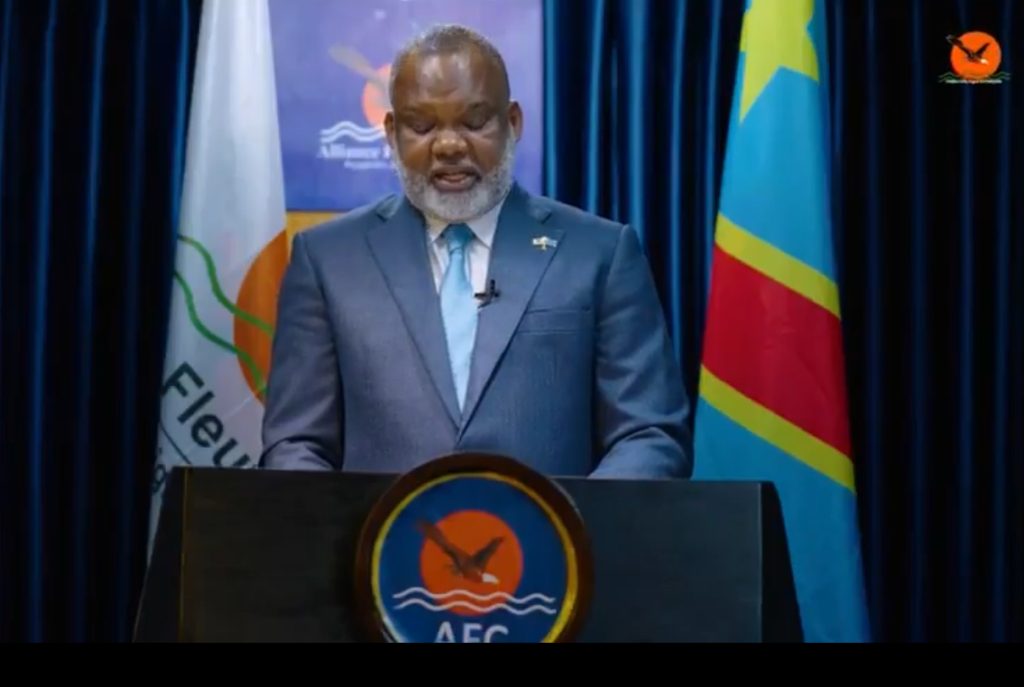
“The boys are at the gates of Kinshasa,” Corneille Nangaa said, a stark warning widely interpreted as signaling an escalating challenge to President Félix Tshisekedi, as the coordinator of AFC/M23 sharpened his political offensive against the Congolese government.
Speaking to audiences across eastern Congo, Nangaa framed the country’s multiple crises as the result of leadership failure and state decay, arguing that insecurity, economic breakdown, and humanitarian suffering extend far beyond the eastern conflict zones.
In a pointed series of rhetorical questions, Nangaa listed flashpoints across the country: the Mobondo militias operating near the capital, the plundering of minerals in Kolwezi, rampant criminal violence by Kuluna gangs in Kinshasa, chronic flooding and unsanitary living conditions in the capital, and recurring famine in Kasaï.
“Rwanda here, Rwanda there,” Nangaa said, dismissing the government’s long-standing narrative that external interference is the central cause of Congo’s instability.
He argued that the scale and geographic spread of the country’s problems point instead to systemic governance failures.
The remarks come amid continued fighting in eastern provinces, where AFC/M23 remains locked in confrontation with Congolese forces and their allies.
Kinshasa has consistently accused Rwanda of backing the group, an allegation Kigali denies and which has dominated regional diplomacy and international discussions on the conflict.
By broadening his message beyond the east, Nangaa appeared to be repositioning AFC/M23 as a national political force rather than a localized rebellion.
Analysts say the strategy is aimed at weakening the government’s claim to legitimacy by portraying it as incapable of governing large parts of the country, including areas far removed from the conflict.
“The language is deliberate,” said a political analyst based in Goma. “By invoking Kinshasa itself, Nangaa is signaling confidence and attempting to project momentum, not just militarily but politically.”
Nangaa, a former head of the Democratic Republic of Congo’s electoral commission, has become the chief political voice of AFC/M23, blending armed struggle with a broader critique of corruption, mismanagement, and what he describes as the failure of state institutions under Tshisekedi’s leadership.
The government has not publicly responded to Nangaa’s latest remarks. Officials continue to insist that defeating AFC/M23 is essential to restoring stability and safeguarding national sovereignty.
As Congo faces overlapping security threats, economic strain, and humanitarian emergencies, Nangaa’s statement underscores an intensifying struggle not only over territory, but over narrative and authority — and whether Kinshasa can maintain control as AFC/M23 openly signals its reach toward the center of power.