

Three Chinese nationals arrested in eastern Democratic Republic of the Congo (DRC) in January 2025 with 10 gold bars and about $400,000 in cash have been convicted of money laundering and illegal purchase and possession of mineral substances, Congolese judicial authorities said.
The trio was tried in Bukavu, where the court sentenced them to seven years in prison, imposed fines totaling $600,000, and ordered their expulsion from the DRC upon completion of their sentences. The case has renewed scrutiny of illicit financial networks operating in mineral-rich conflict zones in eastern Congo, where armed groups continue to exploit natural resources.
Analysts say the convictions illustrate the presence of Chinese illicit financiers in areas affected by the M23 rebellion, which expanded its territorial control in parts of North Kivu and South Kivu during 2025.
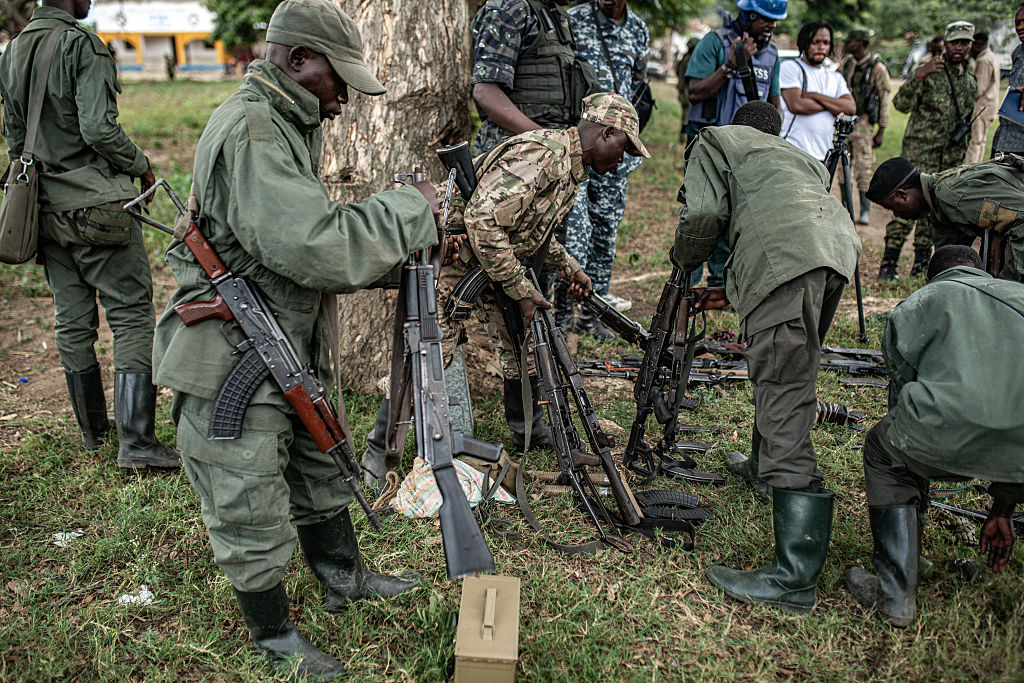
According to Adam Rousselle, editor in chief of Between the Lines Research, the M23 is also heavily equipped with Chinese-manufactured weapons, though he cautions against attributing direct responsibility to the Chinese state.
“China sells large volumes of weapons to both Rwanda and Uganda,” Rousselle said on a China Global South Project podcast. “Given the minerals coming out of these conflict zones, such as cobalt, gold, and coltan, China becomes the natural endpoint. We do not have a causal link showing minerals moving directly from the M23 to China, but the global gravitational pull points in that direction.”
Rousselle noted that in 2022, an estimated 435 metric tons of gold were smuggled out of Africa, with 93 percent destined for the United Arab Emirates. Chinese buyers, he said, were active at multiple points along the supply chain.
Similar dynamics exist in the timber sector, where Chinese-linked syndicates dominate the export of rosewood and other valuable hardwoods from Central and East Africa and the Sahel, often sourcing from conflict-affected areas.
“These gold and timber corridors provide the financial and logistical backbone for broader illicit trade,” Rousselle wrote in an analysis for The Jamestown Foundation. “They create capital flows and transport capacity that can be redirected toward arms procurement or militant financing.”
Concerns over Chinese-made weapons in African conflicts have also surfaced elsewhere. In May, Amnesty International confirmed the presence of Chinese-manufactured arms in Khartoum and Darfur, Sudan, despite a United Nations arms embargo. The weapons were reportedly imported through the United Arab Emirates. Rousselle described China’s role in such cases as that of a “leaky bucket” rather than an intentional instigator.
“They are leaking money and goods into conflicts in illegal ways,” he said. “We know the export of Chinese weapons into these conflicts is unlawful, and China remains the largest legitimate supplier of arms to Africa.”
China Global South Project Africa editor C. Géraud Neema argued that the growing visibility of Chinese nationals and Chinese weapons in conflict zones poses a reputational risk for Beijing and calls for more proactive engagement.
“The more Chinese nationals are present, and the more Chinese weapons circulate in these areas, the harder it becomes for China to stay on the sidelines,” Neema said. “At some point, they will have to take a stance and work with local law enforcement.”
Beyond minerals and arms, Rousselle’s research also points to Chinese illicit finance networks operating through cryptocurrency systems in Africa. His reporting indicates that some of these networks have embedded themselves in stablecoin payment rails in West Africa. In July 2025, two Chinese nationals were convicted in Nigeria of fraud and money laundering. In 2024, Nigerian authorities accused nearly 150 Chinese nationals of participating in coordinated crypto fraud and laundering schemes.
Despite the breadth of these activities, Rousselle emphasized that there is no evidence of direct involvement by the Chinese government.
“There is no proof of a coordinated state effort or official backing,” he said. “What the evidence shows is opportunistic behavior by actors from China that is facilitating and, in effect, fueling conflicts across several African regions.”
The Bukavu convictions, analysts say, illustrate the scale and complexity of illicit economic networks operating in Africa’s conflict economies and the growing challenge they pose to regional security and international accountability.
The sorry first ran on ADF Magazine