

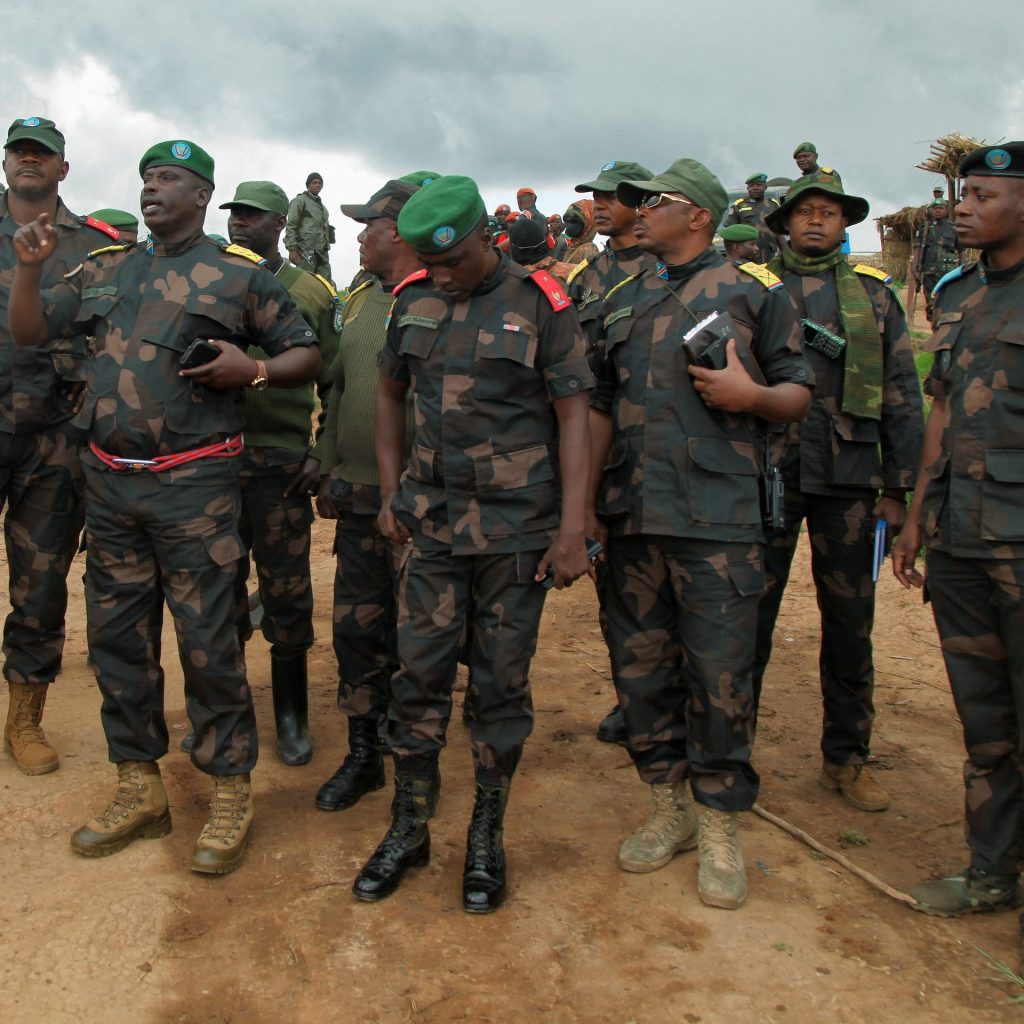
President Félix Tshisekedi has sparked controversy after publicly describing the state of the Congolese army in blunt and disparaging terms, remarks that have landed painfully among rank-and-file soldiers already facing dire living and working conditions.
Speaking during an exchange with youth in Kinshasa on Saturday, the commander-in-chief said that when he came to power, he “found an army of bums,” using an expression that has since circulated widely and drawn sharp reactions.
Tshisekedi said his comments were meant to underscore the depth of decay he inherited within the Armed Forces of the Democratic Republic of the Congo (FARDC), and to highlight efforts he claims to have undertaken to rebuild the institution and allow soldiers to “fully dedicate themselves to the defense of the country.”
However, the remarks come at a particularly sensitive moment. Thousands of FARDC soldiers are reportedly living in miserable conditions: many have gone months without pay, suffer from poor health care, lack adequate food and ammunition, and operate under weak leadership and low morale.
Reports of “ghost soldiers” on payrolls and widespread mismanagement continue to plague the army, especially on active fronts in eastern Congo.
What has intensified the backlash is Tshisekedi’s assertion that his government has helped soldiers by taking care of their wives and children—an assertion many soldiers and their families describe as disconnected from reality.
For troops struggling to meet basic needs, the claim was seen not only as untrue but as humiliating, particularly when paired with language that appeared to belittle them.
Observers describe the episode as an ironic and embarrassing twist: at a time when soldiers feel abandoned by the state they are risking their lives to defend, the head of state appeared to “rub it in” by publicly criticizing them rather than acknowledging their hardships.
Critics argue that responsibility for the army’s condition lies less with ordinary soldiers than with years of corruption, poor governance, and failed reforms at the highest levels.
During the same exchange, Tshisekedi lamented what he called the partial disappearance of patriotism in the country, while insisting that it is not too late to revive it.
Analysts note, however, that morale within the armed forces is unlikely to improve through rhetoric alone, especially when basic obligations such as pay, food, medical care, and equipment remain unmet.
As fighting continues on multiple fronts and security challenges deepen, the president’s remarks have reopened a sensitive national debate: how to rebuild a demoralized army, and whether public humiliation of soldiers—rather than concrete reforms and accountability—undermines the very patriotism the government says it wants to restore.