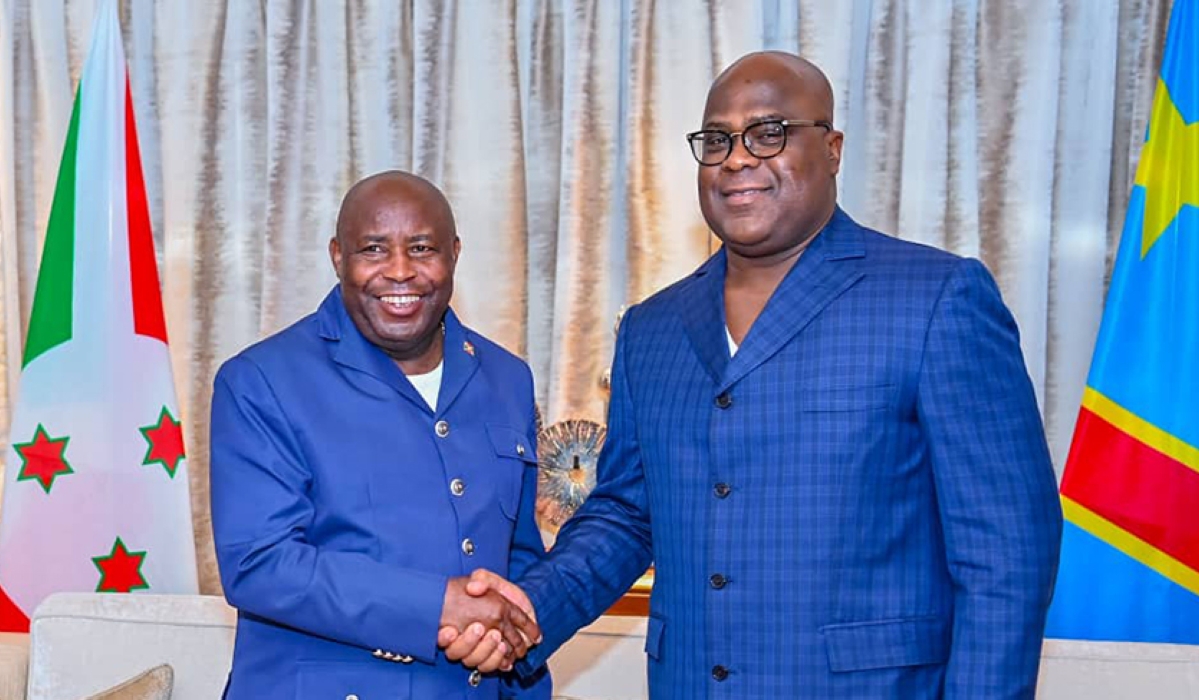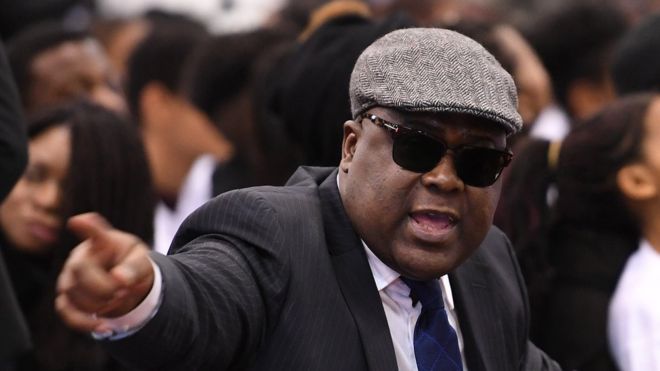
Belgian police have dismantled part of what opposition figures describe as President Félix Tshisekedi’s clandestine killing apparatus after several suspects were arrested in connection with an alleged plot to assassinate Congolese opposition leaders in exile.
The arrests followed a botched operation in which eight armed assailants, cornered and desperate, abandoned their vehicle and fled on foot before being intercepted by Belgian authorities.
Franck Diongo, one of the purported targets and a veteran Congolese opposition leader, said the failed operation is evidence that Tshisekedi has now crossed the threshold from political repression into transnational organized crime.
“We are no longer dealing with an authoritarian president,” Diongo said. “We are facing a global criminal who has placed a death squad on the state payroll, an army of assassins trotting the world, charged with silencing dissent wherever it exists.”
According to Diongo, who was in Eastern DR Congo meeting fellow senior party leaders, the operation was coordinated from Europe by Gilly Bokala, allegedly dispatched to Belgium with a suitcase full of cash to bankroll the killings.
The execution, he claimed, was entrusted to operatives from DEMIAP, the Congolese military intelligence service, and the ANR, notorious for its brutal methods inside the DRC but now accused of exporting its tactics to Paris and Brussels.
The alleged hit list reads like a political purge: Jean-Claude Vuemba, Olivier Kamitatu, former Prime Minister Augustin Matata, Néhemie Mwilanya, Fabien Kusonika, Bibi Kapinga, Pero Lwara, Boketsho, Albert Mukulubundu, and Denise Dusauchoy. Most of them are prominent supporters of the AFC/M23, the political and military movement that has grown into the most formidable challenge to Tshisekedi’s rule.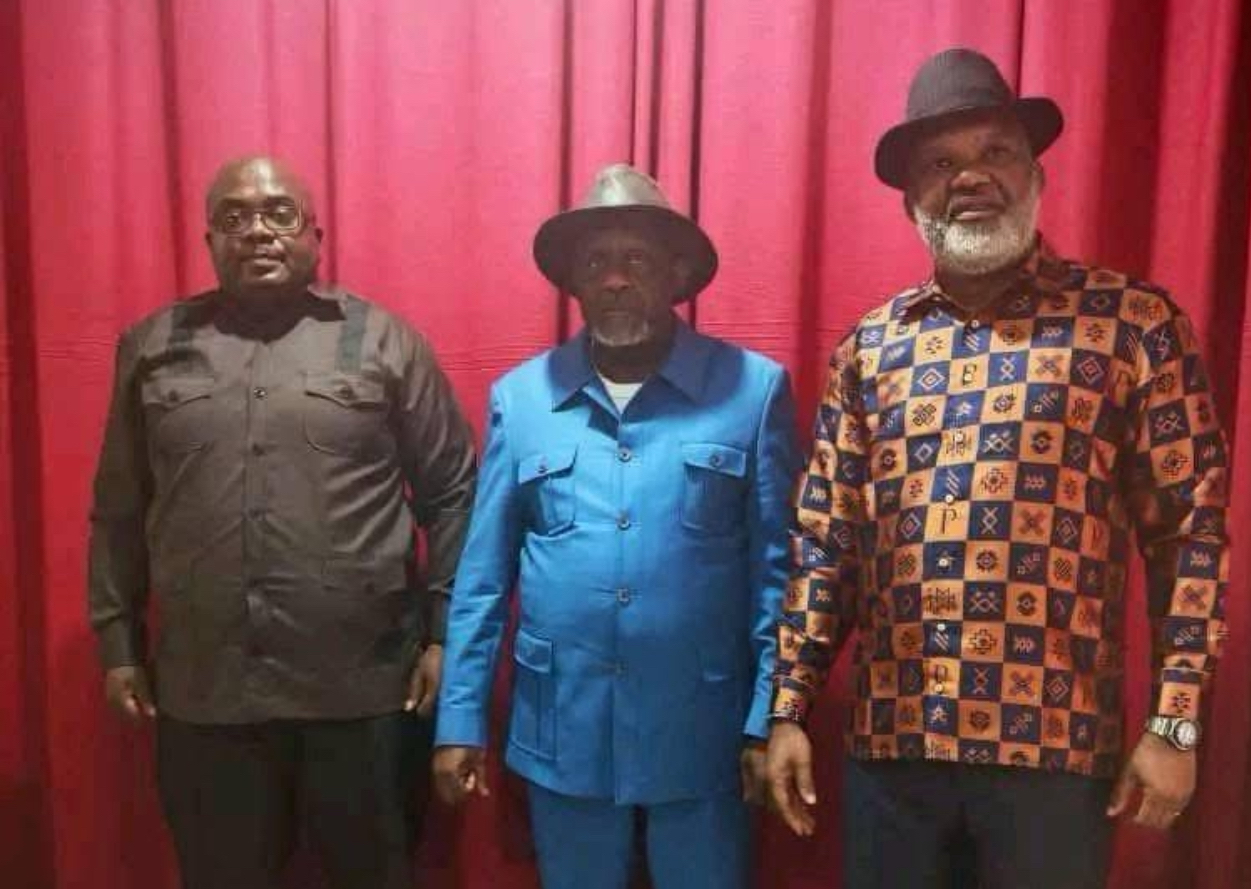
For years, Tshisekedi has sought to brand the AFC/M23 as a foreign-backed rebellion in the east of the country, and is receiving direct support from countries such as Burundi and Belgium.
Apart from military support in battle in Eastern Congo, Belgium has allowed Tshisekedi’s killing machine to loam freely on its territory. The targeted individuals claim even the arrested suspects will be released quietly.
But analysts say Tchisekedi’s obsession has metastasized into paranoia, pushing him to hunt down critics in exile and transform the state into what Diongo called “a mafia system masquerading as a government.”
What is particularly striking about the Brussels episode is the degree of operational sloppiness. The assassins, Diongo suggested, miscalculated both the vigilance of Belgian security services, who are independent and the risk of exposure in a European capital.
By abandoning their vehicle and fleeing into the streets, they effectively unmasked the clandestine nature of the mission. “The machinery of terror that Tshisekedi has assembled is now being unmasked by its own blunders,” one witness said. “Their miscalculation is our proof. The world must now see this for what it is: a criminal state exporting violence across borders.”
Behind the rhetoric lies a broader pattern. Human rights groups have long documented the ANR’s role in torture, arbitrary detentions, and intimidation inside Congo, but their reports are not widely known to the public.
What is unfolding now, however, points to an escalation: the globalization of repression, the outsourcing of political murder, and the rebranding of a sitting president as a fugitive criminal in the making.
“This is no longer about Congo alone,” Diongo warned. “It is about international law and the safety of exiled dissidents everywhere. If Europe tolerates state-sponsored assassins roaming its streets, then no activist, no refugee, no voice of dissent is safe.”
Targeted people demanded immediate protection for opposition figures abroad, an independent judicial investigation in Belgium and France, and the intervention of the European Union, the United Nations, and global human rights organizations.
The Congolese government has not commented on the allegations and has refused to respond to media queries.
Meanwhile, in Brussels, Paris, and other European capitals where Congolese exiles live, the chilling message has already sunk in: Tshisekedi’s reach is long, his methods are criminal, and his squad of killers, once invisible, is now being exposed through its own reckless miscalculations.