

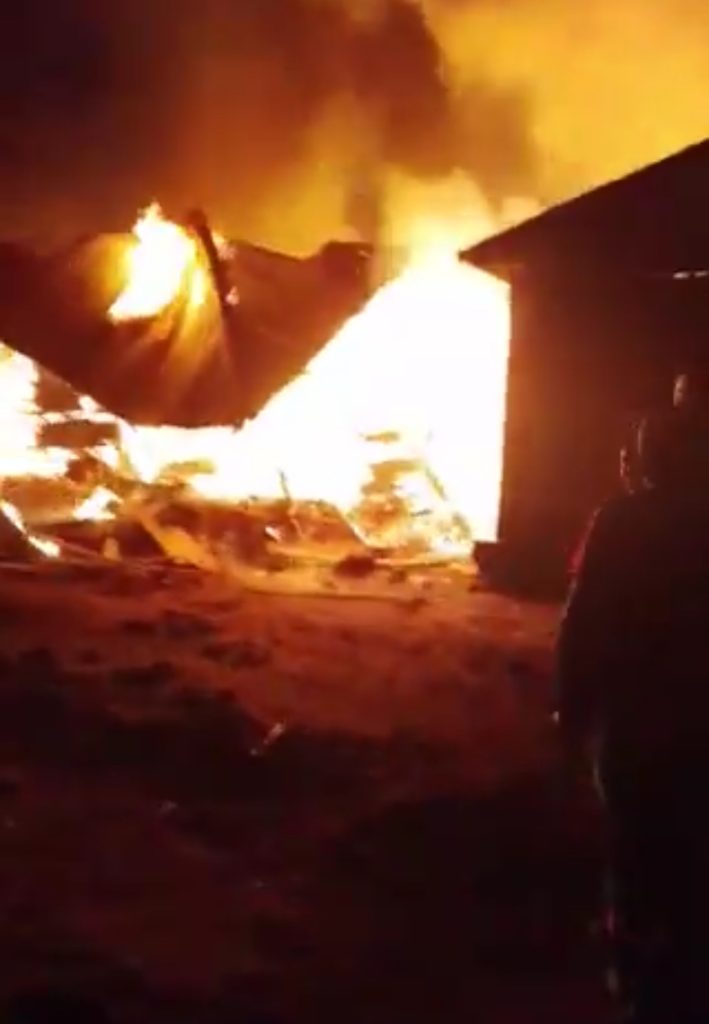
The village of Kizimba, nestled in the troubled Bwito chiefdom of Rutshuru territory in eastern Democratic Republic of the Congo (DRC), was deliberately set ablaze on the night of July 10 by FDLR and the CMC Nyatura armed group.
According to local reports, the attackers acted in a coordinated manner and specifically targeted displaced Congolese Tutsi civilians who had only recently returned to their ancestral homes after years of exile and displacement.
The assault is being described by regional observers and human rights monitors as a calculated campaign of ethnic cleansing.
“This wasn’t a clash between armed groups or a strategic operation targeting M23 military positions,” said a local leader. “The aim was to terrorize and massacre Congolese Tutsis—purely for who they are.”
Eyewitness accounts and community sources confirmed that families were caught in their homes and fled into the surrounding forests as fires engulfed the village.
The attackers spared no one, and the assault left the community devastated—its hopes for rebuilding reduced to ashes.
The attack is believed to have been driven by ideological hatred. The FDLR and CMC Nyatura have long been accused of espousing anti-Tutsi rhetoric. Their alliance appears to be rooted in that shared animosity.
The Kizimba incident is part of a broader and dangerous pattern, the deliberate targeting of Congolese Tutsi returnees in regions where their presence is perceived to threaten local land claims or political dominance.
The message is chillingly clear: ‘You are not welcome,’ “And this message is being delivered through coordinated violence, with the silent tolerance—or even passive complicity—of local authorities,” the community leader added.
There are also growing concerns over the tacit support of the Congolese military (FARDC) and some political elites.
No official statement has yet been released by FARDC regarding the attack, and no arrests have been made.
The lack of a robust state response is being interpreted by some as a dangerous signal of impunity.
“This attack cannot be seen in isolation,” said a conflict analyst, Jean Paul Maboko. “It is part of a larger strategy to sabotage peace efforts, particularly the return of Congolese Tutsis who fled previous waves of violence. It also comes at a time when recent peace agreements between Rwanda and the DRC had sparked cautious optimism for stability.”
Instead, the burning of Kizimba illustrates how some areas of North Kivu remain volatile strongholds for militias with genocidal ideologies—operating freely and threatening any chance of durable peace or reintegration.
Humanitarian actors are now sounding the alarm over the fate of thousands of Congolese Tutsis who may be planning to return to their villages.
As long as groups like the FDLR and Nyatura are tolerated, observers warn, the risk of similar atrocities remains dangerously high—not just for eastern Congo but for the entire Great Lakes region.