

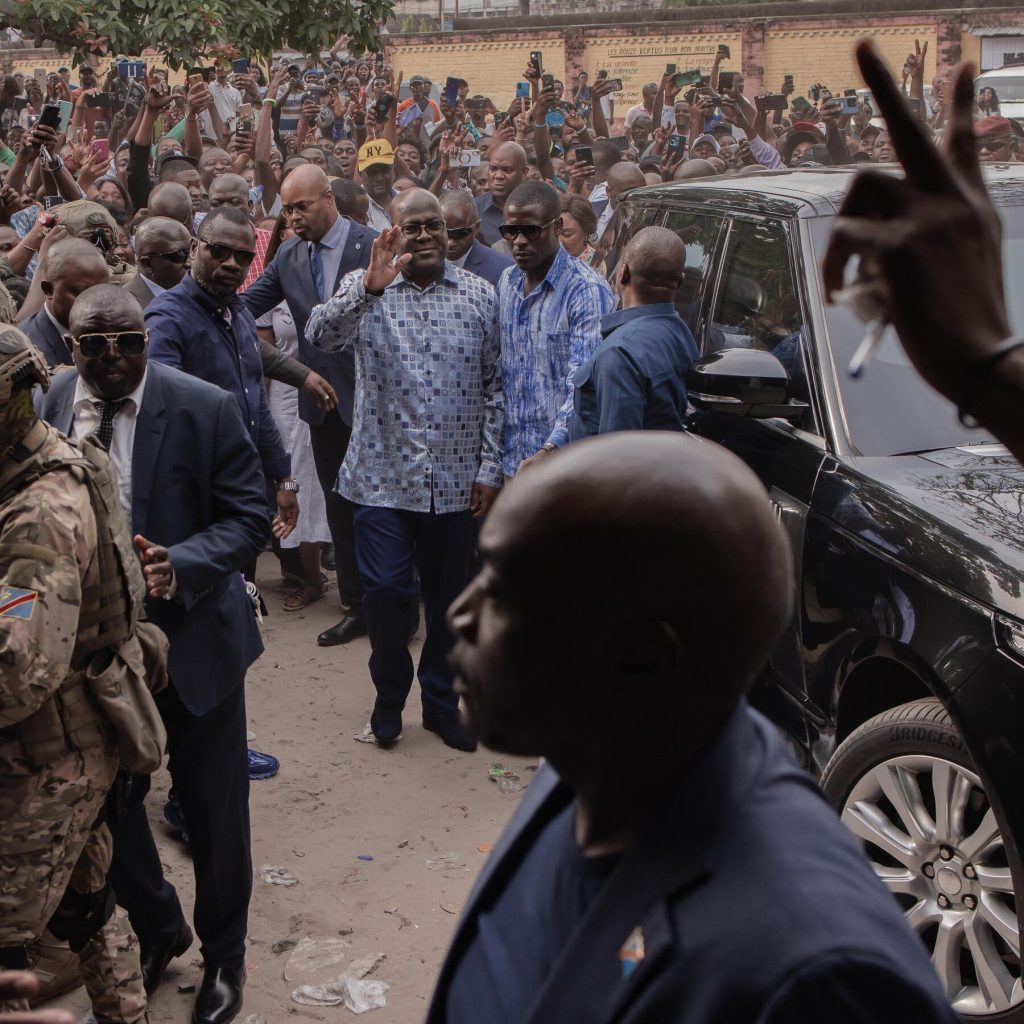
There’s an old Congolese proverb: “A chief who cannot protect his village will sell its land instead.” Félix Tshisekedi seems to have taken this wisdom to heart, not as a warning, but as a strategy. While M23 fighters march toward Butembo and the Congolese army collapses in disarray, Tshisekedi sits in Kinshasa offering America and Europe a stake in Congo’s minerals. The New York Times put it bluntly: “Mr. Tshisekedi seemed eager to capitalize on this as he tries to manage a conflict he says is similar to Russia’s invasion of Ukraine.”
If his country is under attack, why is he spending more time negotiating business deals than leading a military campaign? Why does he refuse to speak with M23, the very force reshaping eastern Congo, but eagerly pleads with Washington and Brussels? His priorities are clear: Congo’s sovereignty is a bargaining chip, and Western powers are his preferred customers.
“I don’t want to negotiate with M23,” Tshisekedi declared, dismissing the movement as “an empty shell.” But if M23 is truly hollow, why is he so afraid to face them? Why does he insist on dealing only with Rwanda while ignoring the fact that M23 is a Congolese rebellion? His refusal to acknowledge their legitimacy is not just political blindness—it is an admission of failure. A leader who cannot control his own nation must create foreign enemies to justify his weakness.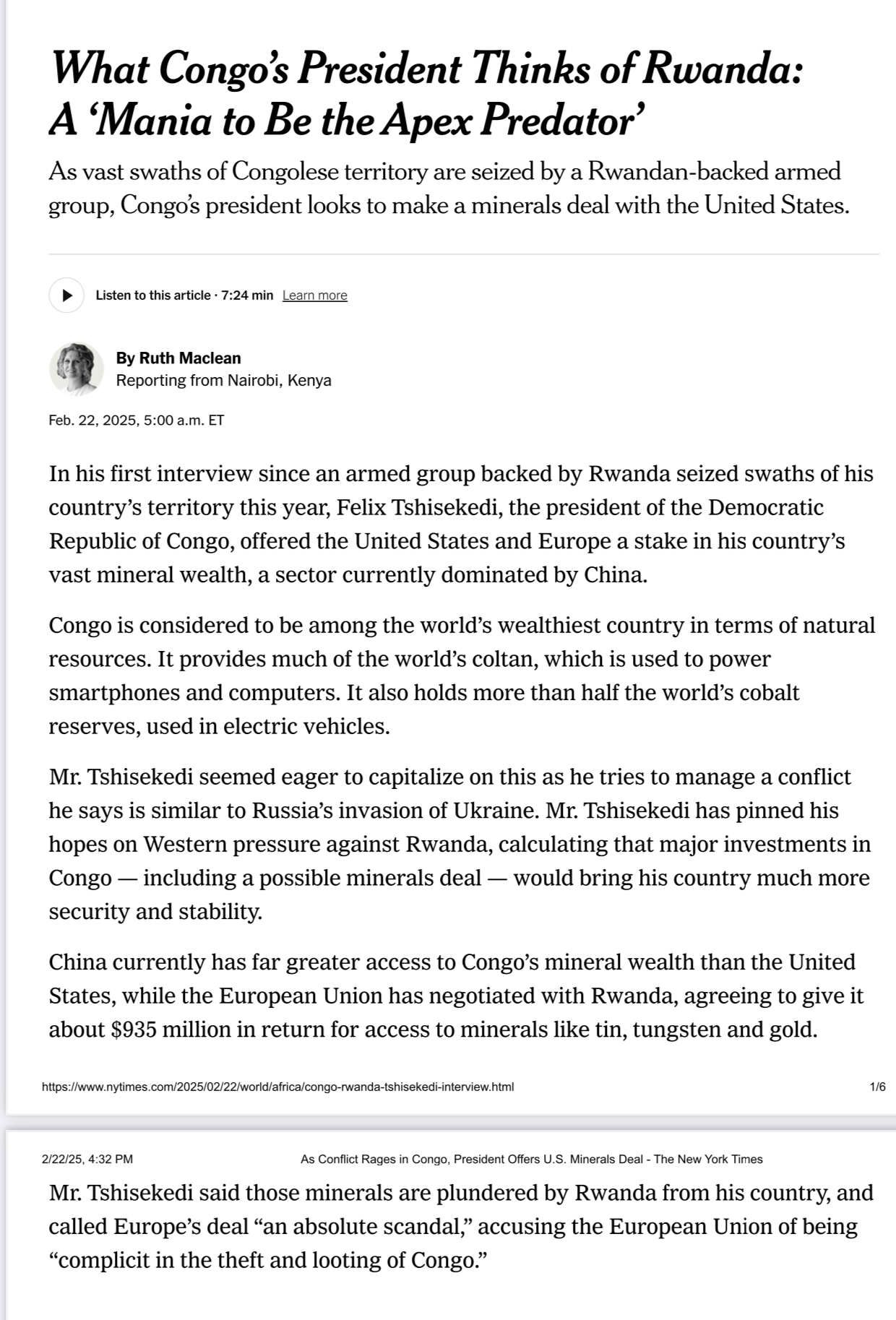
The New York Times highlighted his desperation: “A thousand miles to the west in Kinshasa, Congo’s capital, Mr. Tshisekedi has been running out of options.” The Americans see it. The Europeans see it. His own people see it. But rather than face reality, Tshisekedi clings to a narrative that portrays him as the victim and everyone else as the aggressor.
He accuses Rwanda of stealing minerals while handing over Congo’s wealth to the highest Western bidder. He denounces European deals with Kigali but shamelessly invites Washington to take China’s place in Congo’s mines. It’s not about sovereignty—it’s about survival, and Tshisekedi will sell whatever he can to keep himself in power.
Meanwhile, M23 continues its advance. The Congolese army, riddled with corruption and incompetence, offers little resistance. Kinshasa talks of retaking Goma “by force or by dialogue,” but neither seems likely. Tshisekedi’s forces cannot fight, and he refuses to talk. So what is left? Begging the Americans to save him.
But Washington has seen leaders like him before—loud in speeches, weak in action, willing to trade national interests for personal security. Tshisekedi may think he is playing a clever game, but history has no patience for failed leaders. Eastern Congo is slipping from his grasp, and no amount of American handshakes will change that.