

Eastern Congo is no longer simply a domestic insurgency zone. It has evolved into a regional security crisis involving private military contractors, state-aligned militias, foreign advisers, mineral geopolitics, and unresolved historical grievances rooted in the 1994 genocide against the Tutsi in Rwanda.
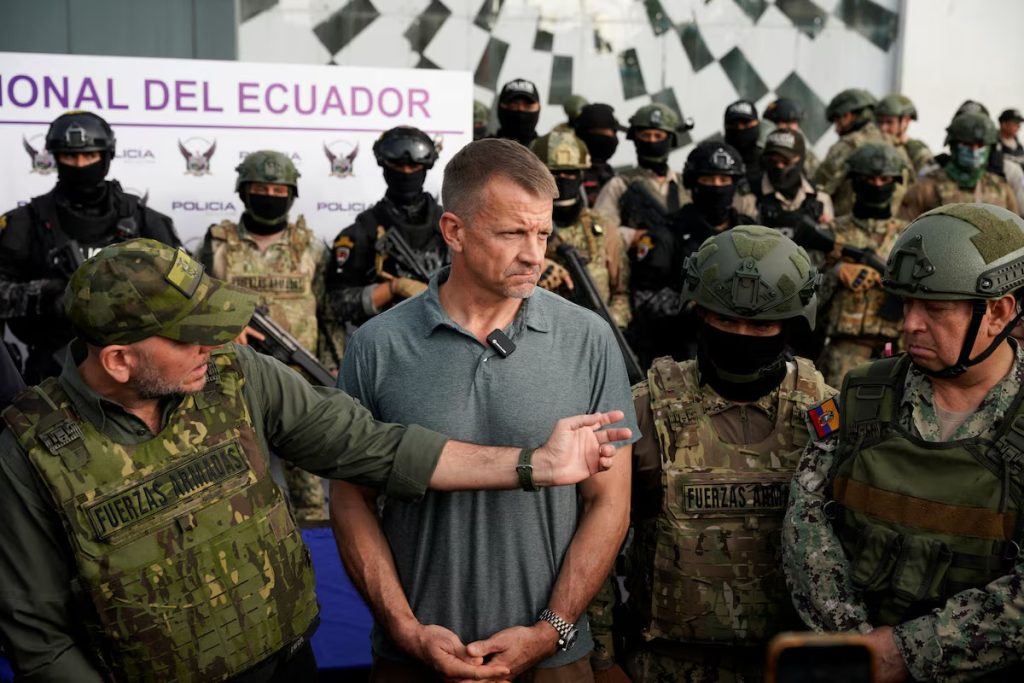
At the center of the latest escalation is the reported deployment of private security personnel linked to Erik Prince, founder of the now defunct Blackwater.
According to multiple sources briefed on the operation, Prince’s contractors operated drones and supported Congolese special operations forces during military activity around the strategic city of Uvira in South Kivu.
The involvement reportedly began before the signing of the Washington-brokered agreement between Kinshasa and Kigali.
Sources say private military activity in and around Uvira contributed to heightened tensions, prompting AFC/M23 fighters to seize the city in December. The rebels later withdrew following international pressure, including warnings from Washington.
Prince had originally been contracted by Kinshasa to assist in improving tax revenue collection from Congo’s mineral sector. However, his alleged role in frontline military support marks a significant expansion.
A spokesperson for Prince declined to comment when contacted by various media outlets.
The U.S. State Department has stated it holds no contracts with Prince or his companies. It remains unclear whether Washington endorsed the deployment.
The reported presence of U.S.-linked contractors introduces a new deterrence dynamic. One senior Congolese security official described the operation as “in line with the minerals-for-security deal,” referencing U.S. offers to support stabilization efforts in exchange for access to critical mineral resources.
Yet the crisis extends far beyond foreign contractors.
Meanwhile, Rwandan authorities and several analysts have long accused the Democratic Republic of Congo of tolerating or integrating elements of the Democratic Forces for the Liberation of Rwanda, known as the FDLR. The FDLR traces its origins to individuals linked to the 1994 genocide against the Tutsi. Rwanda maintains that the continued presence of such forces in eastern Congo constitutes an existential security threat.
Alongside the FDLR, and the so-called Wazalendo militias have emerged as auxiliary forces aligned with the Congolese military. Some of these groups continue to commit abuses against civilians, including indigenous communities in eastern Congo.
The Congolese government describes Wazalendo as community self-defense groups mobilized to defend territorial integrity.
Multiple sources allege that mercenary elements operating in the region have also been implicated in civilian abuses during counterinsurgency operations.
President Félix Tshisekedi has framed the campaign as a legitimate effort to restore sovereignty. However, critics argue that aerial bombardments in populated areas have resulted in civilian casualties, further destabilizing the region.
The broader context is geopolitical. Eastern Congo contains significant deposits of tantalum, gold, lithium, and other strategic minerals critical to global supply chains. Rwanda, for its part, insists that these armed groups are hostile to its security and remain active inside Congolese territory.
The Washington agreement signed last year did not include AFC/M23, leaving a key armed actor outside formal arrangements. As a result, the region remains volatile, with shifting alliances and parallel chains of command.
The convergence of private military contractors, foreign trainers, mineral negotiations, irregular militias, and unresolved genocide-era tensions has transformed eastern Congo into more than a localized insurgency. It is now a complex security theatre with regional and international implications.
Without transparent accountability, clear demobilization frameworks, and a credible regional security architecture, the current trajectory risks entrenching a hybrid war model in which state forces, militias, and private actors operate simultaneously in one of Africa’s most mineral-rich and politically fragile regions.
For eastern Congo, the stakes are no longer only territorial. They are structural, historical, and geopolitical.