

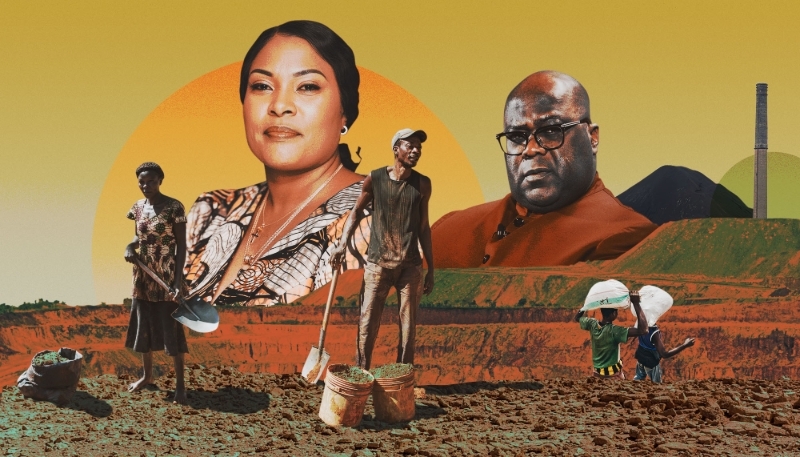
A major investigation by Africa Intelligence has sent political shockwaves through the Democratic Republic of Congo; exposing alleged links between members of President Félix Tshisekedi’s family and powerful foreign cartels involved in the illegal extraction of cobalt and copper in the country’s mineral-rich south.
The report, authored by journalists Olivier Lifranc and Johan Tillouin, reveals what it calls “the dangerous connections of the Tshisekedi clan with the looting cartels.”
Based on internal documents from the Kazakh mining conglomerate Eurasian Resources Group (ERG) and field investigations in Lualaba and Haut-Katanga, the inquiry paints a picture of a complex network involving foreign operators, Congolese power brokers, and elements of the Republican Guard, the elite unit tasked with protecting the president himself.
According to the investigation, a delegation from Kinshasa composed of senior officers and government inspectors was denied access to one of ERG’s mining sites in Lualaba Province earlier this year.
The mine, officially suspended since 2023, was found to be operational under the protection of armed units from the Republican Guard. “The delegation was told flatly that entry was out of the question,” said Olivier Lifranc.
“The guards on site said it was a restricted area, but our findings show that foreign operators were illegally extracting cobalt and copper there under the protection of state forces.”
ERG, a major player in the Congolese mining sector with several subsidiaries in the country, reportedly filed internal complaints about the illegal extraction, which it estimates costs the company over two billion dollars per year; roughly 150 million dollars per month in lost revenue.
Eurasian Resources Group (ERG) operates across several strategic sites in the DRC under the umbrella of ERG Africa. Since March 2024, ERG Africa has been led by CEO Nicolas Treand, who oversees the group’s continental operations from its regional headquarters.
Supporting him are senior executives such as Joachim Nzuzi, Chief of Staff and government relations lead; Jean-Claude Lubembe, Head of Operations at Metalkol RTR; Davron Vakhabov, Head of Operations at Frontier Mine; and Patient Kabela, Social Manager at Boss Mining. Globally, ERG is led by Group CEO and Chairman Shukhrat Ibragimov, who succeeded Benedikt Sobotka in October 2024.
This leadership team is tasked with strengthening transparency and accountability within ERG’s global operations, including those in the DRC—though the latest revelations have placed renewed scrutiny on their local oversight.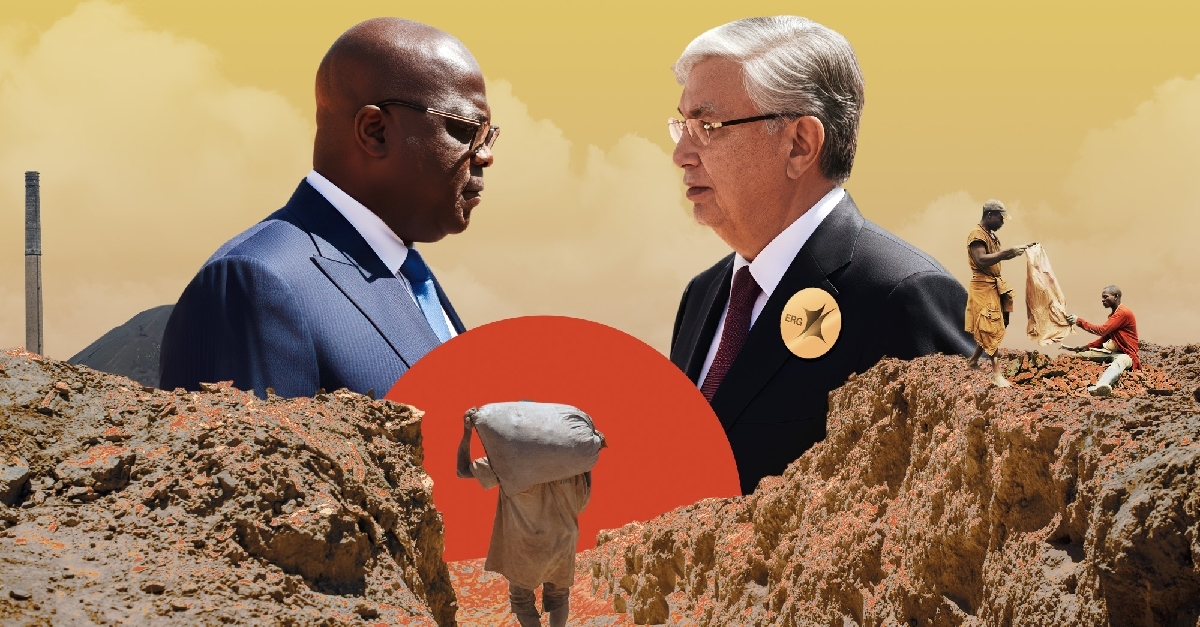
The internal ERG report cited by Africa Intelligence identifies networks of Lebanese and Chinese operators deeply embedded in the illegal trade. On the Chinese side, names such as Fali, Ken, and a businessman nicknamed “Mr. Sun” appear frequently.
On the Lebanese side, the investigation cites Wissam and Bassel Saad, working closely with a financier named Ismaël Al-Faran. These operators reportedly enjoy protection from both the 22nd Military Region and members of the Republican Guard; giving them near-impunity in a region where law enforcement remains weak and corruption entrenched.
“The illegal mining ecosystem has become an intricate web,” said Lifranc. “It involves foreign profiteers, local elites, and elements of the military, all benefiting from the shadow economy surrounding cobalt and copper.”
Perhaps the most politically explosive aspect of the investigation is the allegation that several of President Tshisekedi’s brothers, including Christian Tshisekedi and Thierry Tshisekedi, have had dealings with ERG and other mining stakeholders in Katanga.
According to the ERG report, they are cited as having ties with Chinese and Lebanese cartels operating illegally in the region. While both men categorically deny any involvement in illicit mining, they are reported to have approached ERG officials on multiple occasions, offering services to “secure” or “stabilize” mining concessions.
“What seems certain is that they are present in the region and have been in contact with ERG,” said Lifranc. “Whether they are intermediaries, facilitators, or simply family members acting independently, the perception of impropriety is damaging in itself.”
The affair is politically sensitive. Sources cited in the investigation say the scandal could tarnish Tchisekedi’s reformist image both domestically and abroad.
The situation has grown even more delicate following reports that a formal complaint has been filed in Brussels concerning alleged mining expropriation involving members of the Tshisekedi family.
“The president is now facing a dilemma,” Lifranc said. “He wants to clean up the sector, but his own entourage is being accused of collusion. Meanwhile, the illegal operators benefit from military protection that even Kinshasa struggles to control.”
Tshisekedi has recently taken steps to reassert authority; including a visit to Kazakhstan to engage directly with ERG leadership and new cooperation agreements with Gécamines, the state-owned mining giant.
However, analysts say reclaiming control of the southern mining provinces will be politically and militarily challenging.
Cobalt, essential for electric batteries and renewable energy technologies, represents the backbone of the DRC’s mining economy. Yet as global demand surges, the country’s control over this strategic resource remains fragile.
The looting of cobalt and copper, driven by opaque networks of cartels, corrupt officials, and foreign interests, has robbed the Congolese state of billions in potential revenue.
Local communities in Katanga and Lualaba continue to suffer environmental degradation, displacement, and loss of livelihoods as illegal mining expands unchecked. “What’s happening in Katanga is not just economic theft, it’s a form of national dismemberment,” one local source told Africa Intelligence.
“The state has been sidelined in favor of private networks that operate with total impunity.”
While many of these allegations have circulated for years, the new ERG report provides rare documentation and quantifiable losses. Its publication has reignited public anger in Katanga and renewed questions about the Tshisekedi administration’s ability or willingness to dismantle the shadow economy at the heart of the DRC’s mining sector.
“This story is not new,” Lifranc concluded. “But now it has evidence, names, and numbers. And in a country where cobalt should be a source of prosperity, it has become a mirror reflecting how power, money, and loyalty intersect at the expense of national sovereignty.”