“The Democratic Republic of Congo has returned to dictatorship.” That was the opening declaration of a heated political gathering held today in Nairobi, where Congolese political figures, former officials, and civic leaders unveiled a new movement called “Save the Democratic Republic of Congo.”
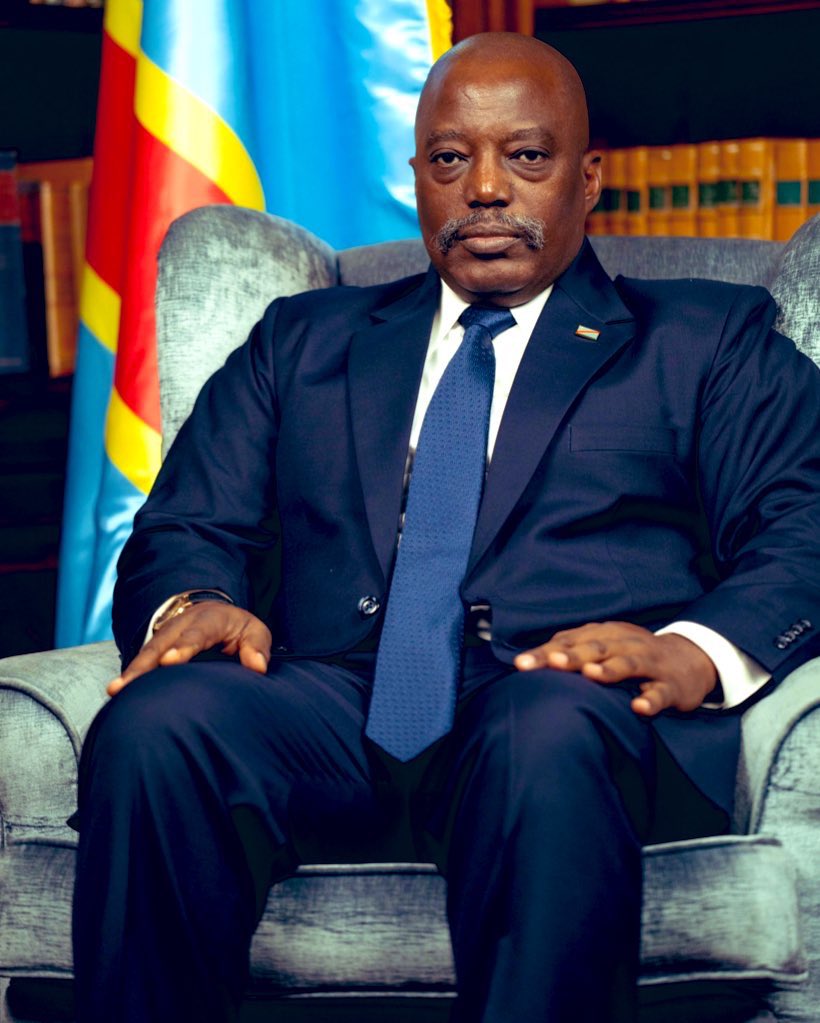
The platform, led by former president Joseph Kabila, is intended to unite opposition voices and restore what participants described as “constitutional order and national dignity.”
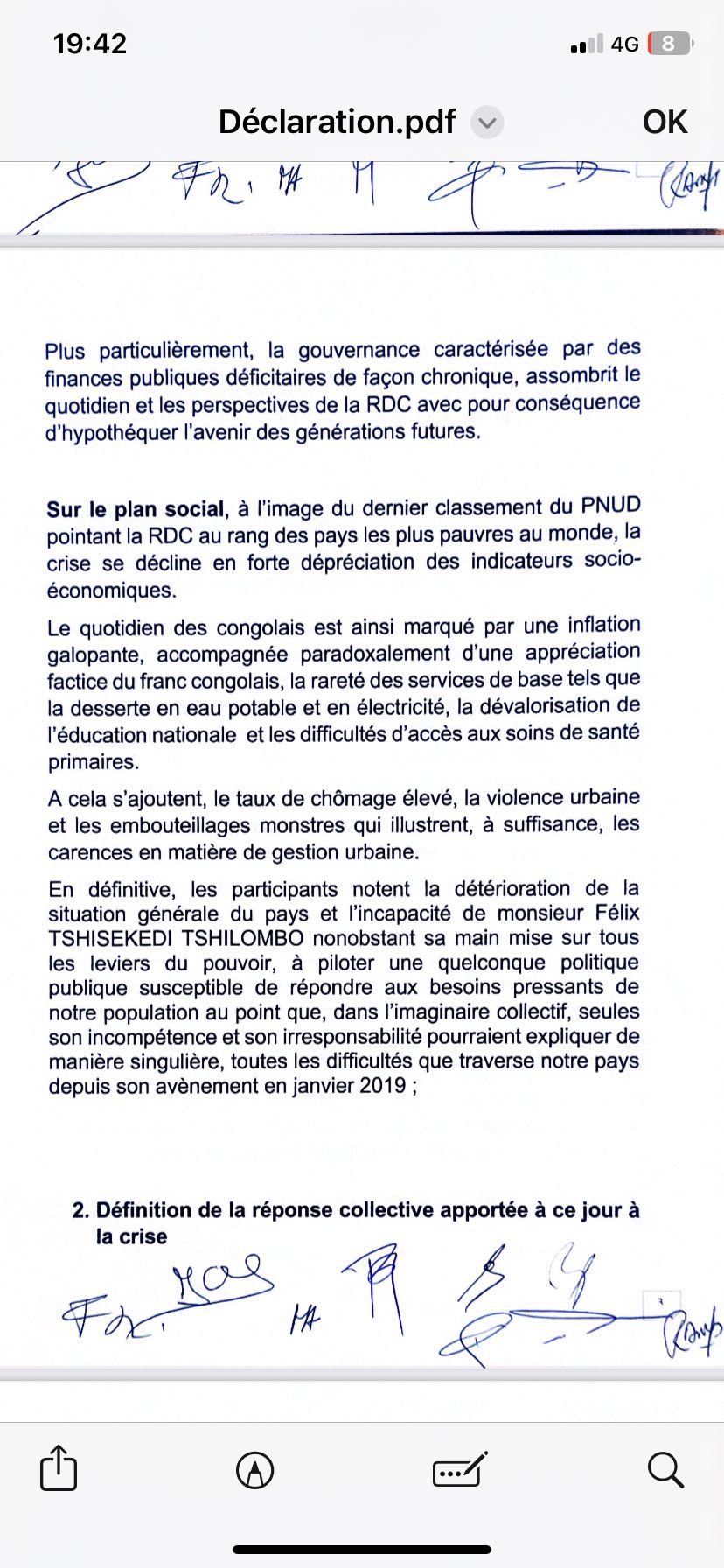
In their final communiqué, participants accused President Félix Tshisekedi of steering the country into a new era of authoritarianism, corruption, and social decay. They claimed that under his leadership, the DRC has “reverted to the practices of a single-party state” where institutions serve political interests rather than the people.
The movement condemned the death sentence recently handed down to Joseph Kabila by the Military High Court, calling it an unjust and politically motivated verdict that reflected the erosion of judicial independence.
However, the symbolism of the Nairobi conclave was double-edged. Joseph Kabila ruled the country for 18 years, and much of what his supporters denounce today—corruption, weak governance, insecurity, and economic despair—flourished under his administration.
The irony of a former president seeking to “save” the country from the same problems that deepened during his tenure was not lost on many observers. Still, his return has electrified parts of the political class disillusioned with Tshisekedi’s rule.
Kabila, who has recently been in contact with the AFC/M23 coalition in eastern DRC, appears to be reasserting himself as a power broker and alternative voice.
His choice to lead the “Save the DRC” movement comes at a time when Congo faces its most severe security and political crisis in years.
Tshisekedi’s government, despite controlling the main state institutions, is struggling to contain unrest, curb inflation, and maintain legitimacy amid rising regional and domestic discontent.
The Nairobi resolutions described a grim national picture. The participants decried a government that has “abandoned its people to hunger, fear, and violence,” accusing Kinshasa of prioritizing power over governance.
They pointed to chronic mismanagement of public finances, soaring unemployment, and crumbling infrastructure as evidence of “a failed state model maintained by the illusion of reform.”
They also cited reports ranking the DRC among the poorest countries in the world, despite its vast mineral wealth.
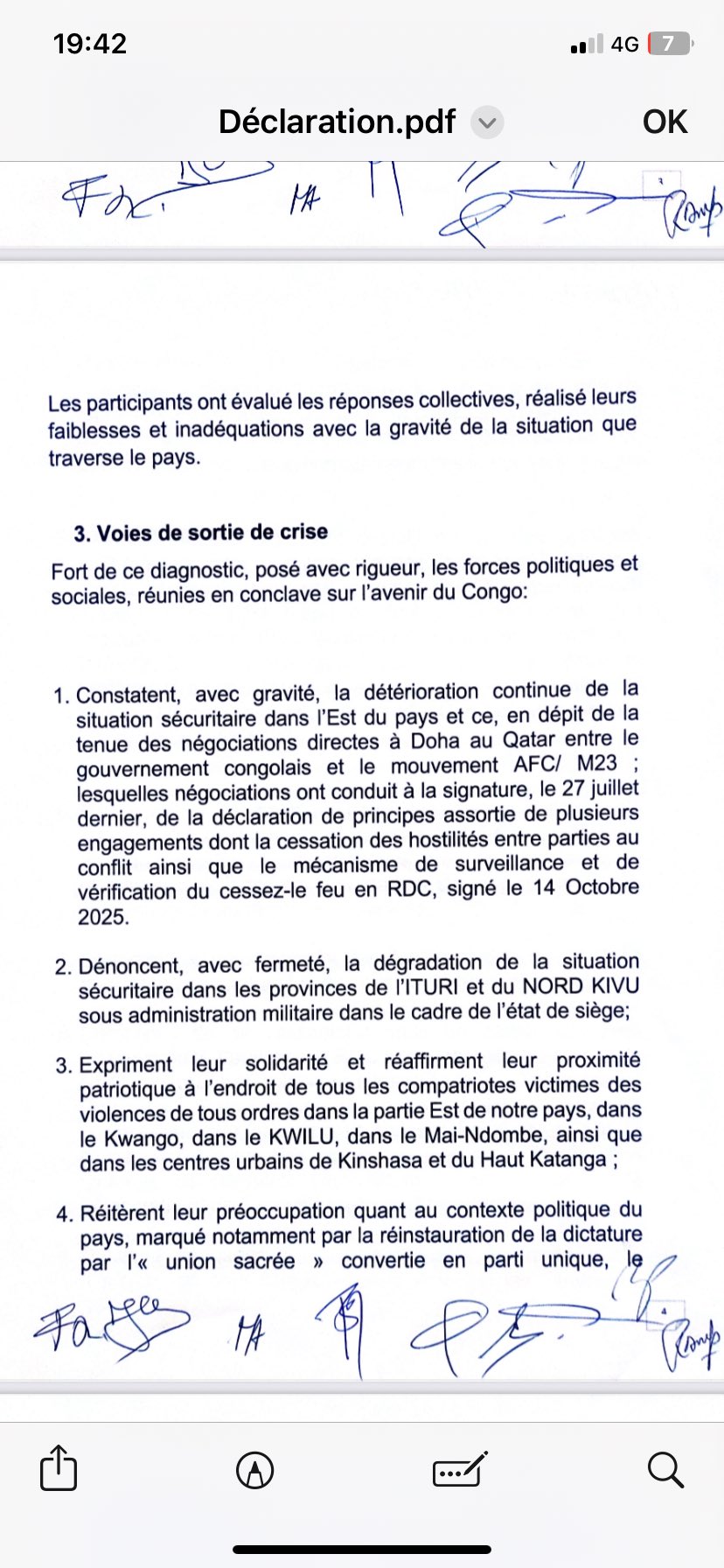
On the security front, the declaration focused heavily on the worsening situation in the east, particularly in North and South Kivu and Ituri provinces.
The participants recalled that a ceasefire verification mechanism was signed in Doha, Qatar, on October 14, 2025, to end hostilities between the Congolese government and the AFC/M23 coalition.
Yet, according to them, Kinshasa and its allied forces have continued to carry out air strikes and bombardments on populated areas, including in Minembwe and Twangiza.
These attacks, they argued, constitute blatant violations of the ceasefire and expose civilians to further danger.
The Nairobi participants expressed solidarity with victims of violence across the country, from the eastern provinces to conflict-hit areas such as Kwango, Kwilu, Mai-Ndombe, Kinshasa, and Haut-Katanga.
They denounced what they called the “moral collapse” of the state and emphasized the need for a “national awakening” grounded in justice, unity, and social renewal.
Central to the Nairobi meeting was Kabila’s twelve-point roadmap for peace and national restoration, which was presented as the guiding framework for the new movement.
The roadmap calls for restoring state authority, reforming governance structures, addressing socio-economic grievances, and engaging in inclusive dialogue with all Congolese stakeholders. It also emphasizes regional cooperation and the strengthening of African-led mechanisms to achieve lasting peace.
Supporters of the new platform described Kabila’s leadership as a response to “a vacuum of credibility and direction” in the country’s politics. Yet critics view it as an attempt by an old political elite to rebrand itself amid growing instability.
For many Congolese, the idea of Kabila “saving” the country evokes mixed feelings—some see him as a stabilizing force, others as a reminder of a past marked by impunity and unfulfilled promises.
The Nairobi declaration concluded by urging all Congolese citizens to unite behind the movement and resist what it called “the monopolization of power and the betrayal of the republic.” It appealed to regional and international partners to respect the sovereignty of the Congolese people and support a peaceful transition toward stability and reform.
Still, the return of Kabila to the political stage raises difficult questions. The same governance failures, economic hardships, and security crises that the Nairobi participants blamed on Tshisekedi were not born in 2019—they were inherited and deepened over decades of mismanagement. Whether Kabila represents a genuine alternative or simply the recycling of a discredited political class remains uncertain.
As tensions rise and the DRC teeters on the edge of another political confrontation, the Nairobi resolutions signal that the battle for the country’s future is far from over.
What began as a call to “save the DRC” may soon evolve into a new chapter in the struggle for power between old and new regimes—one that could again test the limits of the Congolese people’s endurance.