

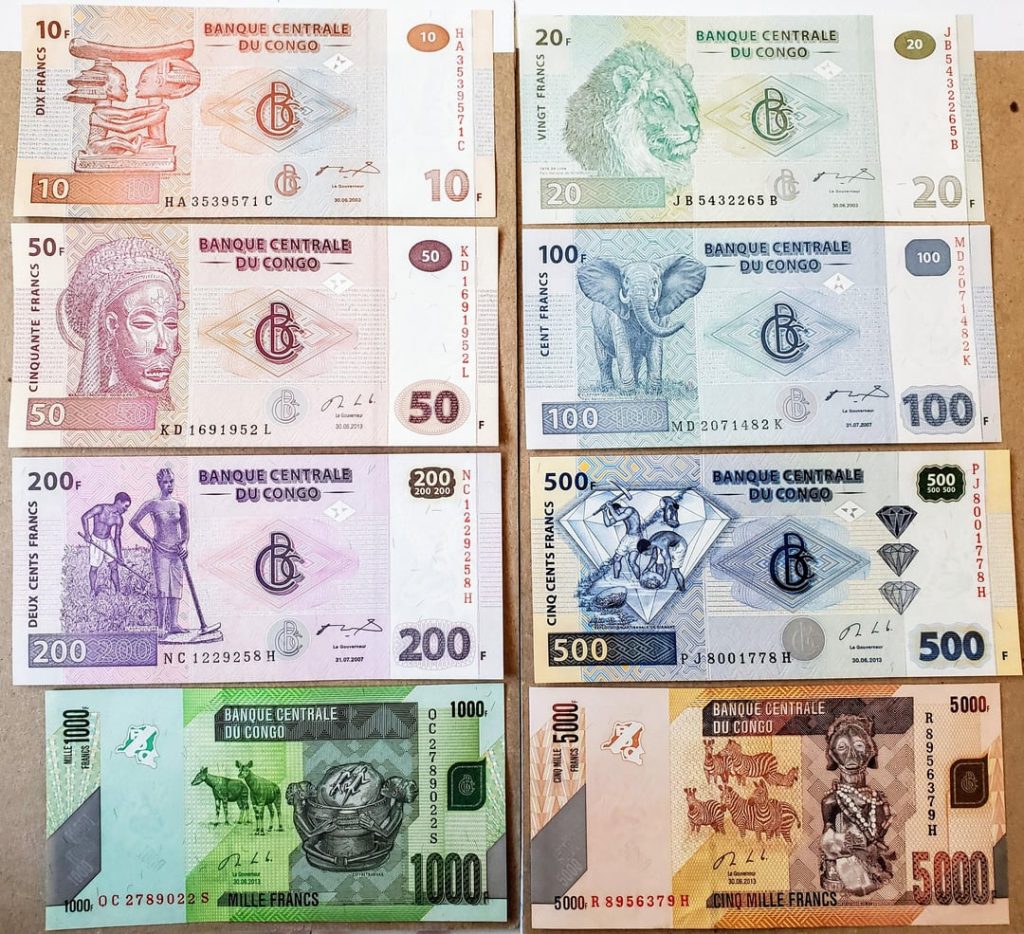
AFC/M23 provincial authorities have issued a circular ordering the withdrawal and exchange of damaged Congolese franc notes, in what authorities say is a measure to restore public trust in the national currency and ensure smooth economic transactions.
The directive, signed on August 28, calls on holders of worn, torn, or deteriorated banknotes to deposit them at CADECO branches in South Kivu, where they will be exchanged at full value for notes in better condition.
According to the circular, the operation is free of charge and will be conducted without penalties, provided that the banknotes presented are genuine. Local administrators, mayors, and financial services have been instructed to ensure the wide dissemination and enforcement of the measure.
But the development has taken on a deeper political undertone after the M23 movement in eastern DRC issued a statement framing the exchange not as a simple technical exercise, but as part of their broader effort to bypass Kinshasa’s financial chokehold.
M23 claims it is not minting new currency, but reviving local banks such as CADECO in Goma and Bukavu, institutions that had long been cut off from the national system.
CADECO, the Cooperative for Savings and Credit, was originally created in the late 1980s as a grassroots financial network to provide credit and savings services to Congolese citizens who were largely excluded from the formal banking sector.
In eastern Congo, it became an essential financial bridge for traders, small businesses, and households who relied on it to keep local commerce alive during periods of political instability and economic collapse.
By reopening CADECO under their watch, M23 leaders say they are restoring a financial institution that was meant to serve the population but had been weakened and disconnected due to Kinshasa’s control and the wider conflict.
They argue that reviving CADECO is necessary to pay local salaries, facilitate cross-border trade, and maintain economic activity in the absence of reliable state banking services.
While no new banknotes have been introduced, the fact that M23-run banking structures are now managing financial exchanges in Bukavu and Goma is seen as a challenge to President Félix Tshisekedi’s authority.
Analysts predict that today’s financial maneuvers could evolve into tomorrow’s de facto autonomy for Kivu, raising the stakes in the region’s long-running conflict.
For now, the streets of Bukavu and Goma are watching closely. What has began as a push to replace old notes may mark the start of a new struggle over who controls the region’s financial lifelines.
Wow! This blog looks exactly like my old one! It’s on a entirely different subject but it
has pretty much the same page layout and design. Superb choice of colors! https://truepharm.org/