

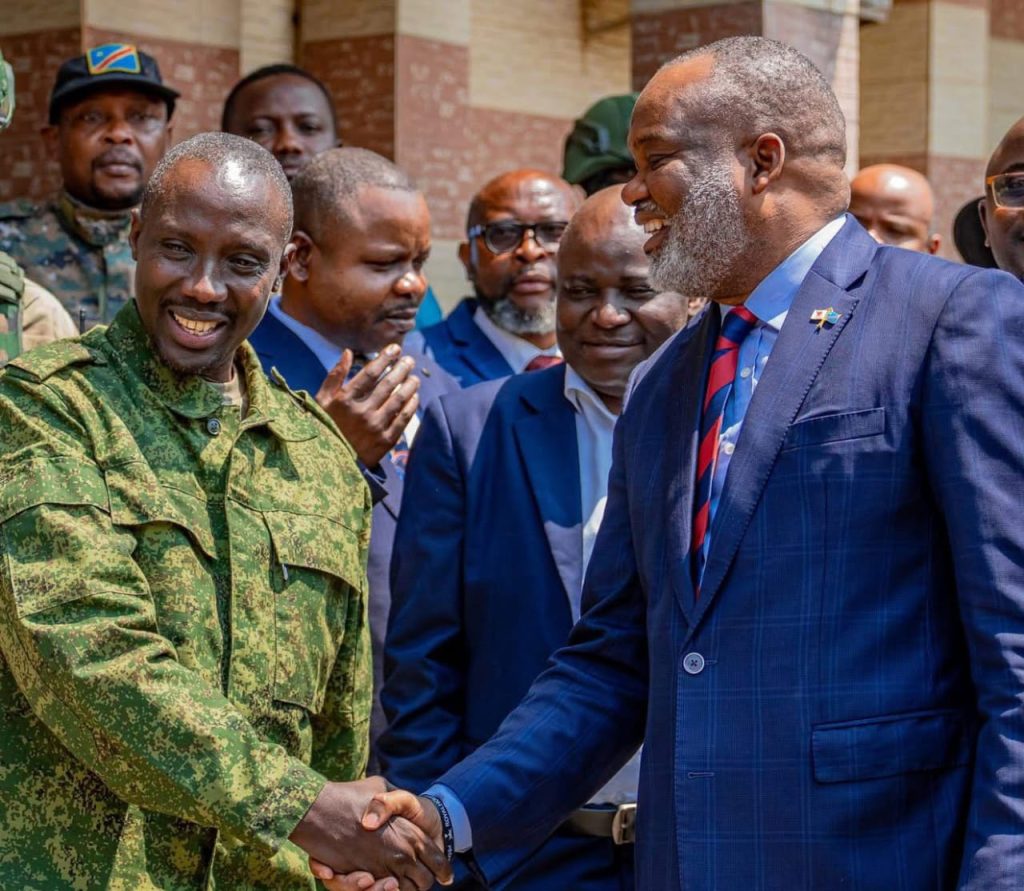
The leadership of the Congo River Alliance (AFC/M23) has published what it describes as its “Five Pillars of Success,” outlining the ideological and moral foundations it claims will guide both its political and military wings in the Democratic Republic of Congo’s ongoing conflict.
In a statement released earlier this week, the movement—long designated by Kinshasa as a rebel group—portrayed itself as a “force for national refounding”, seeking to reform a country it says has been weakened by “decades of corruption and injustice.”
The newly published pillars emphasize discipline, commitment, determination, sacrifice, and endurance as core values of what the group calls a “revolution of values, not of hatred.”
According to the document, discipline forms the basis of internal cohesion and accountability, aiming to replace disorder with “moral and intellectual rigor.”
Commitment, it says, represents the patriot’s oath—a call to transcend ethnic loyalties and personal ambitions in service to the Congolese nation.
The third pillar, determination, is described as the “inner flame of the struggle,” symbolizing perseverance in pursuit of what the group calls a “just Congo where truth triumphs despite demonization and trials.”
Under the theme of sacrifice for dignity, the AFC/M23 says its members are expected to reject ethnic division and embrace a collective commitment to national reconstruction through “work, patience, and solidarity.”
The final pillar, endurance, is characterized as “faith in time,” depicting the group’s long-term resolve in what it claims is a struggle rooted in justice and moral renewal.
“The Congo River Alliance (AFC/M23) is not merely an armed movement but a school of national consciousness,” the statement reads. “Its true victory will not be exclusively military but moral: the renaissance of Congo and its people.”
The publication of these principles appears to be part of the group’s ongoing effort to recast its public image and present itself as a political and moral alternative to what it calls the “failures of the Kinshasa regime.”
Over the past year, the M23 has expanded its control across parts of North Kivu and Ituri, clashing with Congolese forces and regional militias.
Government officials in Kinshasa have repeatedly dismissed the group’s political rhetoric, accusing it of serving foreign interests and committing grave human rights violations.
Regional observers, however, note that the movement has increasingly sought to pair its military advances with an ideological framework intended to appeal to disillusioned Congolese citizens.
“The M23 is clearly trying to rebrand itself as a movement of reform rather than rebellion,” said Jean Paul Kitoko, a political analyst in Goma. “But these words will be tested against their actions on the ground—especially regarding civilian protection and respect for human rights.”
As fighting continues across eastern Congo, the release of the “Five Pillars” signals an attempt by the AFC/M23 to anchor its military campaign in a broader narrative of national renewal, even as its legitimacy remains deeply contested both domestically and internationally.