

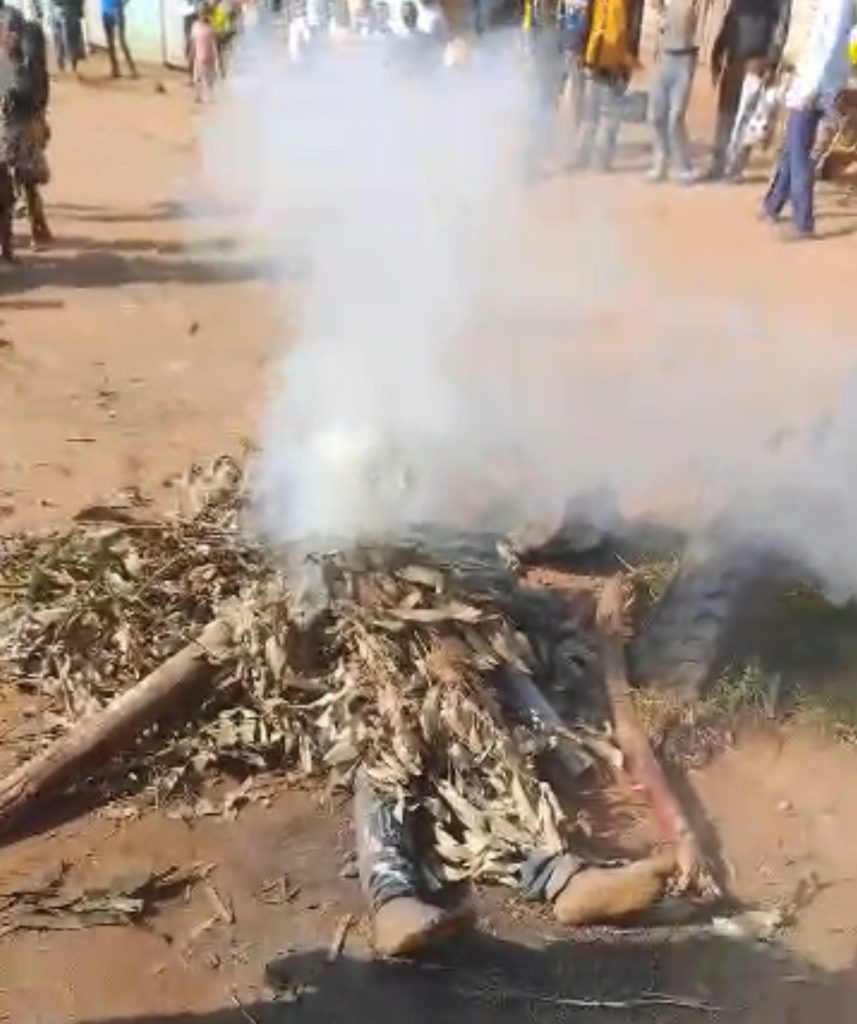
A gruesome incident has shocked Mambaasa in Ituri after a yet-to-be identified Maasai hawker was lynched and burnt to ashes in broad daylight by local vigilantes.
Eyewitnesses said the victim, known in the community for moving from place to place selling his goods, was suddenly accused of being an agent of the M23 rebel movement.
Without evidence or trial, vigilantes descended on him, set him ablaze, and left his remains in the open as a warning.
The killing comes amid an escalating hate campaign against Maasai nationals across eastern DRC.
Colonel Muhindo Mukumbatiya Bénoit, commander of the Wazalendo FAR-W militia, has openly called for a hunt against Maasai from Kenya and Tanzania living in Beni and Butembo, accusing them of collaborating with the M23 rebel group in the capture of Goma.
The Maasai, widely known across East Africa as itinerant traders and hawkers selling shoes and garments in Kigali, Kampala, Nairobi, Dar es Salaam, and other cities, have long been part of the region’s informal economy.
But Mukumbatiya has likened them to “snakes,” claiming they camouflage as ordinary traders while serving as enemy infiltrators.
His rhetoric was echoed by another Wazalendo officer, Muhongya (@JulesMNational), who urged locals to view Maasai as collaborators of the enemy.
The militias have gone further, warning landlords that any homes or hotels hosting Maasai tenants will be burned.
They justify their threats by arguing that the traders “eat every day, pay rent and afford clothing”—a line that observers dismiss as primitive scapegoating designed to incite hostility.
Wazalendo militias, accused of atrocities and strongly funded and backed by President Félix Tshisekedi, continue to wreak havoc in eastern Congo.
Analysts suggest the latest attacks on Maasai traders are politically motivated, coming just days after Kenyan President William Ruto appointed an envoy to Goma.
Tshisekedi’s forces appear to be responding by targeting Kenyan and Tanzanian nationals in Congolese cities, portraying them as enemies of the state.
FAR-W, closely linked to the AVRP tribal political party, has a track record of communal violence, including attacks on Congolese Tutsis in Nyiragongo and Masisi territories, as well as involvement in anti-Tutsi demonstrations in Goma.
Observers warn that expanding this hate campaign to include the Maasai risks fueling fresh waves of violence in Beni and Butembo, and further destabilizing the region.
Already, fear is spreading. Last week, some Maasai traders were seen stranded and distressed in Bukavu, worried for their lives.
“DRC is a member of EAC. Citizens of EAC are free to move, live and work in any country. This hatred targeting Maasais is against our values as member states,” said one Njoroge on X. “This primitive behavior should not be tolerated.”