

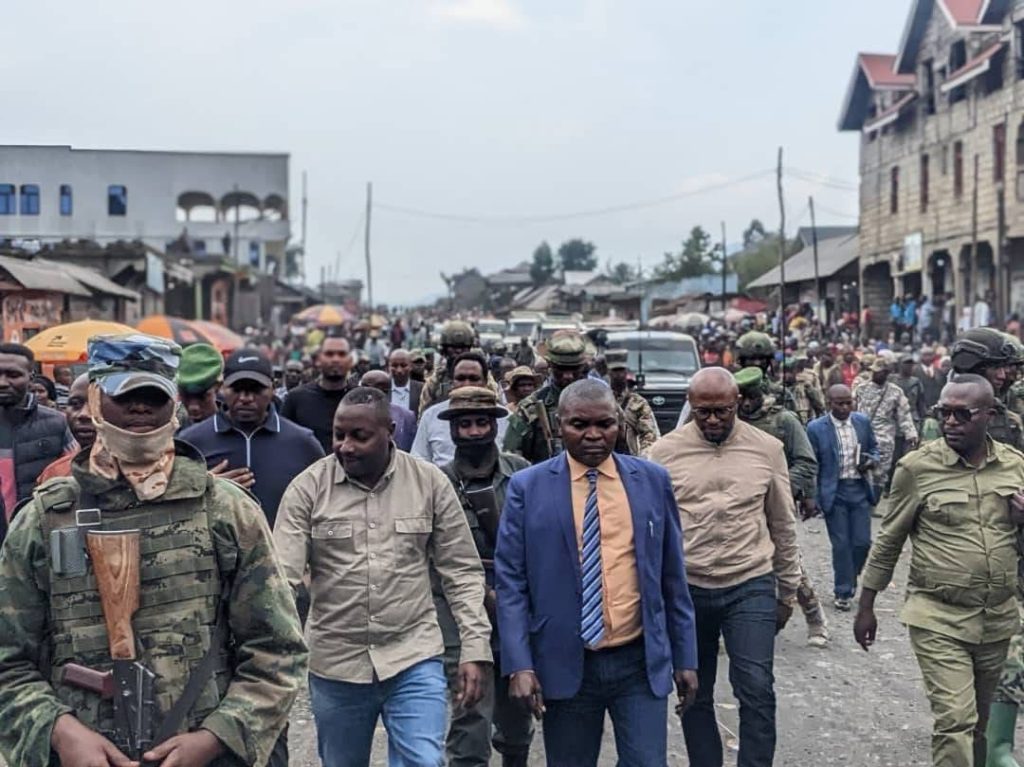
North Kivu Governor Bahati Musanga Erasto was received with great enthusiasm on Tuesday during a visit to Kitshanga town in Masisi territory, where hundreds of residents turned out to welcome him.
Flanked by his two deputy governors and several senior members of the AFC/M23 movement, the provincial leader was greeted by traditional chiefs, local authorities, and jubilant crowds.
In a speech delivered to the gathering, Governor Bahati praised what he described as the gradual restoration of peace in the region.
He called for unity, peaceful coexistence, and active civic participation as foundations for long-term stability.
Encouraging citizens to join the Congolese Revolutionary Army (ARC), he framed the movement as a national effort to “liberate the DRC from the hands of incompetent leaders.”
His remarks echoed the broader political message of the AFC/M23 alliance, which has been critical of the central government’s management of security and governance.
The governor also condemned ethnic discrimination and urged residents to report FARDC soldiers and Wazalendo fighters who have deserted and are believed to be contributing to insecurity in Kitshanga.
During the visit, Governor Bahati held a series of open discussions with representatives from different sectors of the community to address key concerns such as regional security, development, and the economic challenges resulting from the closure of banking services in the area.
He announced the launch of several infrastructure projects, including the electrification of Kitshanga before the end of 2025 and the rehabilitation of the Kiziba–Tongo road, with construction set to begin on May 30.
To ensure regular engagement with the population, the governor also committed to organizing quarterly consultations with local authorities, community leaders, and influential figures.
These meetings, he said, will help monitor progress and respond more effectively to local needs.
The visit comes at a time of heightened tensions and uncertainty in eastern DRC, with M23-aligned authorities consolidating control and seeking to present themselves as legitimate political actors offering security and development in contested areas.