

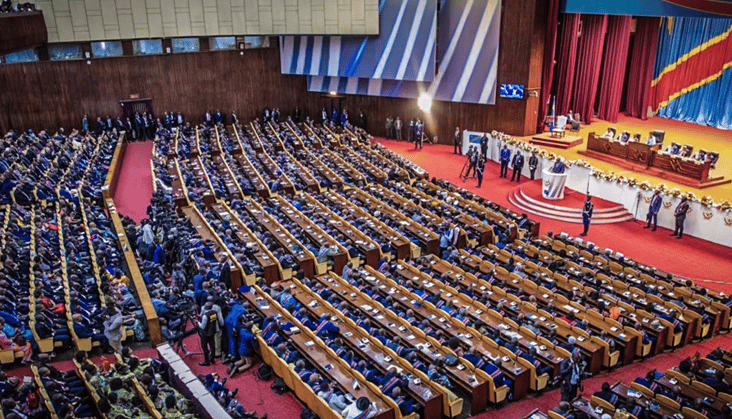
A proposed law before the National Assembly of the DR Congo seeks to bar former leaders of armed rebellions from serving in the country’s security institutions—a move that could reshape how Kinshasa negotiates with insurgent groups and challenge the fragile peace deals that have defined Congolese politics for decades.
Hon. Lutala Mutiki Trésor, a deputy from Mwenga in South Kivu, introduced the bill on September 22. Titled “Law Establishing the Fundamental Principles on the Non-Integration of Former Leaders of Insurrectional Movements into the Institutions and Security Services of the DRC,” it was formally registered the same day, signaling the start of the legislative process.
The timing is politically charged. For years, successive Congolese governments have used a strategy known as brassage—integrating rebel fighters and their commanders into the national army (FARDC) and police—in exchange for ceasefires or peace agreements.
The policy was meant to end cycles of conflict but has often undermined discipline and allowed former warlords to keep their networks intact.
Security analysts say the presence of fighters and officers tied to groups such as the Democratic Forces for the Liberation of Rwanda (FDLR) inside the army illustrates the danger. Over time, critics argue, such integration has allowed ex-rebels to “arm-twist” the state from within, weakening the chain of command and blurring the lines between state and militia.
“This is a structural weakness,” said a Goma-based analyst. “When former rebel leaders enter the army, they carry their allegiances with them. They can block reforms or even threaten to return to the bush if their demands aren’t met.”
The proposed law is also widely viewed as a pre-emptive signal to the M23 movement, which currently controls swathes of territory in North Kivu. “If the FARDC eventually retakes these areas, or if any political deal is struck with M23, the bill would legally bar the group’s top commanders from claiming positions in the army or security services—a tactic that has historically been used to seal peace accords.,” the analyst said.
Other observers warn that while the bill aims to protect the integrity of state institutions, it could carry unintended consequences. Removing the possibility of political or military integration may give armed movements a stronger incentive to seize power by force.
“Groups like M23 will see that there is nothing to gain from negotiations if the door to integration is shut,” said Moise Mwamini, a researcher in Bukavu. “That kind of law can actually motivate rebels to capture territory or even try to control the state outright, because compromise no longer offers them a future.”
Supporters of the legislation say this kind of legal firewall is necessary to rebuild public trust in the FARDC, which many Congolese see as compromised. But opponents caution it could complicate peace talks and fuel the very insurgencies it seeks to neutralize.
Lawmakers will now debate whether the long-standing strategy of buying peace through integration has outlived its usefulness—or whether this bill risks closing off one of the few remaining paths to ending Congo’s chronic conflicts.
The outcome could redefine how the DRC balances reconciliation with the need to secure the loyalty and credibility of its security forces.