

Rwanda’s government says diplomatic pressure and sanctions will not resolve the conflict in eastern Democratic Republic of Congo unless what it considers the core drivers of the crisis are addressed.
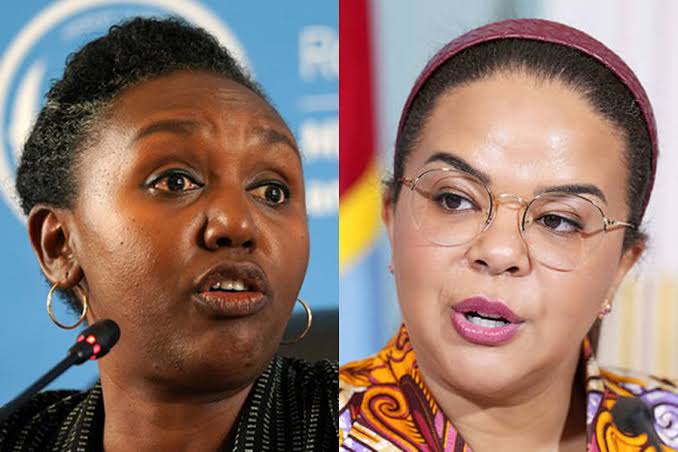
The response came after DR Congo’s Foreign Affairs Minister Thérèse Kayikwamba Wagner welcomed sanctions announced by the United States, describing the decision as a turning point.
“A word given cannot be perpetually broken, and the brazen contempt for human lives cannot endure,” Kayikwamba said in a public statement.
Rwanda’s government spokesperson Yolande Makolo said while the sentiment may resonate, it overlooks what Kigali considers the central issue behind the conflict.
“‘A word given cannot be perpetually broken, and the brazen contempt for human lives cannot endure.’ No one can argue with that,” Makolo said. “But above the noise, this is the reality.”
According to Makolo, the Democratic Republic of Congo remains the main backer of the FDLR militia — an armed group formed by remnants of forces responsible for the 1994 genocide against the Tutsi in Rwanda.
“The Government of the DRC remains the number one backer of the FDLR, which is an existential threat to Rwanda,” she said.
Makolo argued that no amount of diplomatic messaging or international pressure would change what Kigali sees as the fundamental issue.
“No matter how many lies and resources are invested in propaganda to distract from DRC state sponsorship of the FDLR, this problem is not going away,” she said.
She warned that one-sided sanctions risk encouraging Kinshasa to pursue a military solution rather than engaging seriously in peace processes.
“One-sided sanctions unfortunately only serve to embolden the Government of the DRC in its insistence on a military solution,” Makolo said. “The result is what we see now: prolongation of the conflict, escalation of violence, lost opportunities and, importantly, lost lives.”
Makolo also pointed to what she described as inflammatory rhetoric within Congo that risks fueling ethnic hostility.
She cited comments made by FARDC spokesperson General Sylvain Ekenge during a December 27, 2025 interview on the Congolese state broadcaster RTNC.
In the interview, Ekenge warned Congolese men against marrying Tutsi women, describing them as instruments of “infiltration” and accusing them of protecting what he called the “superiority” of their race.
The remarks drew criticism from observers who said the language echoed propaganda historically used to incite ethnic division. Some analysts compared the rhetoric to the notorious “Ten Hutu Commandments,” extremist messaging that helped fuel hatred during the 1994 genocide.
For Makolo, such rhetoric reflects deeper tensions that continue to shape the conflict in eastern Congo.
“This is the root of the extremist ethnic violence which threatens our whole region,” she said.
Makolo said agreements reached over the past year — including what Rwanda describes as the Washington accords — already outline a path toward resolving the crisis.
“These facts cannot be distorted or overlooked in the search for a solution to the crisis,” she said. “The way forward to lasting peace and progress is already laid out, but the DRC appears more interested in continued war than in implementing its obligations.”
The exchange highlights the widening divide between Kigali and Kinshasa over both the causes of the conflict and the path toward ending it.