

The United States says it is cracking down on violence and illegal mining in the Democratic Republic of the Congo (DRC).
But buried in the U.S. Treasury’s latest sanctions announcement is an uncomfortable truth: Washington is being locked out of some of the world’s most strategic mineral reserves; the same resources it needs to sustain its defense industry and compete with China in the global tech race.
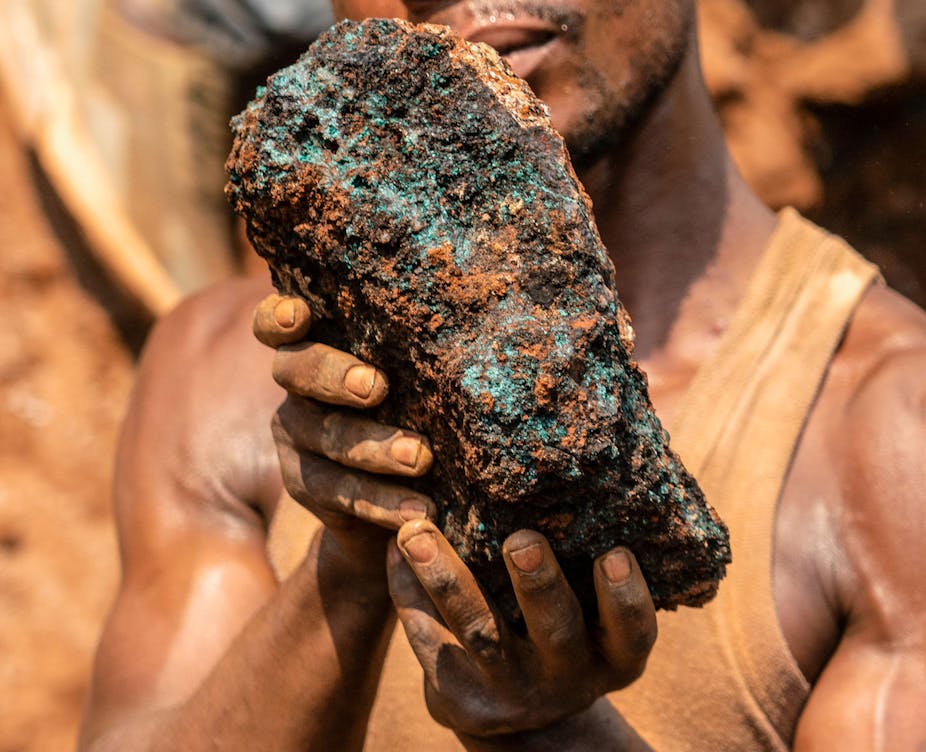
The sanctions, announced by the Office of Foreign Assets Control (OFAC), target an armed group and companies accused of fueling conflict through the illicit trade of minerals from eastern DRC’s Rubaya region; a treasure trove of tantalum, tin, tungsten, and gold.
These minerals are essential for manufacturing semiconductors, communications equipment, aerospace components, missile guidance systems, and next-generation batteries.
“This trade is preventing law-abiding businesses from accessing the critical minerals vital for our national defense,” said Under Secretary John K. Hurley, in a rare admission that the sanctions are as much about supply chain control as they are about stopping human rights abuses.
Shockingly, the USA is not ashamed to admit it needs the minerals and that it’s going to potentially become violent.
“The Treasury Department will not hesitate to take action against groups that deny the United States and our allies access to the critical minerals vital for our national defense,” The statement reads.
The Sanctioned Network
OFAC’s designations cut across armed actors and commercial enablers:
PARECO-FF — A successor to the notorious PARECO militia linked to FDLR, accused of forced labor, civilian executions, and smuggling minerals from Rubaya since 2022.
CDMC (Cooperative des Artisanaux Miniers du Congo) — A Congolese mining cooperative operating on Rubaya’s largest concession, accused of sourcing directly from PARECO-FF-controlled sites.
East Rise Corporation Limited & Star Dragon Corporation Limited — Hong Kong–based exporters accused of buying and moving these minerals into the global market, mainly through refining centers in China.
A Supply Chain Running Through Kigali — and Into Beijing
OFAC alleges that minerals from DRC conflict zones are frequently routed through Rwanda, where trade documentation can be laundered, before being shipped to China, the world’s largest processor of these raw materials.
For Beijing, it is a win — securing access to minerals that Washington’s own sanctions now block from U.S. firms.
This creates a paradox: while the U.S. is tightening sanctions to cut funding to militias, it is also tightening the noose on its own access to the very minerals it admits are “vital” for its security.
Governance Failure and Forgotten People
Analysts say the crisis in eastern DRC is not just about the minerals; it is also the product of years of weak governance, entrenched corruption, and an inability or unwillingness to dismantle the armed group economy.
President Felix Tshisekedi is in the middle of all this mess. He has failed to run clean his house. It’s a total disaster.
While global attention zeroes in on supply chains and strategic metals, the daily suffering of persecuted indigenous communities, many displaced from ancestral lands and subjected to violence, remains largely ignored; resulting in the creation of AFC/M23 that now controls the whole of eastern DRC.
For these populations, the “conflict mineral” narrative reduces their plight to a mere byproduct of resource competition, rather than a humanitarian catastrophe in its own right.
The Countries in Play
DRC — Source of the minerals and epicenter of the armed group economy.
Rwanda — Allegedly part of the transit network that channels minerals to global markets.
China — End-point processor and dominant player in the refining market.
United States — Strategically sidelined from a critical supply chain it wants to control.
The Stakes and Possible Consequences
U.S. Strategic Vulnerability — Without access to DRC’s minerals, the U.S. defense and tech sectors face increased dependency on competitors, especially China. That means possible delays in weapons manufacturing, higher costs for high-tech components, and reduced leverage in supply chain negotiations.
Economic Blow to DRC’s Legal Mining Sector — Sanctions might disrupt illicit trade, but they could also push more transactions underground, depriving the DRC government of legitimate revenues.
Regional Power Struggles — Cutting one group’s funding often empowers another, risking further instability in eastern Congo.
China’s Expanding Grip — Beijing’s dominance in critical mineral processing grows stronger every time the U.S. exits a supply chain.
Diplomatic Fallout for Rwanda — With Washington openly linking Kigali to the conflict-mineral route, tensions could rise even as the U.S. praises Rwanda for signing a June peace deal with Kinshasa.
For now, the sanctions send a clear political signal. But in the resource chessboard of the Congo Basin, the U.S. move may be more defensive than offensive; an attempt to deny funding to militias, while watching China secure the spoils.
”They will talk, issue those sanctions while Chinese pump in money and amass minerals,” says a Ukrainian mineral trader traversing Goma and Bukavu. “These sanctions are a scarecrow, they don’t mean anything at all.”