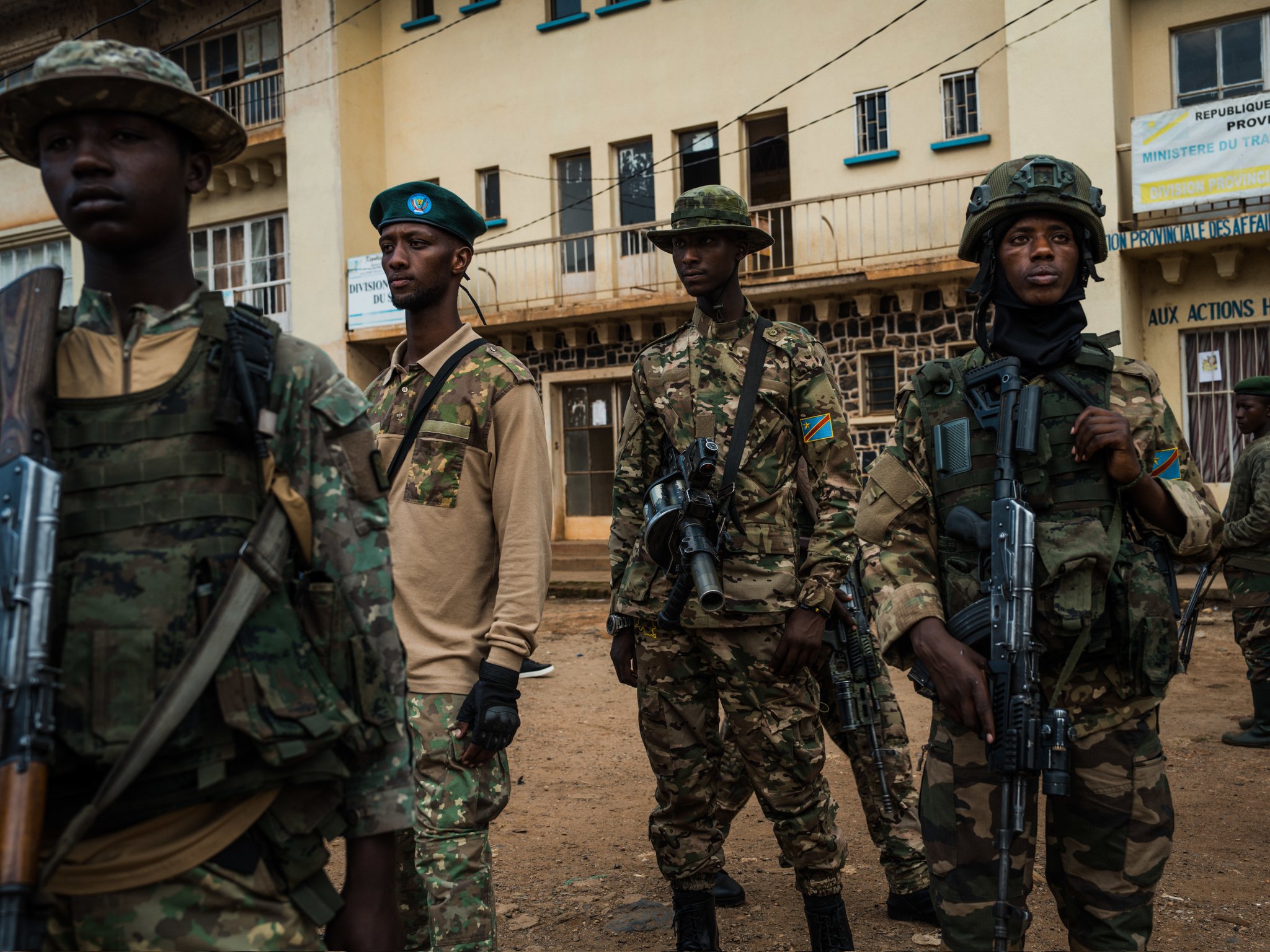
In the hills above Lake Tanganyika, Burundian soldiers huddle around a makeshift fire, their rifles leaning against termite-eaten logs.
The air is thick with the scent of boiled cassava and fatigue. “We came to fight rebels,” muttered one corporal, “but now we’re just surviving.”
His voice trailed off as gunfire echoed faintly from the nearby mountains. Sent ostensibly to stabilize the region, Burundian forces now find themselves stranded near Uvira—short of food, low on morale, and increasingly accused of participating in atrocities.
What began as a regional security mission has become an open-ended campaign paid for by Kinshasa, blurring the lines between peacekeeping and proxy warfare.
But the implications are more serious than just boots on the ground. Burundi has offered its territory for military staging—an act that goes far beyond solidarity with the Congolese government.
This posture, combined with repeated incursions, puts the entire region on edge. There is now a very real risk of the conflict in eastern Congo boiling into a regional war.
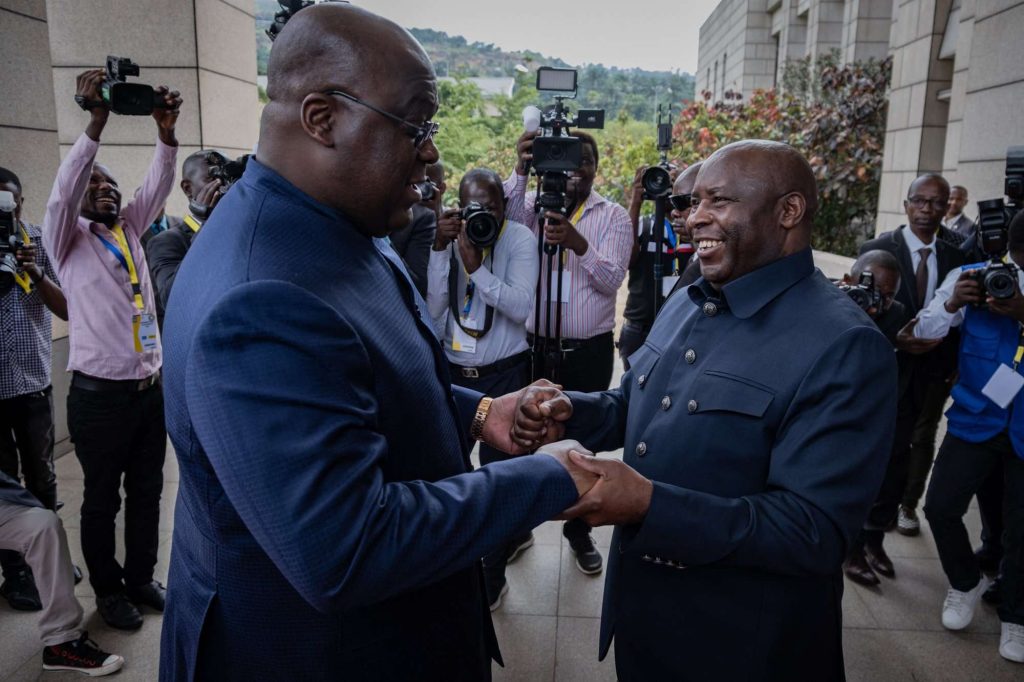
President Évariste Ndayishimiye plays both arsonist and victim—on one hand offering sanctuary and launching forces across the border, while on the other issuing vague, antagonistic statements accusing Rwanda of destabilization.
His rhetoric beats the drums of war, but cloaks them in the language of self-defense. “They want to harm us,” he told state media recently, “but we will not be provoked.” Yet every action his military takes suggests provocation is exactly what he seeks.
Meanwhile, the rebel group M23 watches from the high ground. In recent months, their forces have halted large-scale offensives and shifted focus from battlefronts to bureaucracy.
After capturing Kavumu Airport in February, they secured vast stockpiles of FARDC and SAMIDRC weaponry—machine guns, rocket-propelled grenades, even short-range air defense systems.
What was once a lightly armed militia has transformed into a formidable fighting force with layered command structures and near-total control over supply routes.
Inside the group, military discipline is paramount. Fighters who engage in looting, rape, or brutality face swift and often public punishment.
In zones under their control, crime has plummeted. In some towns, people whisper that they finally feel safe enough to sleep without hiding their children.
The rebels’ momentum has not only reshaped the battlefield—it’s reshaped society. In Rutshuru, farmers return to their plots without paying bribes to local police.
In Kiwanja, students walk to reopened schools with worn notebooks in hand. In Bunagana, shopkeepers boast of sales doubling since the rebels stabilized trade routes and reopened the border market.
The local economy, once strangled by militia taxation and army corruption, is cautiously rebounding.
Fishers, transporters, and small traders now pay taxes to a parallel administration staffed by civilians loyal to M23.
The rebel government has reinstated former state institutions: CADECO bank functions again, trade licenses are issued, and local courts mediate disputes. There is order—strange, improvised, but real.
And this is what makes the situation so unsettling. M23 is no longer just a rebel group. It has become a shadow state. It taxes, governs, defends, and mediates.
The people, long abandoned by Kinshasa, are adapting to the new reality. The idea that eastern Congo could become self-governed no longer feels like fantasy—it feels like inevitability.
The rebels themselves are careful not to articulate a clear end goal. There are no declarations of independence, no obvious roadmaps.
But for residents watching government offices reopen under M23 logos, the momentum is vivid.
Something is being built. Whether it is a breakaway state, a new political order, or just a negotiating chip in future peace talks, no one truly knows. Not even the rebels.
The irony of the current moment is sharpened by the reappearance of Joseph Kabila. The former president, who led Congo for 18 years, has quietly resurfaced in Goma and, in a twist of history, appears to be aligning with M23.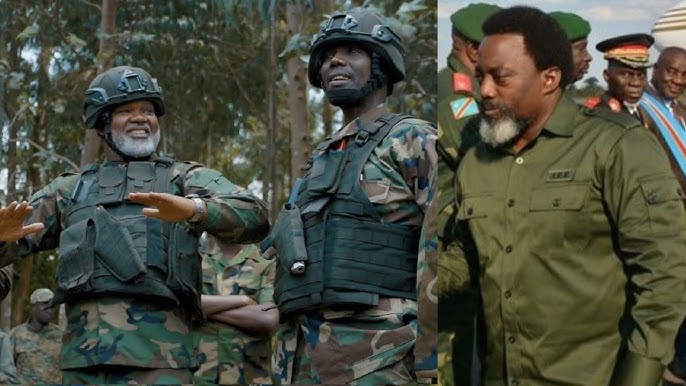
Under his long rule, the east descended into chaos, birthing M23 and dozens of other armed groups.
He had two decades to resolve the conflict, yet presided over its worst fragmentation.
Now, after President Tshisekedi stripped him of immunity, froze his assets, and accused him of backing rebellion, Kabila seems to have returned to the very fire he once stoked.
“It’s like the arsonist is trying to take shelter in the blaze,” a former North Kivu official remarked with bitter amusement.
The cynicism of international engagement only deepens the fracture. While civilians are displaced by the hundreds of thousands, world powers prioritize minerals over human lives.
The United States recently brokered a deal with Tshisekedi offering military and political support in exchange for stable access to critical minerals.
India and Canada have followed suit with development partnerships that are more about cobalt and lithium than communities. Belgium and France—nations with deep colonial legacies—have expressed vague concern over human rights but little else.
“They care about the mines, not the people,” said a nurse at a Goma displacement camp. “They’ll cry for peace, then buy our blood for batteries.”
Burundi’s role has inflamed tensions further. Far from remaining neutral, its troops have become active participants in the fighting—accused of attacking civilians, looting villages, and fanning ethnic divisions.
Locals say they now fear the so-called allied forces more than the rebels themselves. “They came with guns and left with our goats,” a grandmother in Uvira said, her eyes hollow with exhaustion. “Who are they protecting?”
And with Evariste’s increasingly reckless involvement, many fear the flames may soon leap across borders, pulling Rwanda and Uganda deeper into a conflict none of them publicly want, but none of them can ignore.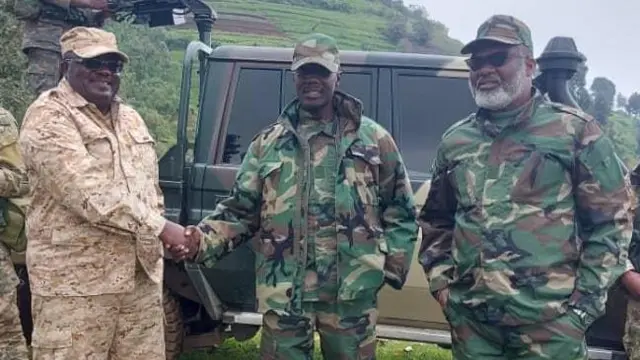
In this moral vacuum, M23 has emerged as both villain and redeemer. To some, especially among eastern Congo’s Tutsi communities, the group represents self-defense against a state that has, once again, welcomed former genocidaires into its army.
Fighters from the FDLR—descendants of the Interahamwe militias that carried out the 1994 genocide—have been reabsorbed into the FARDC. Under Tshisekedi, their influence has grown.
In response, M23 has captured and detained over 4,000 enemy fighters, many of them from the FDLR, and transferred nearly 2,000 to Rwanda in a dramatic reversal of regional power dynamics.
While the African Union remains largely silent and peace processes in Luanda and Nairobi sputter, the conflict takes on a rhythm of its own.
The Doha talks are frozen. SADC’s intervention has crumbled. And the Congolese government finds itself overwhelmed—militarily, diplomatically, and morally.
Inside Kinshasa, even senior politicians now question whether the country’s dysfunction can ever be repaired. Several have privately begun aligning with M23, not because they believe in its cause, but because they no longer believe in the state.
And so the story of Congo’s east continues—violent, ironic, and unresolved.
A war that began with chaos now seems to be gesturing toward order. But what that order looks like, and whether the world will accept it, remains a question for tomorrow.