


It’s 3:49 a.m. The silence at the Rusizi border was overwhelming, broken only by the hum of distant electricity and the faint crackle of a radio sermon on the Rwandan side. The border post stood closed, its usual life and movement replaced by stillness. The trucks that typically lined the massive parking lot were absent, leaving behind a single parked car under the unforgiving glare of the floodlights. But across the border, on the Congolese side, a battle had just concluded. The victors were already consolidating their grip.
Earlier in the morning of Sunday, M23 fighters had executed a meticulously planned ambush. In a swift and deadly maneuver, they overwhelmed FARDC soldiers, racing past any notion of a drawn-out confrontation. Their objective was clear: seize control of the border and secure Bukavu, a critical town just a few kilometers from Rwanda. Bukavu, now the second major town to fall, following the capture of Goma two weeks prior signals a deliberate expansion of M23’s territorial control in this volatile region.
A commander, speaking under strict orders to maintain operational secrecy, outlined the group’s next steps: reinforcements from Goma, comprising special forces and seasoned mobilizers, were already en route to consolidate their grip on Bukavu. “We will be in Bukavu early morning to ensure everything is running smoothly,” he stated. The plan, as revealed in his guarded remarks, is twofold: first, to disarm those who surrendered in the chaos, and second, to begin a process of reintegration, absorbing former FARDC fighters into the ranks of M23.
The commander stressed that this was not merely about military might but also about reassuring the population of their safety and returning the town into business as usual and even better.
M23 now has full control over Bukavu’s key infrastructure, including the airport, public administration facilities, and all strategic installations. The city’s entire population estimated at 1.2 million is under M23’s authority. This is no minor development; Bukavu is not just another town in eastern Congo but a key economic artery that sustains livelihoods on both sides of the border. Its geographical position at the southwestern edge of Lake Kivu, separated from Rwanda by the Ruzizi River, makes it a vital commercial hub for Congolese and Rwandan populations alike. Trade, transport, and daily life flow through this city, and its capture by M23 represents a shift that could ripple far beyond South Kivu Province.
But in the shadows of this dramatic advance lies a truth the world chooses to ignore. The young men and women of M23, many of them former citizens who know all too well the failures of their government, have been abandoned by the international community, left to fight alone against a murderous regime that has for years turned its guns on its own people. Their demands for justice, for fair governance, and for an end to ethnic persecution have been met with silence from the very powers that claim to champion democracy and human rights. Instead of engaging with the legitimate grievances of these fighters, Western powers have resorted to a campaign of blackmail and harassment against Rwanda, conveniently painting it as the villain of a conflict whose roots run deep within Congo’s own failed leadership. Without a shred of credible evidence, Rwanda has been accused, sanctioned, and vilified while Kinshasa, despite its atrocities, continues to receive international backing.
https://x.com/realmanziwilly/status/1890263493497983352?s=46
This latest offensive, executed with precision, leaves little doubt about the group’s ambitions. The M23’s operation was surgical, suggesting both a high degree of planning and a willingness to adapt dynamically to the fluid battlefield. Eyewitnesses recall that despite the intense exchange of gunfire, the transition of power appeared disturbingly calm, almost as if the takeover was preordained.
Local accounts reveal a population caught between fear and reluctant acceptance. In neighborhoods that once bustled with commerce and conversation, residents now whisper of cleaning up efforts and a future where former enemies might walk the same streets, now united under a new, if uncertain, authority.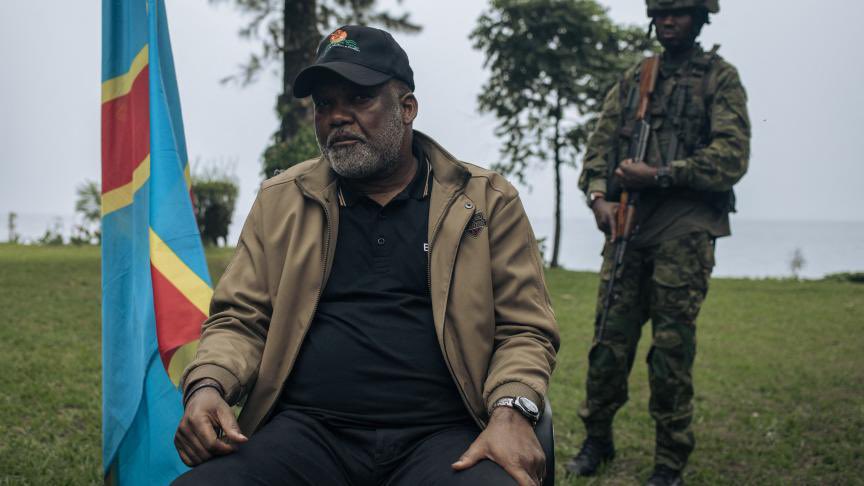
This reintegration of FARDC elements, if it goes as planned, could either pave the way for stability or sow seeds of further division, as former comrades find themselves on opposite sides of a rapidly evolving conflict.
On the international stage, these events hint at broader regional dynamics. Rwanda’s measured presence, with officers stationed calmly nearby, contrasts sharply with the overt military actions on the DRC side. Then Burundi that has been shamed and humiliated have nothing to say but to remain silent, sorrowfully. Analysts suggest that this disparity may reflect differing strategic priorities or constraints among neighboring states, as they navigate the perilous interplay of security, sovereignty, and survival in the Great Lakes region.
M23’s tactical, swift, calculated attacks and leaving little room for immediate resistance underscore a critical shift in the balance of power. With reinforcements mobilizing and an apparent ambition to extend their control further, the ramifications for the local population and regional stability could be profound. As dawn approaches over Bukavu, the quiet moments on the border serve as a deceptive prelude to what may be a longer and more turbulent day for the region.
In this unfolding crisis, the subdued reaction beyond the battle lines masks a much deeper and unsettling transformation that could reshape the political and security landscape of eastern Congo for months, if not years, to come.
People of Bukavu embracing liberation. Truth being only asset in this liberation. You can convince anyone other than people were tired of TSHISEKEDI. You cab see the joy in the population of Bukavu and other liberated areas are testament of how this liberation was necessary. pic.twitter.com/UROaViebjp
— Manzi Willy (@RealManziWilly) February 17, 2025