

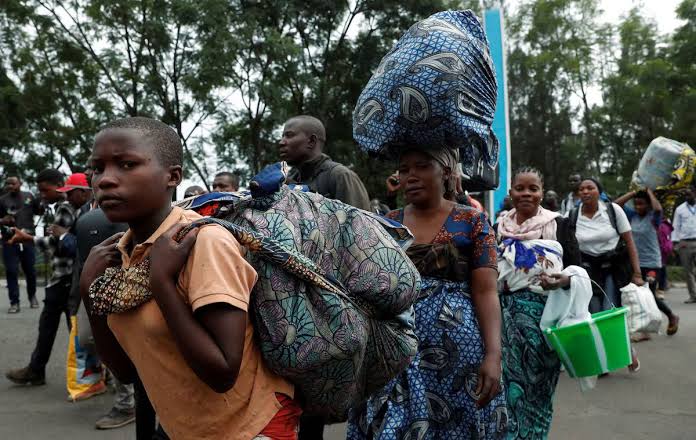
Marie held her youngest child close, listening to the distant roar of gunfire in Uvira. Smoke from burning homes curled into the sky, filling the air with the acrid stench of destruction.
Her husband Jean had stayed behind to help neighbors escape, and for two days she feared she would never see him again.
Their village, once alive with laughter and life, had been reduced to ashes by Wazarendo militias, Burundian soldiers, and FARDC forces, part of a systematic campaign of persecution across eastern Congo.
This horror is not unique to Uvira. From Minembwe to Masisi, Rutshuru, and Iruri, indigenous populations have endured mass killings, abductions, torture, sexual violence, forced displacement, starvation, siege tactics, destruction of homes and crops, denial of humanitarian aid, and drone and air attacks targeting civilians.
Children have been abducted and conscripted as soldiers, elderly men beaten or executed for fleeing, and entire villages have been placed under coordinated siege.
Since 2017, over 85 percent of Banyamwureng villages in South Kivu have been destroyed, leaving 700,000 people displaced or living under constant threat.
On 6 September 2025, 80 civilians, mostly women carrying food for their families, were ambushed by militias and Burundian troops. Among the victims were Amina Kalema, a mother of three, and Lucie Ntambara, a young woman distributing food.
Survivors reported killings, torture, and sexual assaults carried out with shocking brutality.
Marie recalls nights spent in the forest with her children pressed against her, silent in fear. “We could not cry. Every rustle, every distant gunshot could have been the end of us,” she says.
Across the hills, Joseph, an elderly farmer, recounts hiding in a small pit with his wife, holding his grandchild against his chest for three days without food or water.
“I thought I would die, and I could not comfort the baby,” he says. Solange, another mother, remembers carrying her infant for 12 hours through dense forest, singing softly to calm him while knowing food had run out.
The role of Burundi in this conflict has been decisive and destructive. Rwanda’s Ambassador to the UN, Martin Ngoga, addressing the UN Security Council, highlighted the scale and deliberate targeting:
“Tens of thousands of Burundian soldiers were deployed into South Kivu on the invitation of the government of the DRC. Their operations alongside Fardese, FDLR, and affiliated militias imposed a siege on the Banyamwureng population… These conditions were imposed only on the Banyamwureng Tutsi ethnic group.”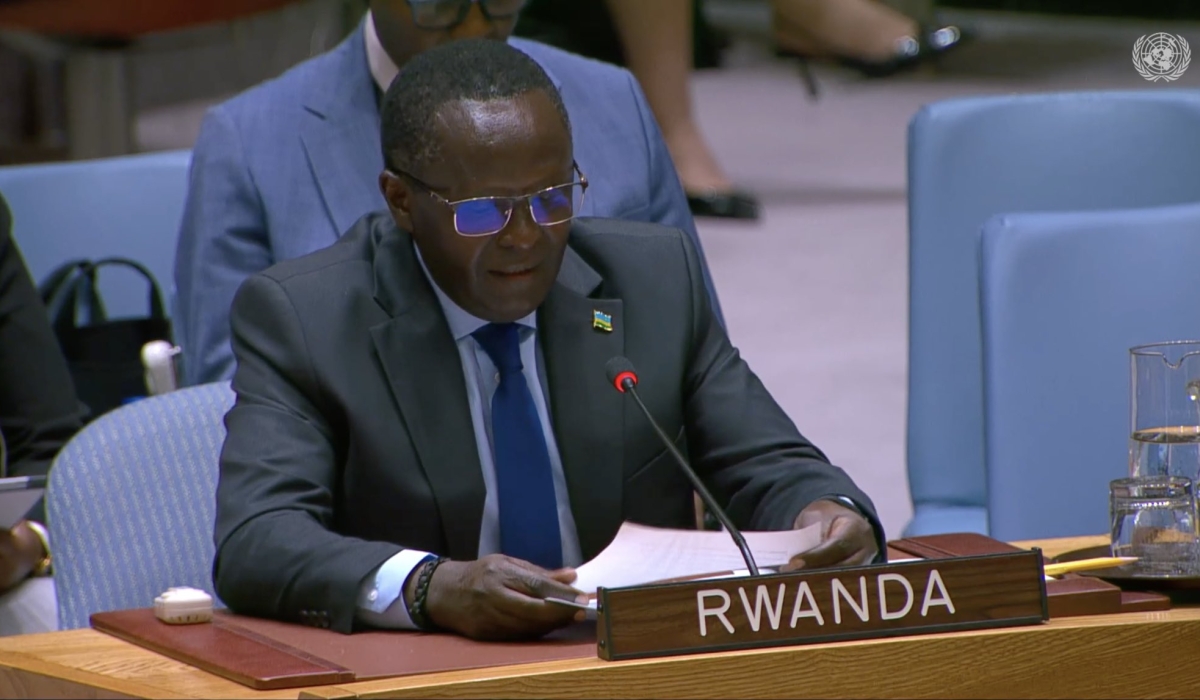
Burundi deployed over 20,000 soldiers, some of them children, earning less than $100 a month, coerced into fighting a war that was not theirs. They enforced blockades, committed massacres, abducted children, and imposed forced displacement.
The army operates under Gen. Évariste Ndayishimiye, who struck deals to earn millions of dollars from participating in DRC conflicts. On Saturday, he called his soldiers “bums,” a public insult reflecting callous leadership, while presenting a façade of concern internationally.
President Felix Tshisekedi pays the piper and Ndayishimiye kisses the boot; killing indiscriminately and washes the blood on his hands like someone who just had a juicy chicken burger. And he doesn’t care at all. For him, indigenous people of eastern Congo are a valuable commodity tagged on a dollar. 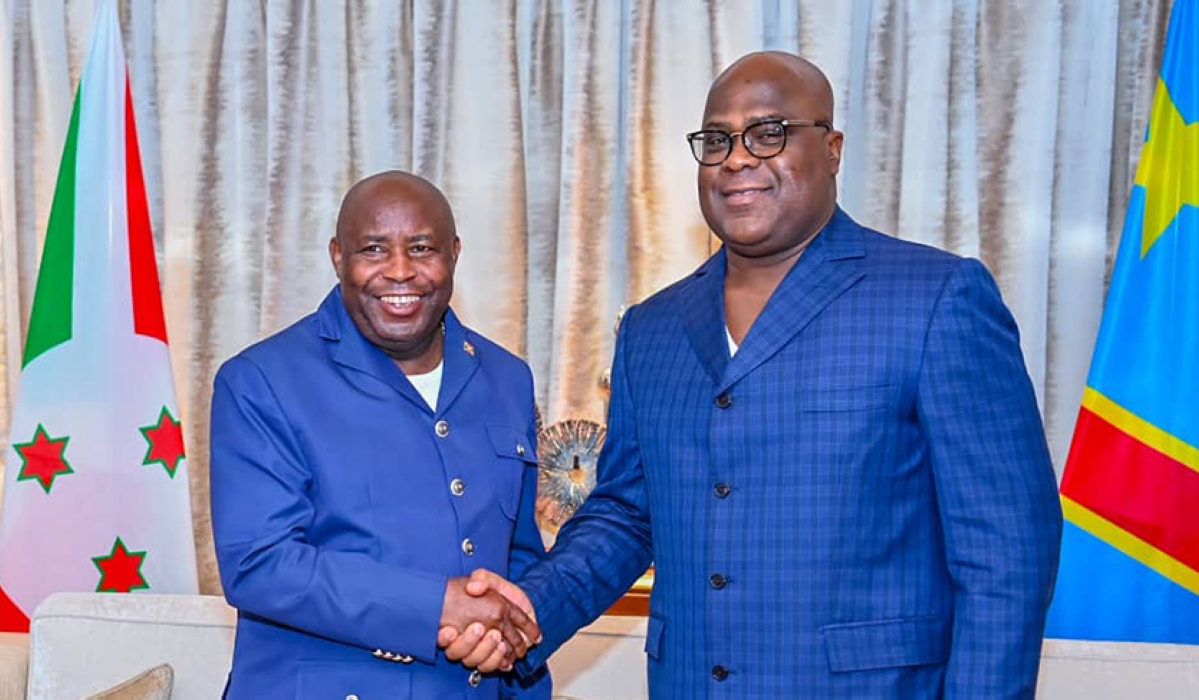
Yet as civilians endured these attacks, MONUSCO, the UN mission tasked with peacekeeping, has repeatedly failed to protect them. For more than two decades, with a budget exceeding $2 billion annually, MONUSCO has been unable to contain these crises.
Investigations have shown that its forces occasionally became complicit: dropping bombs, siding with foreign armies like SAMIDRC, and, in some instances, trading arms and minerals with local militias.
In earlier years, MONUSCO personnel were accused of supplying weapons to the FDLR, perpetrators of the Rwandan genocide, exposing a history of direct involvement in fueling conflict rather than preventing it.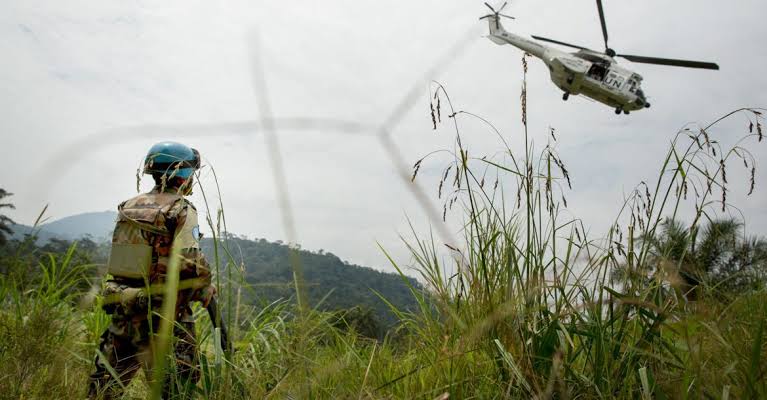
The consequences for civilians have been catastrophic. Roads to markets were blocked, water points restricted, villages under siege repeatedly struck by air and drone attacks.
From 5 to 8 September 2025, civilians were abducted, shot, or terrorized by mobs chanting for their extermination. Between March and December 2025, 50 separate air attacks targeted IDP camps around Michenye and other villages.
Families endured nearly a year of deprivation—food, medicine, and humanitarian aid cut off.
When Ngoga mentioned of victims in his speech, he was talking about people like Jean-Paul Munyaneza, killed defending his home; Alice Mukarubibi, trapped in her burning house; and Claude Niyonzima, a teacher who refused to abandon children.
That’s why Ngoga emphasized the broader responsibility: “All these people that I’m talking on behalf of, because nobody else does… the government of the DRC, as an inviting authority, should be responsible for the actions and conduct on the ground of Burundian forces and their allies.”
Despite this, survival persisted.
Children learned to forage for edible plants, mothers shared scarce food, and fathers guided families through ambush zones.
One teenager, Emmanuel, recalls crawling through a cornfield for hours to reach a hidden shelter, clutching his younger sister, afraid every sound might be a bullet.
Another, Clarisse, remembers seeing her mother beaten for attempting to fetch water and how the neighbors risked their lives to hide her for a night.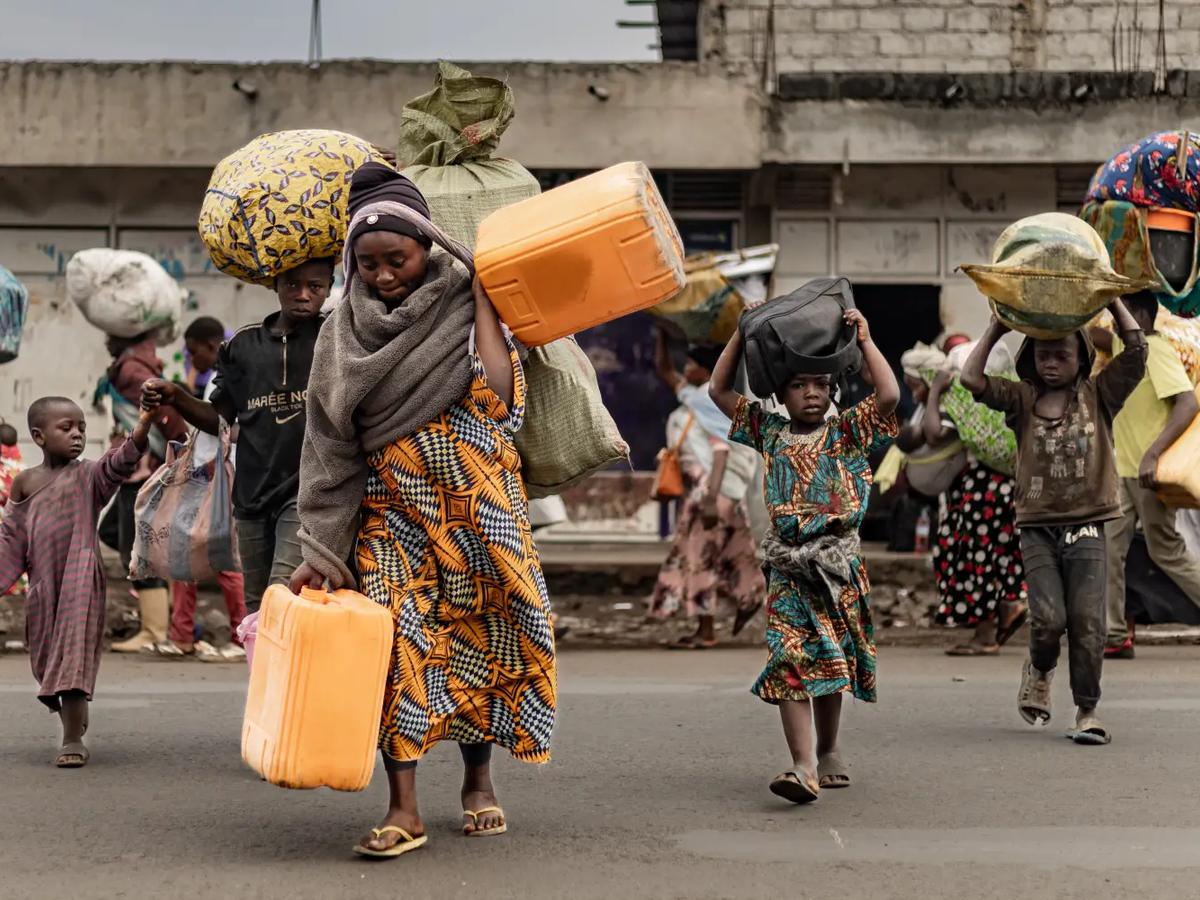
Then, last week, hope returned. M23 compatriots, sons and daughters of these besieged communities, rose with courage and zeal.
Using intimate knowledge of the terrain, local networks, and the grief accumulated over years, they liberated Uvira and surrounding villages.
Blockades were dismantled, roads reopened, and civilians regained access to water, food, and medical care.
Marie recalls the moment M23 fighters arrived: “They knew our names, they knew our families. They fought not just with weapons but with the courage of those who had lost everything and would not let it happen again.”
The operation minimized civilian harm while neutralizing militias and foreign forces. Families emerged from hiding, embracing one another, crying, and reclaiming their homes.
Children ran freely for the first time in years, their laughter piercing the air like a song of life and defiance.
Ngoga’s words to the UN Security Council highlight the moral obligation: “Taking into account the factual situation and the wider context of hate ideology in DRC and the inherent legal and moral obligation, allow me to ask you the question:
Has the Security Council not been aware of this situation, or did it not? Did this situation not merit your attention?”
Eastern Congo is a land of systemic injustice—poor governance, ethnic targeting, foreign exploitation, political manipulation, and UN negligence—yet also of resilience, courage, and rising hope.
From Minembwe to Uvira, Masisi, Rutshuru, and Iruri, the bravery of M23 compatriots and local families shows that even in the darkest sieges, communities can reclaim dignity, safety, and future.
Marie and Jean now walk to the market, fetch water, and let their children play again.
Uvira’s story mirrors the entire eastern Congo: a landscape of atrocities, neglect, political manipulation, foreign greed, and UN failures, yet a place where human courage refuses to vanish and hope, at last, begins to bloom.