

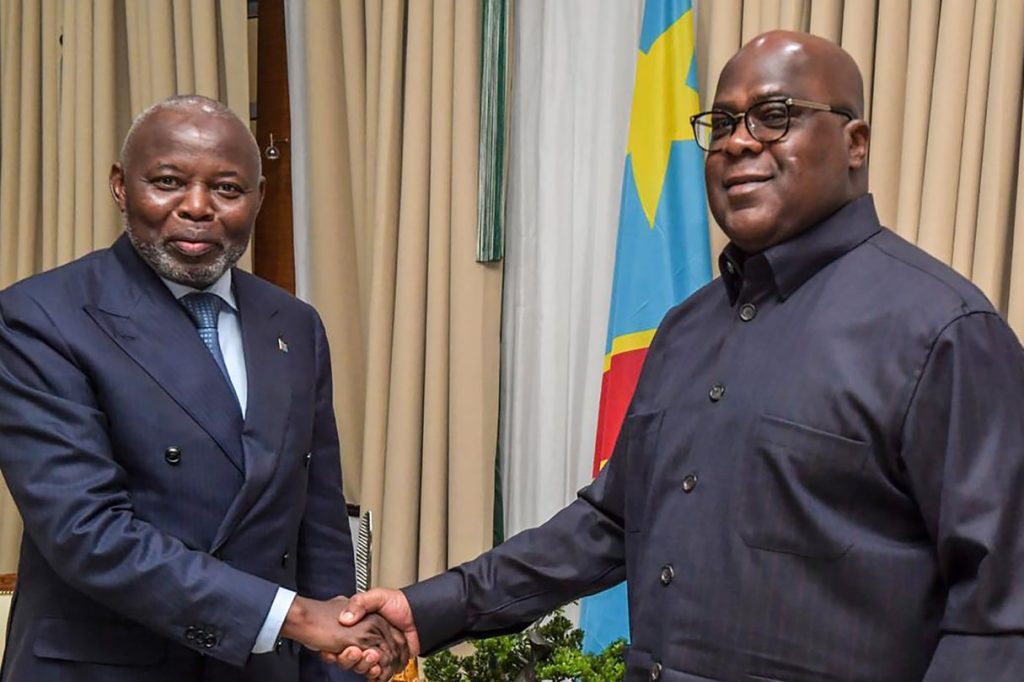
President Félix Tshisekedi has said he first learned from the media that Vital Kamerhe, the Speaker of the National Assembly, had resigned.
Tshisekedi described Kamerhe as both a brother and a partner but added that it would be up to Kamerhe to decide how their relationship evolves.
“He will determine how our partnership continues,” Tshisekedi said. “If he chooses a different path, that will be his choice.”
Kamerhe, 66, submitted his resignation letter on Monday evening, citing personal reasons and pointing to provisions in the DRC Constitution and parliamentary rules that allow such a step.
Although Kamerhe framed his exit as a personal decision, it came after weeks of mounting pressure inside parliament. Lawmakers had raised concerns about alleged mismanagement of Assembly finances and obstruction of government business.
Just days before his resignation, around 200 deputies signed a petition demanding that both Kamerhe and Senate President Sama Lukonde step down. The move was strongly backed by members of President Tshisekedi’s ruling UDPS party, who accused Kamerhe of having “dirty hands” and being unfit to lead the legislature.
Kamerhe chose to quit before a formal vote could remove him, a move some analysts say was aimed at avoiding a public showdown.
Kamerhe, originally from South Kivu province, is a veteran of Congolese politics with a career spanning four decades. He first entered politics in 1984 with the party of Étienne Tshisekedi, father of the current president, before shifting in 1990 to work under longtime ruler Mobutu Sese Seko.
Under Laurent-Désiré Kabila, Kamerhe held senior political roles and played a key part in 2002 peace talks aimed at ending the wars in eastern Congo.
In 2004 he helped Joseph Kabila win the presidency, was elected a lawmaker in Bukavu, and in 2006 became Speaker of the National Assembly for the first time.
In 2009 he broke with Joseph Kabila over the decision to allow Rwandan forces to enter eastern Congo for a joint military operation and resigned from the Assembly. Two years later he ran for the presidency under his UNC party, winning about seven percent of the vote.
During the 2018 election, Kamerhe joined forces with Félix Tshisekedi, who promised to make him prime minister if victorious.
Instead, Tshisekedi appointed him chief of staff, a role that ended abruptly when Kamerhe was jailed in 2020 on charges of embezzling 48 million US dollars meant for police and army housing projects.
In a controversial court decision, Kamerhe was later cleared of the charges and returned to government as Minister of the Economy before winning the speakership again in May 2024.
Members of Kamerhe’s UNC party claim the UDPS orchestrated his removal to weaken their leader politically. It is not yet clear what his next political move will be, though some in Kinshasa speculate he could face new legal scrutiny.
For now, Tshisekedi has kept his tone conciliatory, but with Kamerhe stepping aside under pressure from the ruling party, the balance of power inside the DRC’s politics may be set for another shift.