

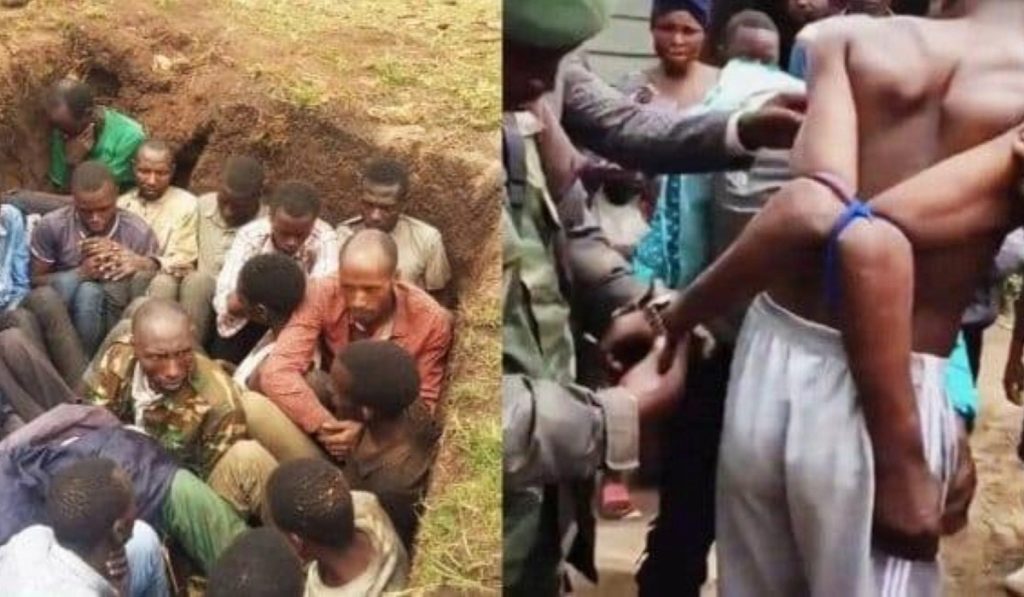
The Democratic Republic of Congo is teetering on the edge of catastrophe. What’s happening in the country’s east doesn’t seem to be enough suffering. In the streets of Kinshasa and beyond, a dangerous tide of ethnic persecution is rising. Swahili speakers, long an integral part of the nation’s fabric, are now being hunted, attacked, and killed—branded as traitors and foreigners in their own country. What started as whispers of suspicion has turned into open violence, orchestrated by a regime that thrives on division.
The Catholic Church has raised the alarm. Through the National Episcopal Conference of Congo (CENCO), bishops have condemned the growing wave of hate, warning that the country is descending into ethnic conflict. “It is disgraceful,” they said, “that our own compatriots are being stigmatized simply for speaking Swahili, a national language.” In Kinshasa and other regions, Swahili-speaking Congolese are being profiled, harassed, and forced to live in fear.
M23 leader Bertrand Bisiimwa describes a systematic campaign of state-sponsored persecution. “Our compatriots are being identified, hunted down, kidnapped, assaulted, and killed in the streets by militias protected and supported by elements of the police and the Army,” he said. “They are accused of being Rwandans and of supporting M23, simply because they speak Swahili.”
The state is fueling ethnic tensions, turning language into a weapon and labeling an entire people as enemies. Bisiimwa warns that what is happening now is a precursor to something far worse. “Genocide does not start with mass graves; it starts with words, with narratives that justify the erasure of a people,” he said.
The Catholic Church has urged national unity, warning that this path will only lead to deeper bloodshed. The bishops recall a time when the Congolese people stood together, electing leaders from different regions and backgrounds without ethnic divisions poisoning the process. They call on the nation to resist those who seek to fracture it along linguistic and ethnic lines.
But even as the warnings grow louder, the persecution continues. For many Swahili-speaking Congolese, groups like M23 are no longer just rebels—they are the last line of defense against a state that has turned against its own people. “We will not abandon the Baswahili people to the mercy of the Tshisekedi regime,” Bisiimwa declared. “We encourage our people to continue to join our cause en masse and to defend with courage and determination their rights to life and freedom.”
The world is watching, but few are speaking out. Some governments, despite their own histories of overcoming ethnic violence, are choosing political alliances over human rights. “It is astonishing that some states in the world, having survived these very practices, now align with the Tshisekedi regime at the expense of a people facing extermination,” Bisiimwa said.
The signs of a coming disaster are clear. The persecuted are speaking out. The question remains: will the world listen before it is too late?