

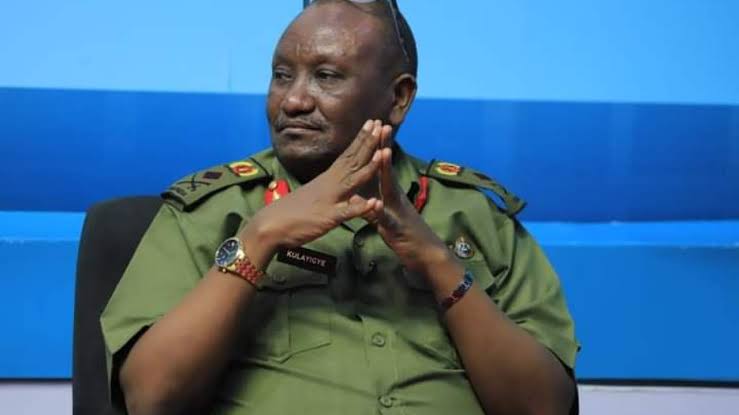
Kampala — Uganda has renewed calls for stronger governance in the Democratic Republic of Congo (DRC), urging the establishment of a stable central authority in Kinshasa capable of extending effective control across the country.
Ugandan military spokesperson Gen Felix Kulayigye said the ongoing insecurity in eastern DRC reflects a deeper structural problem—what he described as a vacuum of state authority.
“Nature abhors a vacuum. And Eastern DRC had a vacuum of state control,” he said, pointing to the proliferation of armed groups operating in the region.
According to Kulayigye, the focus on specific rebel movements such as M23 or ADF risks overlooking the scale of the broader challenge.
“You people are talking about M23 and now ADF and others, but there are over 130 groups inside DRC as we speak now,” he said.
He argued that such a fragmented security landscape cannot be addressed without fundamental changes in governance.
“In such a situation, you must have, in my view, a stable government in Kinshasa with the ability to have federal governments across the country that therefore have state control against this vacuum,” he added.
Kulayigye emphasized that the DRC needs a governance model that allows the central government to project authority more effectively throughout its vast territory.
“The DRC deserves to have a stable government in Kinshasa, equipped with the capacity to establish a federal-type government in the rest of the country, so that the State can exercise its control and fill this institutional vacuum,” he said.
His remarks come amid continued instability in eastern Congo, where dozens of armed groups remain active, contributing to prolonged insecurity and humanitarian challenges.
Regional actors, including Uganda, have increasingly highlighted governance deficits as a key driver of the crisis.
The suggestion of a federal-style system adds to ongoing debates within and beyond the DRC about how best to manage the country’s size, diversity and security challenges.
Supporters argue that decentralization could strengthen local administration and improve responsiveness, while critics warn of potential risks to national unity.
Uganda’s position underscores growing regional concern that without stronger state presence and institutional reform, the security vacuum in eastern DRC will persist, allowing armed groups to continue operating with limited resistance.
As the crisis endures, the question of governance—rather than solely military intervention—appears increasingly central to any long-term solution.