

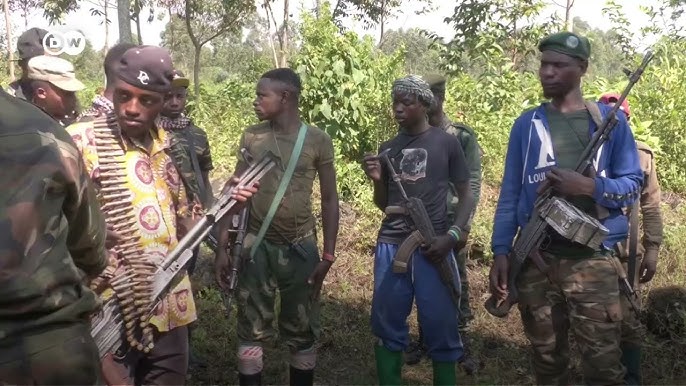
Uvira, South Kivu – The town of Uvira in eastern Democratic Republic of Congo faces an imminent humanitarian crisis after the Wazalendo militia issued a chilling 10-day ultimatum demanding that Banyamulenge and other Tutsi communities leave the area or face deadly consequences.
The warning, circulating as an audio message on social media, has sparked panic among residents.
The militia, which numbers over 45,000 fighters in Uvira alone, is openly defying the government that initially created it and has threatened to confront the Congolese army (FARDC) if opposed.
Wazalendo are funded and armed by the DRC government under President Félix Tshisekedi as a proxy force to fight M23 movement that has captured much of eastern Congo.
However, the militia has since become uncontrollable, operating independently and increasingly targeting civilians rather than armed opposition groups.
Analysts warn that the DRC government’s creation of such militias has directly contributed to the chaos and insecurity in eastern Congo.
Uvira is not an isolated case. Similar attacks have been reported across South Kivu, North Kivu, and Ituri, where militias regularly target Tutsi and Kinyarwanda-speaking communities. Past incidents in the region have resulted in hundreds of deaths, mass displacement, and widespread destruction, with little accountability for perpetrators.
Local residents describe a climate of terror, with families preparing to flee and schools, markets, and public spaces effectively paralyzed.
Observers warn that if no intervention occurs, the next 10 days could witness a severe escalation, potentially leading to mass atrocities.
Yolande Makolo, Rwanda’s government spokesperson, highlighted the gravity of the situation, noting that the militia’s threats come amid a pattern of unchecked violence.
“These Wazalendo are ready to carry out threats to eliminate Congolese and Burundian Tutsi, even targeting Tanzanian Maasai,” Makolo said. “This dangerous chaos was predicted, and the militia’s defiance of FARDC only heightens the risk to civilians.”
Makolo’s remarks echoed critics other observers who claim there is an inherent selective international reporting, pointing out that UN reports often focus on alleged Rwandan involvement while ignoring atrocities committed by militias funded and armed by the DRC government.
They claim that by scapegoating Rwanda and failing to hold perpetrators accountable, the reports distort reality and leave civilians exposed to further violence.
The situation in Uvira underscores the fragility of security in eastern DRC and the urgent need for effective measures to protect vulnerable populations from imminent harm.