

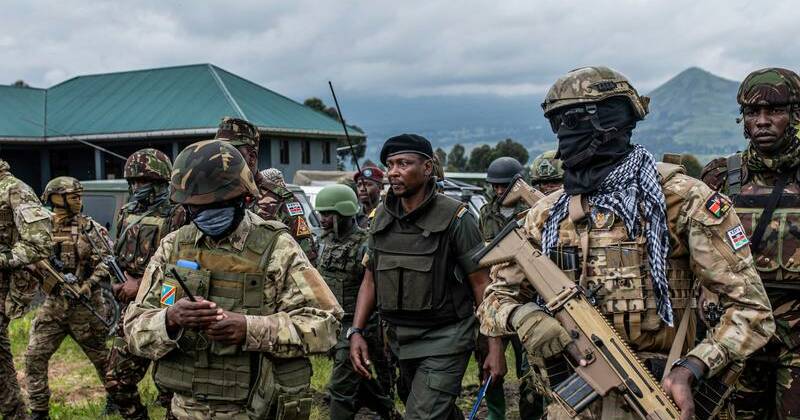
A ceasefire is supposed to quiet the guns. It is meant to create space for diplomacy, to allow tempers to cool and negotiations to breathe. But when a senior commander is killed during that pause, the silence does not bring calm.
It brings questions.
The killing of Willy Ngoma during a declared ceasefire, at a time when there was reportedly no active military engagement by the March 23 Movement, is not simply a battlefield development. It is a legally complex and politically loaded event that sits at the intersection of international humanitarian law, proxy warfare narratives, regional diplomacy and historical grievance.
To understand its implications, one must separate legal doctrine from political interpretation, and political interpretation from perception.
Under international humanitarian law, a ceasefire does not automatically terminate an armed conflict. If the underlying armed conflict continues to exist in fact, members of an organized armed group who perform a continuous combat function may remain lawful targets.
This position is grounded in Common Article 3 of the Geneva Conventions of 1949 and further elaborated in Additional Protocol II relating to non international armed conflicts. Combatant status, in such contexts, does not evaporate simply because the guns temporarily fall silent.
However, ceasefires create additional obligations. They are not merely tactical pauses. They are political commitments. If a ceasefire agreement explicitly prohibits offensive operations, then conducting a targeted killing during that period may constitute a breach of the agreement, even if it does not automatically amount to a war crime.
The key legal questions become whether the ceasefire was binding and mutually recognized, whether it prohibited offensive strikes, whether the target was performing an ongoing combat function, and whether military necessity existed at that moment. The principles of distinction and proportionality, reflected in customary international humanitarian law and codified in Additional Protocol I, remain applicable.
If hostilities were genuinely suspended and no imminent threat existed, the requirement of military necessity becomes harder to justify. International humanitarian law does not permit violence for its own sake. It permits force only to achieve a definite military advantage under prevailing circumstances.
Beyond legality lies the political layer, and here the narrative widens.
If President Félix Tshisekedi publicly asserts that Rwanda supports M23, then the conflict is rhetorically reframed. In that framing, M23 ceases to be merely a domestic armed group and becomes a proxy instrument of a neighboring state. Once that narrative takes hold, military operations against M23 leadership acquire interstate symbolism.
Legally, however, attribution to Rwanda requires proof of effective control, the high threshold articulated by the International Court of Justice in the Nicaragua case. Political accusation alone does not meet that standard. Unless Rwanda exercises operational command and control over M23, the conflict remains, in law, a non international armed conflict between the Democratic Republic of the Congo and an organized armed group.
Yet Rwanda presents its own counter narrative. Kigali has consistently argued that the Democratic Republic of the Congo harbors elements of the FDLR, an armed group composed in part of individuals implicated in the 1994 genocide against Tutsis in Rwanda. Rwanda considers the FDLR a genocidal outfit that threatens its national security.
If, as Rwanda alleges, FDLR elements are integrated within Congolese security structures and have participated in operations against M23, the conflict becomes even more layered.
From Rwanda’s perspective, if FDLR fighters are used in joint operations against M23 and pose a cross border threat, Kigali may invoke Article 51 of the United Nations Charter, which recognizes the inherent right of self defense if an armed attack occurs.
The legal viability of such a claim would depend on evidence of cross border attacks and the inability or unwillingness of the host state to neutralize the threat. This doctrine has been debated extensively in international law, particularly in relation to non state actors operating from foreign territory.
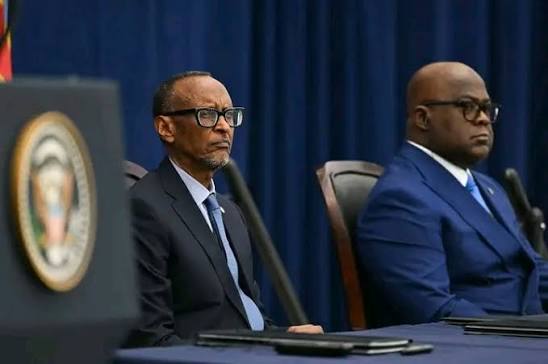
Thus, two parallel narratives collide. Kinshasa alleges external support for M23. Kigali alleges that genocidal forces hostile to Rwanda operate from Congolese soil and participate in operations against both Rwanda and M23.
In that context, military actions against M23 leadership may be interpreted differently by each capital. For Kinshasa, it is counterinsurgency. For Kigali, it may look like action intertwined with actors Rwanda views as existential threats.
This complexity strengthens the argument that peace negotiations, even if formally framed as a domestic matter between the DRC and M23, cannot realistically exclude Rwanda if Rwanda is viewed, rightly or wrongly, as a stakeholder in the security equation. Where cross border armed groups and reciprocal accusations exist, negotiations that ignore neighboring states often struggle to hold.
Ceasefires without inclusive architecture resemble bridges missing a pillar.
Another dimension intensifies the volatility. If actors deemed to be supporters of M23 interpret the killing of senior commanders during a ceasefire as escalation, retaliation becomes a plausible risk. In proxy environments, actions rarely remain contained.
When one side escalates vertically, the other may respond horizontally, expanding the theater or deepening support. The logic of deterrence and counter deterrence begins to replace the logic of negotiation.
Compounding this dynamic are persistent allegations that the DRC has relied on foreign mercenaries and private military contractors in operations against M23, as well as reports of foreign military training and advisory support from external powers.
Under international law, the recruitment, use, financing or training of mercenaries is addressed in the International Convention against the Recruitment, Use, Financing and Training of Mercenaries and the OAU Convention on the Elimination of Mercenarism in Africa.
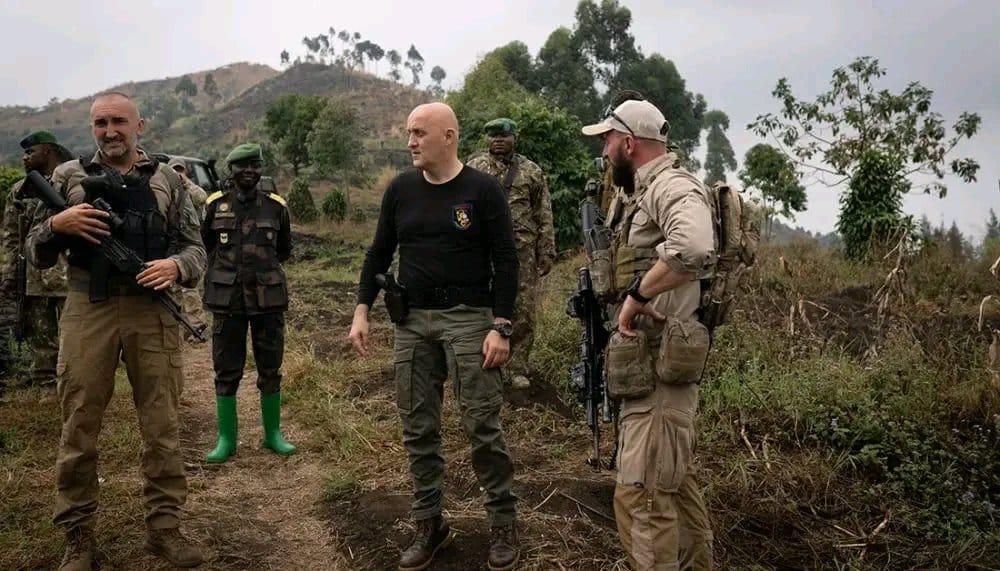
If substantiated, such involvement raises serious legal and political questions.
There have also been public discussions and accusations involving foreign actors, including references in media and political discourse to support or advisory roles linked to countries such as France, Belgium, and private American security contractors.
These claims remain politically contested and require careful evidentiary scrutiny. However, in the perception space of the conflict, the belief that foreign powers are directly or indirectly supporting one side fuels the narrative of internationalized confrontation.
If one party is seen as benefiting from external military backing while the other is accused of proxy sponsorship, the conflict ceases to appear purely domestic. It becomes layered with interstate undertones, historical grievances and geopolitical alignments.
The muted reaction from major international actors adds another dimension. After the killing of Ngoma, there was no visible public outrage from countries involved in mediation, including Angola, the African Union leadership, the United States, or the European Union, whose diplomatic representatives had engaged both the DRC government and M23.
That silence invites interpretation.
In international politics, silence does not automatically signify endorsement. It may reflect legal caution, diplomatic strategy, or prioritization of de escalation over public condemnation.
External actors may consider the killing to fall within the operational framework of an ongoing armed conflict. They may prefer quiet diplomacy to public rebuke. Or they may simply lack consensus on how to characterize the event.
However, in eastern Congo, silence can be perceived as selective empathy. The question of Tutsi identity and belonging in the region carries deep historical wounds.
When violence unfolds and the international response appears restrained, perceptions of double standards gain strength. Whether such perceptions align with diplomatic realities or not, they influence local trust in international mediation.
History provides a cautionary parallel. The Nairobi Peace Agreement between UNLA and NRA in Uganda unraveled amid accusations of mutual violation. The agreement required demilitarization of Kampala and cessation of violence, yet arms circulation reportedly continued and promised monitoring mechanisms failed to materialize. Each side blamed the other.
The point is simple. Once trust eroded, the ceasefire collapsed and war resumed until a decisive outcome emerged. When violations are perceived as mutual, agreements lose legitimacy and force regains primacy.
Ceasefires depend on credible verification and reciprocal restraint. Without monitoring mechanisms and disciplined command structures, suspicion spreads. A truce without enforcement risks becoming a tactical pause rather than a pathway to peace.
The central issue, therefore, is not solely whether the killing of Willy Ngoma was lawful under targeting doctrine.
It is whether it undermines the fragile architecture of restraint and whether competing narratives about Rwanda, the FDLR, foreign involvement and M23 transform a domestic conflict into a de facto regional confrontation.
International law provides the framework. Common Article 3, Additional Protocol II, Article 51 of the United Nations Charter, the effective control standard of the International Court of Justice, and the conventions governing mercenarism in Africa all set boundaries. Political reality determines whether those boundaries are respected or stretched.
In eastern Congo, law defines the limits of action, but perception defines the direction of conflict. The killing of Ngoma is therefore more than an isolated strike. It is a litmus test of whether the ceasefire had substance or was merely symbolic.
It is also a potential trigger to a deadly encounter in the making. And as history has repeatedly shown in this region, it is the innocent people who ultimately bear the consequences.