

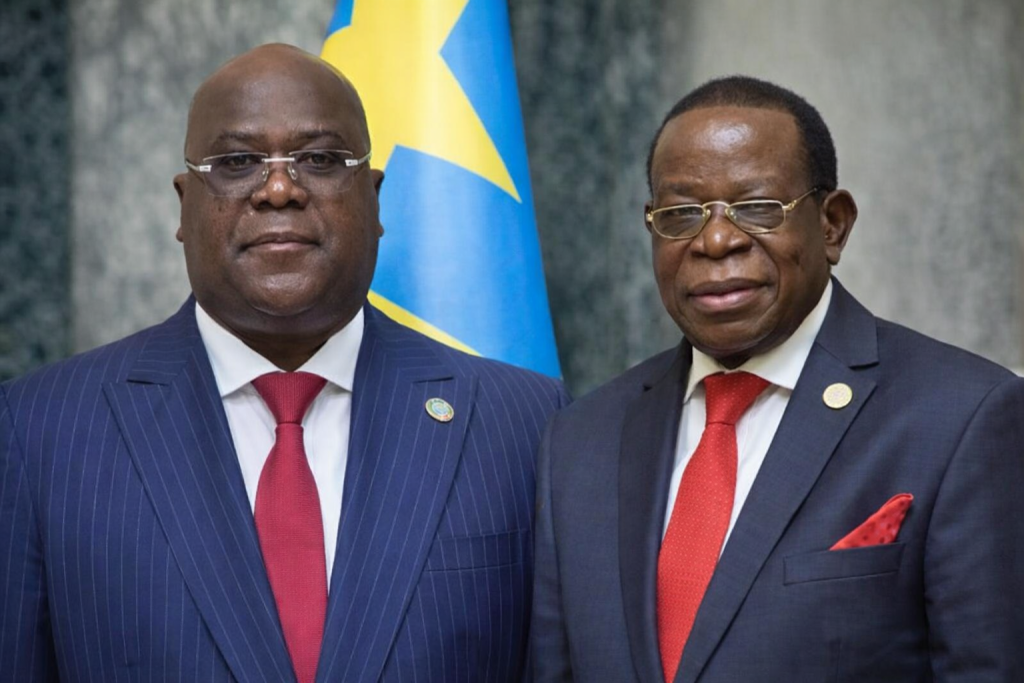
Political tensions within the top leadership in DR Congo appear to be intensifying after President Félix Tshisekedi accused Senate President Modeste Bahati Lukwebo of fueling a controversial debate over constitutional change to mislead the public.
Tshisekedi suggested that the discussion around whether the constitution should be amended is being used as a diversion, distracting citizens from what he described as the country’s pressing political and security challenges.
The dispute reflects growing fractures within Congo’s political class at a time when the government is facing pressure over the ongoing conflict in the eastern provinces.
Critics of the administration argue that the constitutional debate risks overshadowing scrutiny of military setbacks and governance concerns, particularly as fighting continues in North and South Kivu involving groups such as the March 23 Movement (M23).
Within this charged context, the controversy has taken on broader political significance, with competing factions accusing each other of manipulating public discourse.
The reference by some political actors to the possibility of Bahati Lukwebo drifting toward the AFC/M23 camp underscores the increasingly polarized rhetoric shaping national politics.
While such claims remain politically charged and unverified, analysts say they illustrate how the war in eastern Congo is becoming deeply intertwined with internal power struggles in Kinshasa.
As debates over constitutional reform, security policy and political accountability intensify, the episode highlights the fragile balance within Congo’s governing alliances and the uncertain trajectory of its political landscape.