

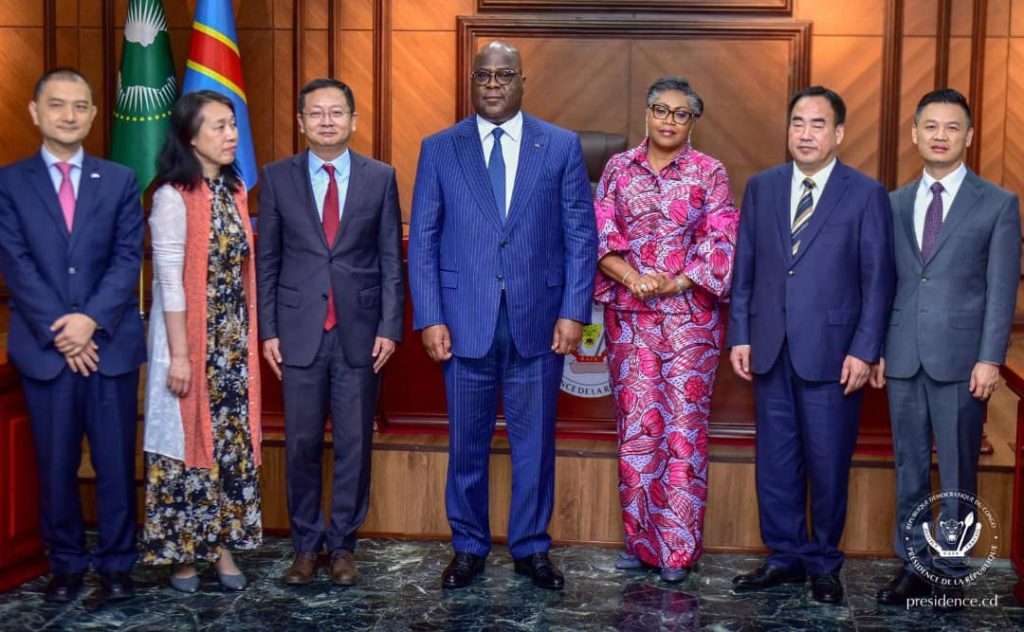
Tensions are escalating between Sicomines, a major Sino-Congolese mining joint venture, and the government of President Félix Tshisekedi after the company refused to undergo a planned financial and technical audit, deepening an already fragile partnership.
The audit, which was scheduled to take place in the coming days, was intended to assess the performance, transparency, and contractual compliance of the Sino-Congolese program.
However, Sicomines reportedly rejected the process outright without proposing any alternative arrangements or timeline.
The dispute comes amid renewed scrutiny of the Sicomines agreement, originally signed in 2008 under a “minerals-for-infrastructure” model.
The deal granted a consortium of Chinese companies privileged access to the Democratic Republic of the Congo’s mineral resources in exchange for infrastructure development financing.
Over the years, the agreement has faced sustained criticism over alleged economic imbalances and lack of transparency.
Investigations by the Extractive Industries Transparency Initiative and the General Inspectorate of Finance identified major governance failures, prompting calls for renegotiation.
In response, the Congolese government and its Chinese partners signed Amendment 5 to the Sicomines Convention on March 14, 2024. The revised deal increased infrastructure commitments from US$3.2 billion to US$7 billion and reinforced the Congolese role in managing the Sino-Congolese Hydroelectric Company, SICOHYDRO.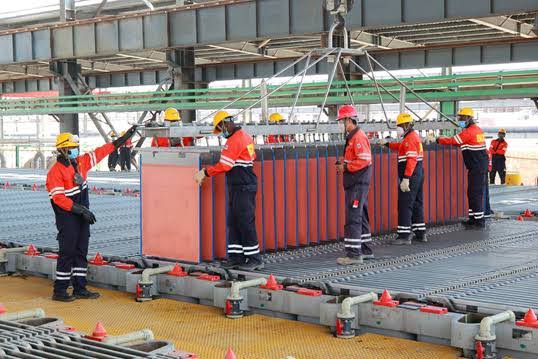
One year later, on March 14, 2025, the civil society coalition Congo Is Not for Sale convened a high-level forum in Kinshasa to assess progress and examine ongoing concerns regarding implementation.
While the amendments were welcomed in principle, significant doubts remain about whether the revised commitments are being effectively enforced.
The standoff is unfolding against a broader backdrop of intensifying global competition for critical minerals, particularly between the United States and China, both of which view the Democratic Republic of the Congo as strategically vital due to its vast reserves of cobalt and copper.
A recent minerals exploration and extraction agreement between the Tshisekedi government and the United States has added to the strain. Analysts say the move has angered Chinese stakeholders involved in the Sicomines project and introduced a new layer of geopolitical friction.
According to sources familiar with both frameworks, elements of the U.S.-linked agreement contradict key clauses of the Sino-Congolese deal, particularly those governing preferential access and long-term resource rights.
Some observers interpret the Congolese government’s approach as an attempt to balance competing global powers to maximize national benefit.
However, critics argue that the strategy risks appearing inconsistent or opportunistic, potentially undermining trust with long-standing partners while exposing the country to heightened geopolitical pressure.
Against this backdrop, Sicomines’ refusal to submit to an audit is being interpreted by officials as a direct challenge to state authority and ongoing efforts to strengthen oversight in the mining sector.
The standoff is also clouded by allegations of internal dysfunction. Sources close to the presidency claim that the team tasked with conducting the audit lacks independence and credibility.
“They are compromised. They have no moral authority to audit a company they receive kickbacks from,” a source who requested anonymity told Kivu Today on Sunday morning. “The audit will implicate so many people including those close to the president. So, forget about the audit.”
The dispute raises broader questions about the future of cooperation between the Congolese government and Chinese investors, as well as the overall investment climate in the country’s extractive industries.
In recent years, authorities in Kinshasa have pushed to review and renegotiate major mining agreements to secure greater national benefit.
Sicomines and its Chinese partners have not publicly explained their refusal to participate in the audit.
With tensions mounting, competing global interests intensifying, and political stakes rising, observers say the coming days will be critical in determining whether dialogue can resume or whether the dispute will escalate further.