

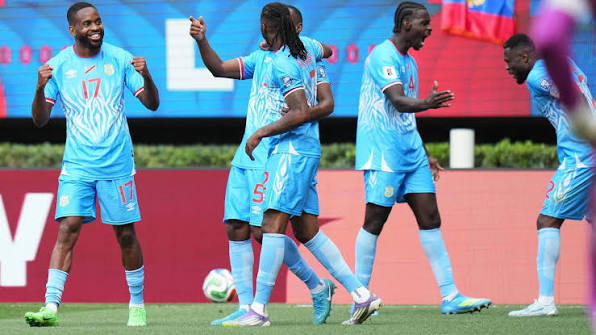
The Democratic Republic of the Congo has secured a historic place at the 2026 FIFA World Cup, marking the country’s first appearance at the tournament in over five decades and its debut under its current name.
The Congolese side booked their ticket with a hard fought 1-0 victory over Jamaica after extra time in their intercontinental playoff final.
The decisive moment came in the 100th minute when defender Axel Tuanzebe, a former Manchester United player now with Burnley, forced the ball over the line from a corner.
The goal was briefly reviewed for a possible handball before being confirmed.
The win carries special significance for the nation, as it will be their first World Cup participation since 1974, when they competed as Zaire.
This time, however, it marks a new chapter, with the Democratic Republic of the Congo making its long awaited debut on football’s biggest stage under its modern identity.
Tuanzebe said after the match that scoring the winning goal for his country was a dream come true, admitting that the magnitude of the occasion may have made the game more difficult for the team.
He expressed pride in both his contribution and the collective achievement, adding that it was now time for the country to celebrate.
The match, played at Estadio Guadalajara in Mexico, saw Congo dominate possession and tempo for long stretches, although clear scoring chances were limited during normal time.
Their persistence paid off in extra time, securing a result many observers felt they deserved.
The road to qualification was equally demanding. Congo first overcame Nigeria in a decisive Confederation of African Football playoff to advance to the intercontinental stage.
Their ranking then placed them directly into the final, where they faced a Jamaican side that had defeated New Caledonia to reach the same round.
With this qualification, the Democratic Republic of the Congo becomes part of a record 10 African teams set to compete at the expanded 2026 tournament.
They have been drawn into a challenging group alongside Portugal, Colombia and Uzbekistan, and will open their campaign against the European side.
For Congo, the qualification is more than just a sporting achievement. It represents a symbolic return to the global stage and an opportunity to redefine their footballing identity for a new generation.