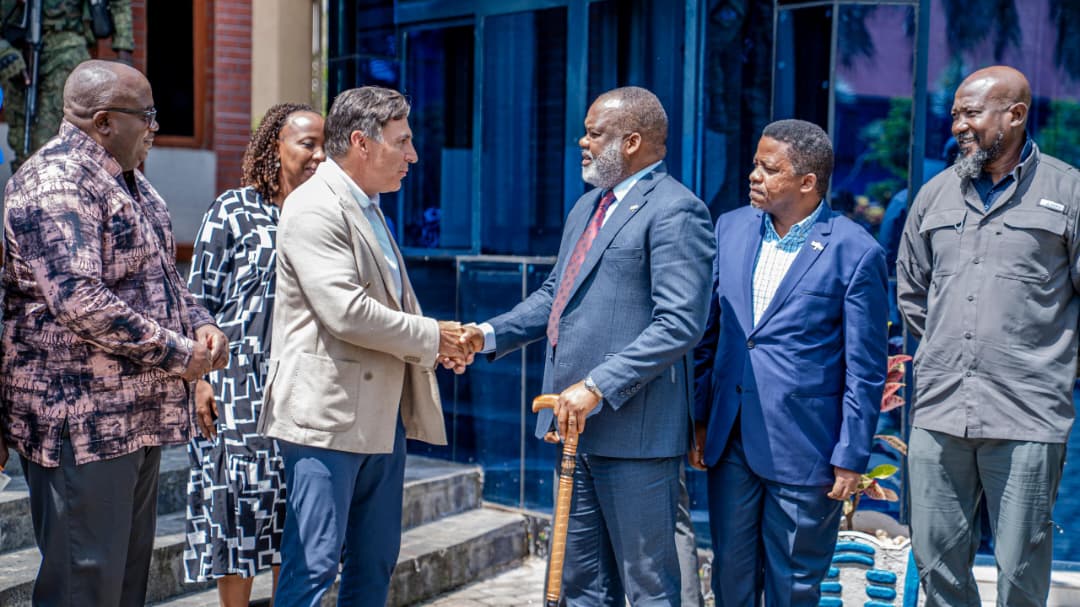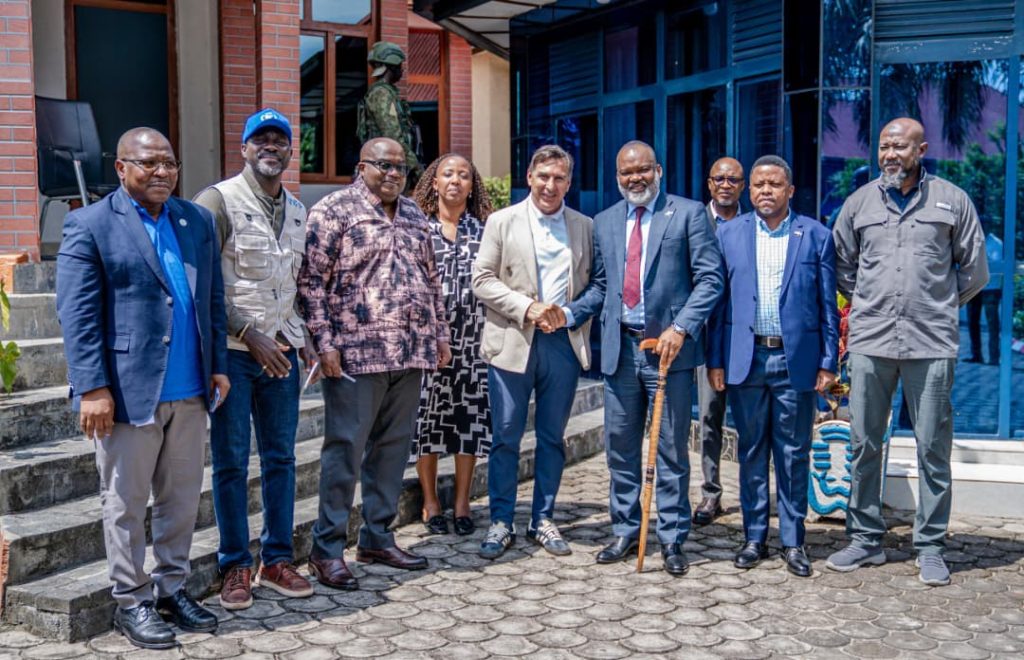
GOMA — The United Nations World Food Programme has held a high-level meeting with the political leadership of the AFC/M23 movement in North Kivu, in what marks a significant step toward formalising humanitarian cooperation between the UN agency and the rebel alliance that controls large swathes of eastern Democratic Republic of Congo.
The WFP delegation, led by its representative David Stevenson and accompanied by three colleagues, met with AFC/M23 political coordinators at the movement’s offices to review the state of ongoing humanitarian operations across territories under its administration in both North and South Kivu provinces.
During the talks, WFP officials presented progress on several active programmes in AFC/M23-held areas, including food distribution operations and the e-voucher initiative known as “Chakula Sokoni” — a Swahili phrase meaning “food at the market” — which allows households to access food supplies through local traders rather than direct aid distribution.
The agency’s school feeding programme was also discussed, with both sides acknowledging its dual impact in reducing school dropout rates and stimulating local economic activity.
The meeting did not shy away from difficult ground. WFP representatives raised the consequences of bank closures across several localities under AFC/M23 control, warning that the shutdowns are cutting families off from their own savings and deepening social vulnerability at a time when populations are already under severe strain.
The reopening of the airport — widely seen as critical to the flow of humanitarian supplies, commercial activity and social services — was also placed on the table, though no resolution was reached.
The parties agreed the matter would be subject to further consultations.
The AFC/M23 used the occasion to reaffirm its stated commitment to supporting what it described as credible humanitarian initiatives, and to present itself as a stabilising force capable of providing an environment in which UN agencies and other humanitarian actors can operate freely.
The WFP, for its part, acknowledged the organisation and stability of areas under AFC/M23 administration and reaffirmed its humanitarian engagement across those territories.
The meeting closed in what both sides described as a constructive atmosphere, with a shared commitment to deepen cooperation going forward.
The encounter is likely to draw scrutiny from Kinshasa, which continues to regard the AFC/M23 as an illegitimate armed group operating in violation of Congolese sovereignty.