

What began with a single sick nurse in eastern Democratic Republic of the Congo has evolved into one of the most alarming Ebola outbreaks in recent years, exposing major weaknesses in disease surveillance systems, delayed laboratory capacity, chronic underfunding and the devastating impact of conflict on public health.
On April 24, 2026, a nurse walked into a clinic in Bunia, Ituri Province, suffering from fever, bleeding and severe vomiting. She died three days later.
At the time, nobody knew they were witnessing the beginning of a rapidly expanding outbreak.
By May 5, health authorities had been alerted to an unusual cluster of deaths with similar symptoms. At least 50 people had already died. Samples were collected and transported to Kinshasa for testing, but confirmation took days.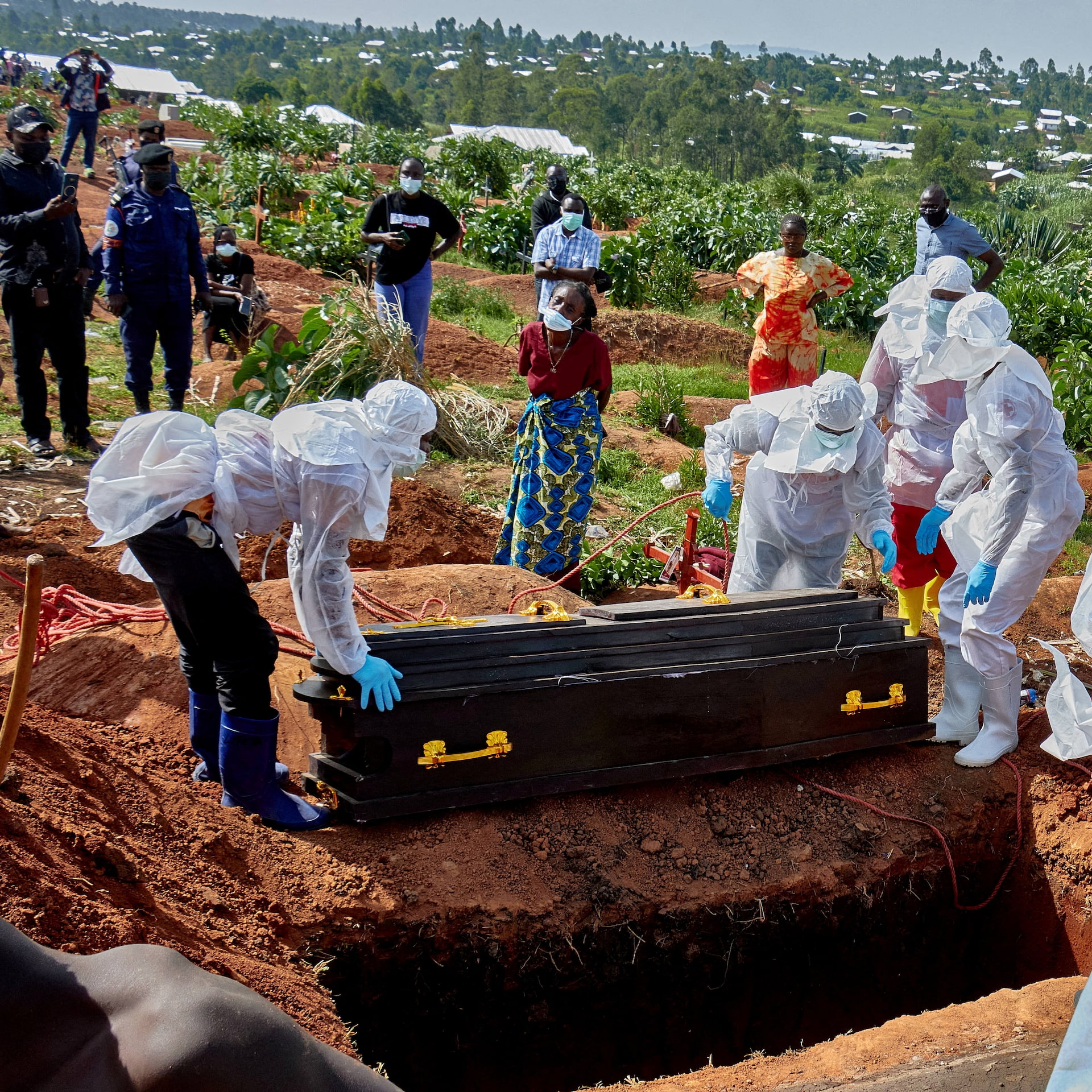
By the time laboratory analysis identified Ebola as the cause, the virus had already crossed international borders into Uganda.
On May 17, the World Health Organization officially declared the outbreak a Public Health Emergency of International Concern, warning that the situation posed a serious regional and global threat.
Investigators traced the outbreak back to Mongbwalu, a busy gold-mining hub in Ituri Province, where an estimated 150,000 miners move constantly between remote mining sites and trading centers.
That mobility became the virus’s greatest advantage.
Health officials believe infections spread from Mongbwalu into Rwampara and Bunia as sick patients sought treatment. From there, the disease crossed into Uganda before reaching Kampala, where a patient died on May 14. It later expanded into North Kivu and South Kivu, carrying the outbreak more than 1,000 kilometers from its suspected point of origin.
The outbreak continues to grow rapidly.
Initial reports in mid-May recorded roughly 670 probable cases, 160 suspected deaths and 61 confirmed infections. Those figures have since increased significantly.
According to the latest updates from health authorities, more than 900 suspected cases and over 220 suspected deaths have now been reported in the DRC alone. Confirmed cases across the DRC and Uganda have risen to at least 134, including 18 confirmed deaths.
Uganda has reported confirmed infections, including one death, while thousands of contacts are being monitored in affected areas. Some estimates place suspected cases above 1,000, highlighting the speed at which the outbreak continues to evolve.
The crisis has become particularly dangerous because it is not being caused by the more common Zaire strain of Ebola.
Instead, scientists identified the culprit as the Bundibugyo strain, one of the rarest forms of Ebola ever recorded.
The strain has only been confirmed a handful of times in human history. Unlike the Zaire variant, which caused the devastating 2018-2020 Ebola epidemic in eastern Congo and for which the Ervebo vaccine was developed, Bundibugyo currently has no approved vaccine and no approved targeted treatment.
Previous outbreaks demonstrate how lethal it can be.
During a 2007 outbreak, approximately 25 percent of infected patients died. In 2012, the fatality rate climbed above 50 percent. In the current outbreak, around 24 percent of patients have died so far, according to available data.
Its rarity also created a critical delay in detection.
Most field laboratories across the region are configured primarily to identify the Zaire strain because it has historically been the dominant Ebola variant. As a result, samples from Ituri had to be transported to specialized laboratories in Kinshasa for confirmation.
The process took nine days.
Those nine days may have given the virus enough time to establish multiple chains of transmission across provinces and international borders before containment measures could begin.
Health workers are now attempting to control a highly mobile, cross-border outbreak using traditional containment methods: isolation units, contact tracing, surveillance, infection-control measures and safe burial procedures.
However, the response is unfolding in one of the most fragile regions of Central Africa.
Ituri remains deeply affected by armed violence, population displacement and weak health infrastructure. More than 250,000 people have been displaced by insecurity, making it extremely difficult to trace contacts, monitor infections and maintain treatment networks.
Cross-border movement remains another major concern.
The outbreak sits at the intersection of trade routes linking the DRC, Uganda and South Sudan. Health officials have repeatedly warned that porous borders and constant population movement create ideal conditions for further regional spread.
The financial response has also drawn concern.
In the early stages of the outbreak, funding commitments stood at roughly $32 million, far below what health agencies considered necessary to contain a rapidly expanding epidemic.
That pattern is familiar. During the 2018 Ebola outbreak in Ituri and North Kivu, major donor funding only accelerated after the epidemic had already claimed thousands of lives.
Additional support has begun to emerge. Gavi recently announced up to $50 million to support vaccine research, emergency response operations and accelerated access to investigational Bundibugyo vaccine candidates. Broader international commitments have also increased significantly as governments and partners scramble to prevent a larger catastrophe.
Despite those pledges, health officials continue to warn that operational funding, laboratory capacity and frontline medical resources remain insufficient relative to the scale of the outbreak.
For many public health experts, the outbreak is becoming a case study in how dangerous epidemics can become when rare pathogens collide with conflict, weak health systems and delayed international action.
The Bundibugyo strain may not be new, but it remains one of the least understood Ebola variants ever encountered.
Health workers are effectively fighting a 21st-century outbreak with tools from previous decades. Without an approved vaccine, and with cases continuing to spread across borders and conflict-affected communities, authorities across Central Africa are now racing against time to prevent the virus from establishing an even larger regional foothold.