

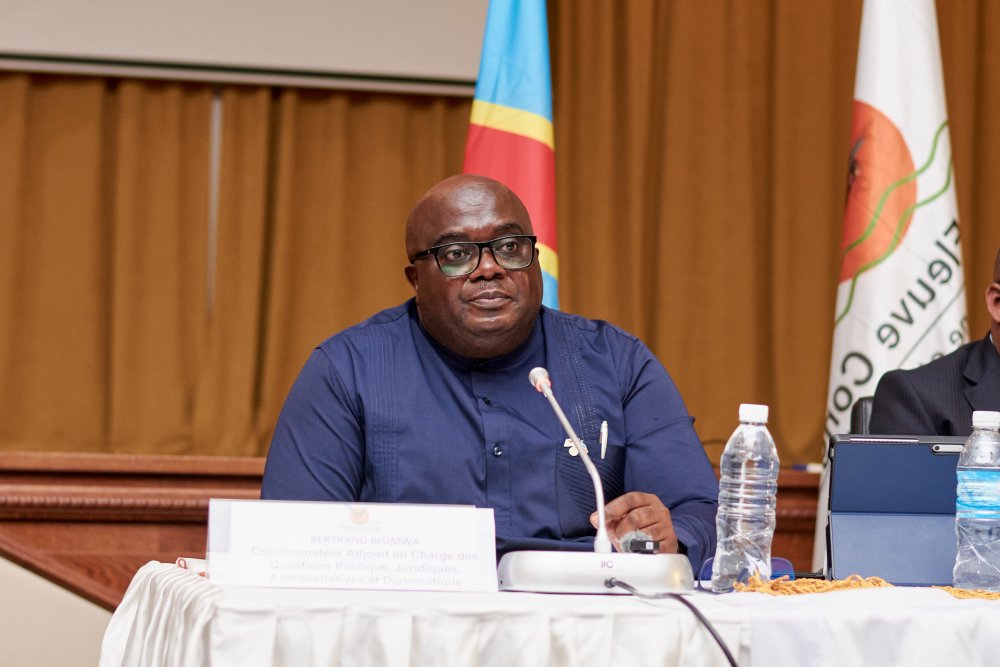
AFC/M23 is emerging as a potentially significant political framework in the Democratic Republic of Congo (DRC), with indications that the structure could evolve beyond its current form.
Recent disclosures attributed to Bertrand Bisimwa, the president of the movement, clarify that the AFC was conceived not as a permanent organization, but as a temporary and inclusive platform aimed at uniting diverse Congolese actors around shared national concerns.
According to Bisiimwa, the initiative grew out of widespread dissatisfaction among various groups in the country, particularly regarding governance and state performance.
“There are other Congolese who raised various problems they observed in the country, particularly poor governance, the issue of the legitimacy of the current leadership, and the inability of those in power to resolve the problems of our society.”
These concerns reportedly brought together individuals and groups from across the political spectrum.
“Some had political parties, others had citizen movements, others were in civil society, and others were political figures who decided to join us. Together, we decided to create a new framework where we would welcome everyone.”
The AFC/M23 is therefore positioned as a unifying structure, one that enables collective expression of political aspirations, grievances, and reform proposals.
“We said, first, let us create a framework that brings us all together, that allows all of us to express ourselves, what we want for this country, our aspirations, and also to name the problems undermining the nation.”
Crucially, the framework is described as provisional, with the possibility of transformation into a different political or institutional form in the future.
“Then, this structure may evolve into something else. It is a temporary structure that we have created.”
The continued association with the March 23 Movement, or M23, also reflects the coalition’s origins and internal hierarchy.
“As the base of the AFC was the M23, we kept the M23 name alongside it, because the M23 is, in a way, the ‘eldest son’ of the AFC.”
Overall, the AFC presents itself as a transitional political framework designed to consolidate opposition voices, articulate national concerns, and potentially evolve into a more structured political entity.
Its future trajectory could carry significant implications for governance debates and political realignment in the Democratic Republic of Congo.