

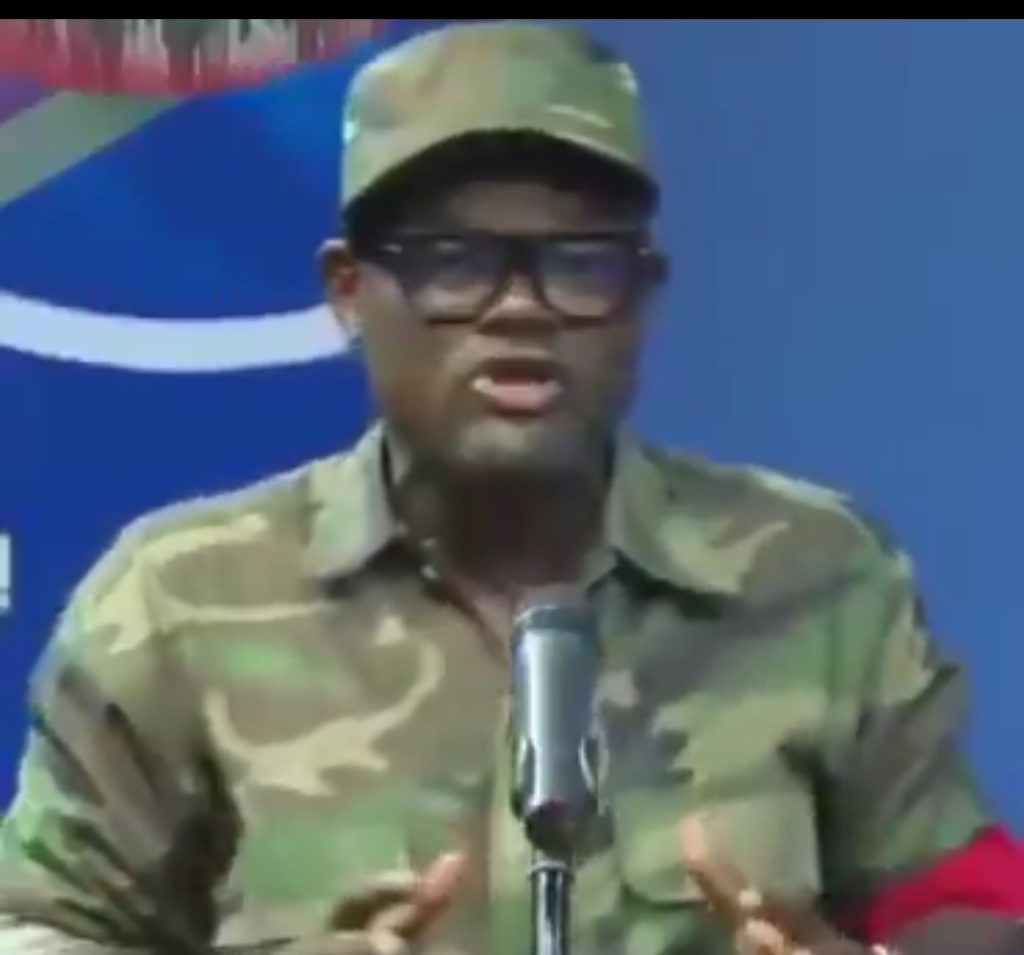
A senior aide to President Félix Tshisekedi has ignited outrage and alarm after issuing death threats against doctors and families allegedly linked to rebel groups during a live broadcast on state television.
Yves Abdallah, a close presidential confidant, appeared on Radio-Télévision Nationale Congolaise (RTNC) dressed in military fatigues, calling for a campaign he termed “Operation Luka Famille”—Lingala for “hunt down their families.”
His remarks targeted individuals associated with the Congo River Alliance (AFC) and the M23 rebel movement, both of which have been fighting government forces in the east of the country.
Speaking in a mix of Lingala and French, Abdallah threatened “Docteur Ya Nangaa” and “Docteur Ya Makenga,” believed to be medical professionals linked to AFC leader Corneille Nangaa and M23 commander Sultani Makenga.
“We will finish you in many ways,” he said. “If we don’t succeed with weapons and bombings, we can get you in an operating room.”
Abdullah also appeared to extend his threats beyond Congo’s borders, referencing cities in Canada, the UK, and Kenya, suggesting that the campaign should target the families of rebel supporters in the diaspora.
Legal and diplomatic experts have condemned the broadcast as a clear incitement to violence, in violation of both Congolese law and international conventions such as the Rome Statute and the Genocide Convention.
They warn that the DRC government could face international scrutiny if it fails to disavow or investigate Abdallah’s remarks.
“This is not just hate speech; it is a public call for persecution broadcast on state media,” said a Kinshasa-based human rights lawyer. “If the government does nothing, it risks being seen as complicit.”
The timing of the outburst is particularly damaging. It comes amid the Doha peace process, where mediators from Qatar and United States have been working to broker an end to the escalating conflict in eastern DRC.
A diplomat involved in the Doha talks described the televised threats as “a direct blow to Congo’s credibility.” The envoy, speaking on condition of anonymity, said Abdallah’s rhetoric undermines Tshisekedi’s assurances to the international community about his government’s commitment to peace and civilian protection.
Nangaa, once the head of Congo’s electoral commission, now leads the AFC from exile and has been sentenced to death in absentia for treason.
Makenga, a longtime M23 commander, remains under UN sanctions for alleged war crimes.
Yet Abdallah’s threats broaden the scope of the conflict by extending it to civilians—particularly healthcare workers and relatives of suspected rebel affiliates.
Human rights organizations, including the United Nations, Human Rights Watch, and Amnesty International, have denounced the remarks.
They warn that targeting medical personnel violates international humanitarian law and could further destabilize an already fragile situation.
“Targeting doctors in operating rooms is a new low,” said one aid worker in Goma. “It turns the act of healing into an act of war.”
Medical staff in eastern Congo have reported increased fear following the broadcast, with some clinics tightening security.
Analysts warn that such rhetoric could provoke retaliatory attacks against Tutsi communities, who have long faced scapegoating amid the conflict.
So far, Tshisekedi’s office has remained silent. Government spokesperson Patrick Muyaya has previously dismissed rebel-linked allegations as “propaganda,” but has not addressed Abdallah’s televised threats.
As M23 continues its advances and the Doha talks show signs of strain, the remarks by one of Tshisekedi’s aides mark a dangerous escalation—fueling tensions, undermining peace efforts, and putting more lives at risk in a conflict that has already claimed too many.