

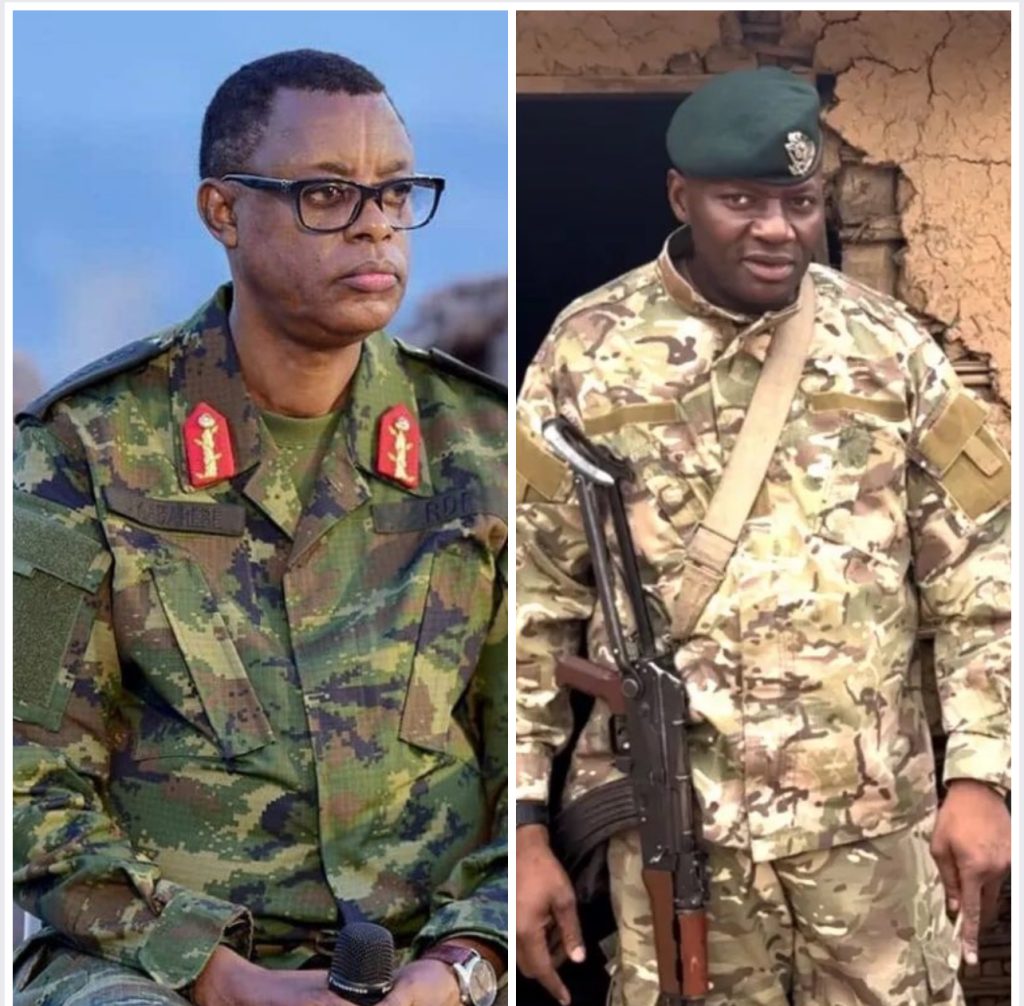
The U.S. government recently announced sanctions on Retired General James Kabarebe of Rwanda and Lawrence Kanyuka, the spokesman for the Congolese rebel group AFC/M23. This move has sparked speculation and confusion, with many assuming it is a form of punishment that restricts their personal freedoms or rights. But in reality, U.S. sanctions are more about political posturing than personal consequences—unless the individuals involved have business dealings or financial assets in the United States.
For those unfamiliar with how U.S. sanctions work, it’s important to understand that they primarily target financial and economic interests. When the U.S. imposes sanctions, it means that any assets the sanctioned individuals may hold in the U.S. are frozen, and American citizens and businesses are prohibited from engaging in financial transactions with them. This could affect bank accounts, real estate, or any business ventures tied to the U.S. However, if someone has no financial connections to the United States, the impact is largely symbolic.
Who Are the Sanctioned Individuals?
James Kabarebe is no ordinary military officer. He is a legendary figure in Rwanda’s history, known for playing a key role in ending the 1994 genocide against the Tutsi. As a young officer, he was part of the forces that toppled the genocidal regime and helped rebuild Rwanda from the ashes. Later, he was involved in military operations in the Democratic Republic of Congo (DRC), a country that has been entangled in decades of war and instability. To many Rwandans, Kabarebe is a national hero who has dedicated his life to securing the country and the region.
His sanctioning by the U.S. comes at a time when Rwanda has been vocal about security threats emanating from eastern DRC. The region remains a hotbed of armed groups, including the FDLR, a militia founded by remnants of the genocidal forces that fled Rwanda in 1994. Rwanda has repeatedly called for action against these groups, yet the international community has largely ignored its concerns. Now, by sanctioning a key Rwandan figure, the U.S. appears to be taking sides in a complex regional conflict.
Lawrence Kanyuka, on the other hand, is the spokesman for AFC/M23, an armed group that has been battling the Congolese government. The M23 rebellion is deeply tied to the grievances of the Congolese Tutsi community, which has long faced discrimination and violence in eastern DRC. Kanyuki has been the face of the group’s communications, articulating its demands and defending its actions on the battlefield. While the Congolese government labels M23 as a terrorist group, the rebels argue that they are fighting for the rights and security of their people.
Sanctions: A Tool of U.S. Power Projection
To understand why the U.S. imposes sanctions, one must look beyond the individuals targeted and focus on the bigger picture. The U.S. has long used sanctions as a tool to assert its influence and maintain its global dominance. Whenever Washington feels its interests are being challenged—whether by governments, rebel groups, or individual leaders—it deploys sanctions as a way to send a message.
In many ways, this is a gangster tactic. It’s less about justice and more about control. The U.S. does not sanction individuals or groups based purely on human rights concerns or violations of international law. If that were the case, warlords and dictators with deep ties to the West would also be on these lists. Instead, sanctions are selectively applied, often in ways that align with America’s political and economic interests.
For example, while Rwanda is being sanctioned over alleged involvement in the DRC conflict, the Congolese government’s alliances with groups like the FDLR—a militia with a history of genocide—go largely unpunished. Even as Congolese forces work alongside Burundian troops, European mercenaries, and militias known for human rights abuses, the international community remains silent. This double standard raises questions about the true purpose of these sanctions.
What Happens Next?
For Kabarebe and Kanyuka, these sanctions will likely have little effect on their daily lives. Unless they have investments in the U.S. or conduct transactions that pass through American financial institutions, their personal and professional activities will continue as usual. They may not even have any assets or bank accounts with deposits. The real impact is in the political message the U.S. is trying to send—one that seeks to pressure Rwanda and M23 while ignoring the root causes of conflict in eastern DRC. It’s a condescending posturing. The Uncle Sam usual bullying behavior.
In the end, sanctions are just another tool in the U.S. foreign policy playbook. They do not bring peace, nor do they resolve conflicts. If anything, they reinforce divisions and complicate diplomatic efforts. For those directly involved in the eastern DRC crisis, the real work of securing peace and stability will continue—regardless of Washington’s declarations