

BENI, North Kivu — The people of Beni are mourning once again.
More than 20 civilians have reportedly been killed in fresh attacks attributed to the Allied Democratic Forces (ADF), the latest chapter in a conflict that has turned parts of eastern Democratic Republic of Congo into one of Africa’s deadliest theatres of violence.
The attacks, which occurred in villages around Mangina in Beni Territory, left families burying their loved ones while others fled into surrounding forests, fearing another night of bloodshed. Local authorities and civil society groups say the victims were attacked in their homes and fields, continuing a pattern of violence that has haunted the region for more than a decade.
For residents of Beni, the massacre is tragically familiar.
“We count the dead, bury them and wait for the next attack,” one local civil society activist told reporters after visiting affected communities.
The latest killings have reignited criticism of President Félix Tshisekedi’s administration, with many Congolese questioning why such attacks continue despite repeated military operations, a prolonged state of siege and years of promises to restore peace in eastern Congo.
Public anger intensified after reports circulated that President Tshisekedi was attending a wedding ceremony as news of the massacre emerged. The reports have spread widely on Congolese social media, where many users accused Kinshasa of appearing disconnected from the suffering in the country’s east.
The reports of his wedding attendance have amplified a longstanding grievance shared by many residents across North Kivu and Ituri: that national leaders are often perceived as absent when tragedy strikes eastern Congo.
The ADF, originally formed in Uganda before relocating to eastern Congo and later pledging allegiance to the Islamic State, remains one of the region’s most feared armed groups.
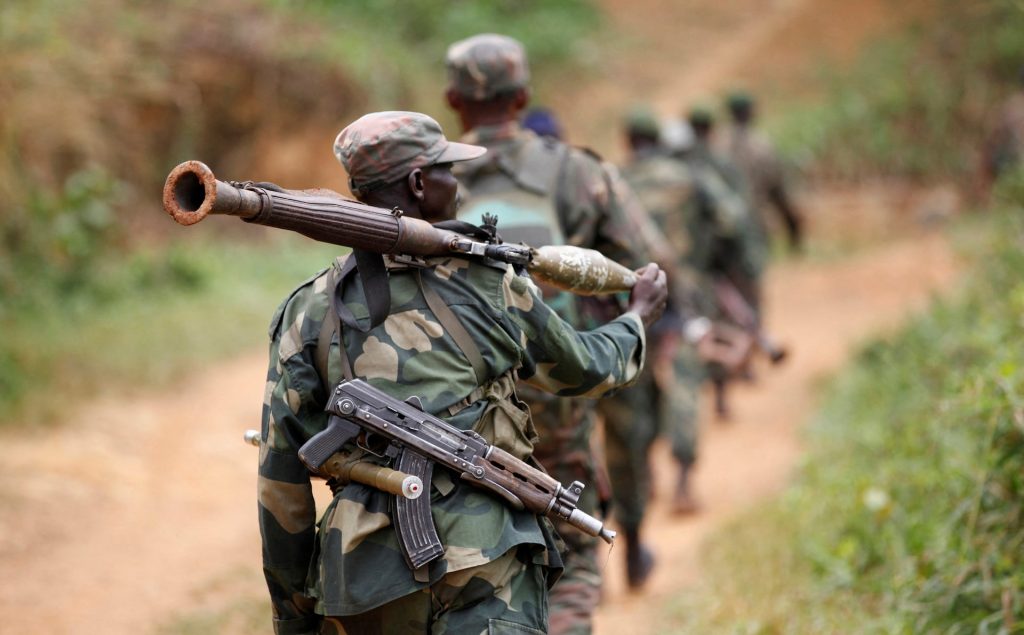
Despite joint military operations by the Congolese and Ugandan armies under Operation Shujaa, the insurgents continue to stage deadly raids on villages, ambush vehicles and target farmers working in remote areas.
According to security analysts, the group’s ability to survive reflects not only its mobility through dense forests but also the Congolese state’s limited control over vast rural territories where civilians remain largely unprotected.
The renewed violence also exposes the limits of military campaigns that have failed to deliver lasting security.
Since the introduction of the state of siege in North Kivu and Ituri in 2021, successive offensives have eliminated several rebel commanders, yet attacks on civilians have continued with alarming regularity.
For many families in Beni, peace remains little more than a promise repeated after every massacre.
The latest killings come at a time when Kinshasa is simultaneously grappling with conflict on multiple fronts. While government forces continue to confront the AFC/M23 rebellion in North and South Kivu, they also remain engaged against the ADF in the north-east, stretching military resources across a vast and volatile region.
Humanitarian organisations warn that the persistent insecurity has displaced hundreds of thousands of people, disrupted farming and trade, and complicated efforts to respond to public health emergencies, including Ebola outbreaks that have periodically affected the Beni region.
For the people of eastern Congo, however, statistics mean little compared to the reality on the ground.
Every new attack leaves more children orphaned, more families displaced and more villages emptied.
And with every massacre, the same question echoes across Beni: if the state cannot protect its citizens from a threat that has endured for years, when will the killing finally end?