

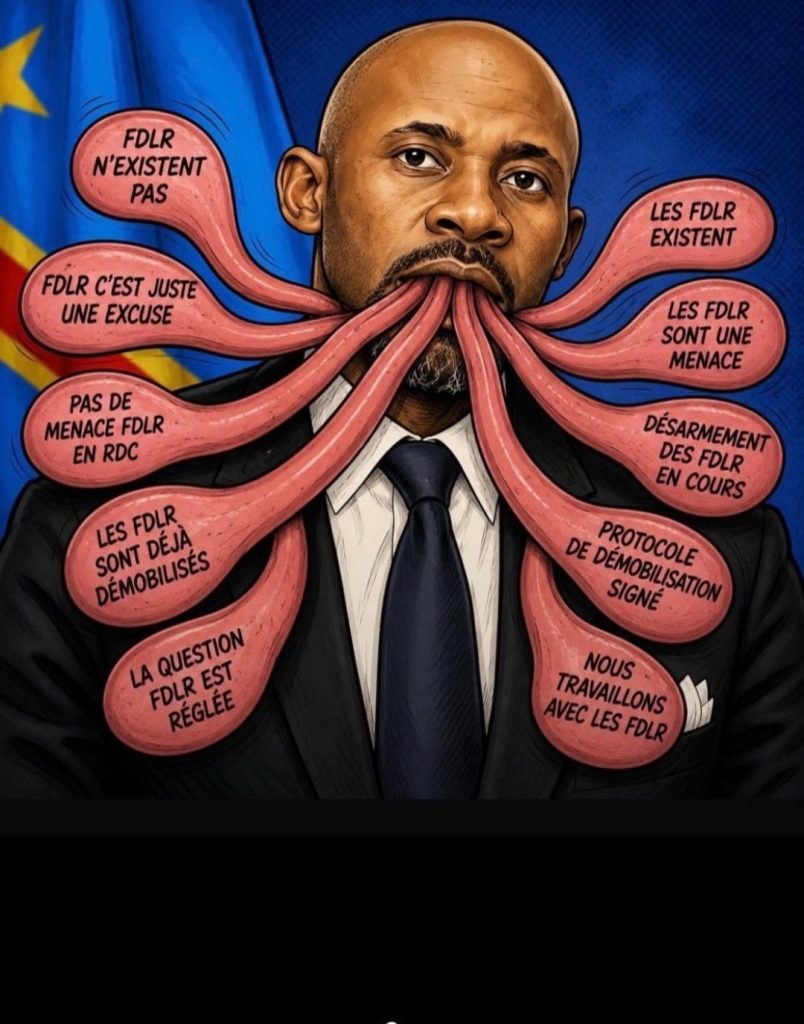
A fresh war of words has erupted over the FDLR after Democratic Republic of Congo government spokesman Patrick Muyaya claimed that the armed group had signed a protocol for disarmament, demobilisation and cantonment under the Washington agreements.
Muyaya described the reported development as a major turning point, arguing that the FDLR issue had for years been used by Rwanda as a pretext to justify what he called aggression against the DRC.
He said the protocol had been signed following sensitisation efforts and in line with the Washington agreements and their accompanying Concept of Operations, or CONOPS.
The claim was immediately challenged by critics of the Kinshasa government, who accused Muyaya of misrepresenting the Washington framework and questioned how the FDLR could be described as having “signed” an agreement to which, they argue, it is not a signatory.
The critics contend that the CONOPS instead provides for the neutralisation of the FDLR, making the group’s disarmament and removal from the conflict a security obligation rather than a political agreement requiring its signature.
“If the FDLR don’t exist, how does Kinshasa justify their integration into the national army?” one critic asked, referring to allegations that FDLR elements have at different times operated alongside Congolese forces.
The same critic pointed to what they described as contradictory positions within the Congolese government, noting that while Muyaya has dismissed the FDLR as a “Rwandan pretext”, another senior government official has reportedly travelled across Africa and Europe presenting a letter attributed to the group expressing willingness to lay down its arms.
The dispute is particularly significant because the FDLR remains one of the central security issues in the strained relations between Rwanda and the DRC.
Kigali has consistently demanded that the armed group be disarmed and neutralised, citing its presence in eastern Congo and its historical links to the 1994 Genocide against the Tutsi.
Critics of Kinshasa are now challenging the government to demonstrate that the reported commitment goes beyond statements and documents.
“If they have mobilised the FDLR, let them bring them to Rwanda after first laying down their weapons,” one critic said, arguing that the real test should be the actual disarmament and removal of the fighters.
The controversy also highlights a fundamental disagreement over the interpretation of the Washington agreements.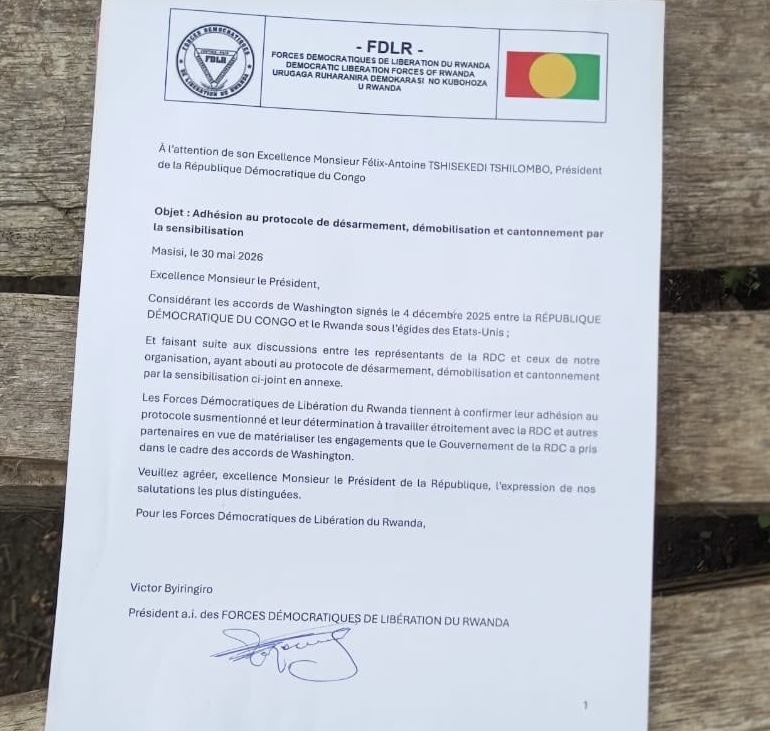
Kinshasa appears to be presenting the reported FDLR disarmament protocol as evidence of progress, while its critics insist that the focus should be on verifiable neutralisation of the group.
The latest exchange adds another layer to an already complicated peace process, in which the implementation of security commitments remains as contentious as the negotiations themselves.