

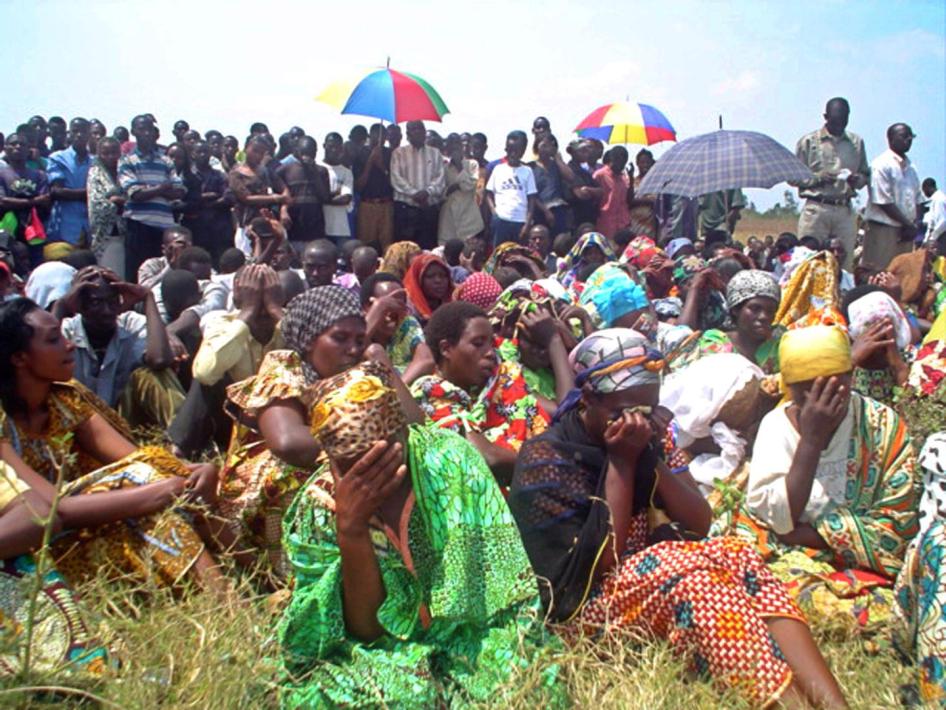
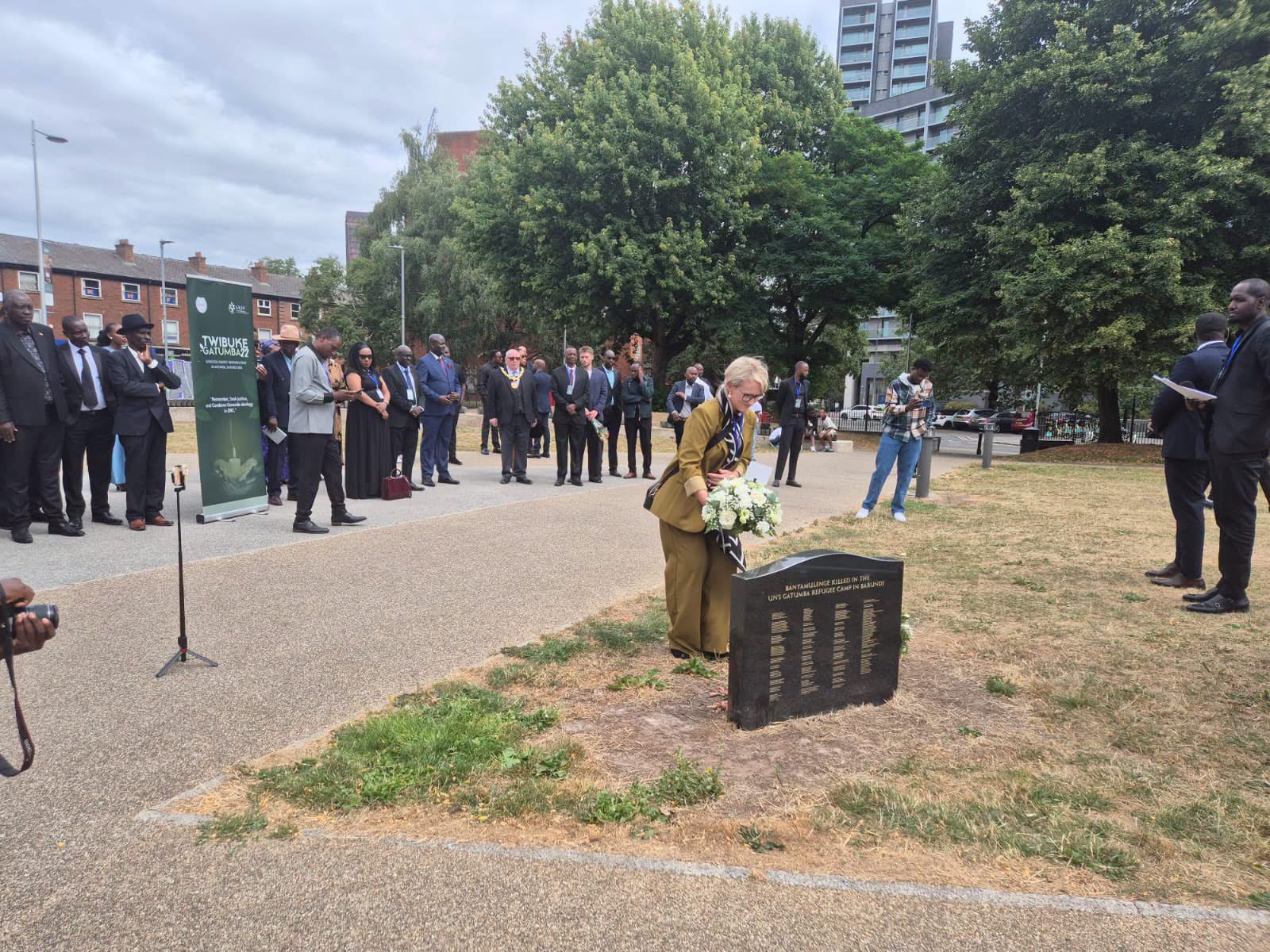
 Twenty-two years after the Gatumba massacre, the message coming from the Banyamulenge community is shifting beyond remembrance. It is increasingly becoming a warning: unresolved atrocities, persistent ethnic hostility and decades without accountability may be reproducing the conditions that made Gatumba possible in the first place.
That was the central argument delivered by Salomon Kitambara, speaking on behalf of the Banyamulenge Diaspora during a major commemoration of the massacre in Goma this month.
The gathering brought together survivors, families of victims, community representatives and senior political figures, including AFC/M23 political coordinator Corneille Nangaa and Bertrand Bisimwa, the movement’s deputy coordinator responsible for administrative, legal and diplomatic affairs.
Kitambara’s intervention was significant because it deliberately connected three issues often discussed separately: the massacre of 2004, the failure to establish accountability over the subsequent 22 years, and the contemporary political and security threats confronting Banyamulenge communities in eastern Democratic Republic of Congo.
His argument was that Gatumba should no longer be treated simply as a historical atrocity. It remains an unfinished political and judicial question.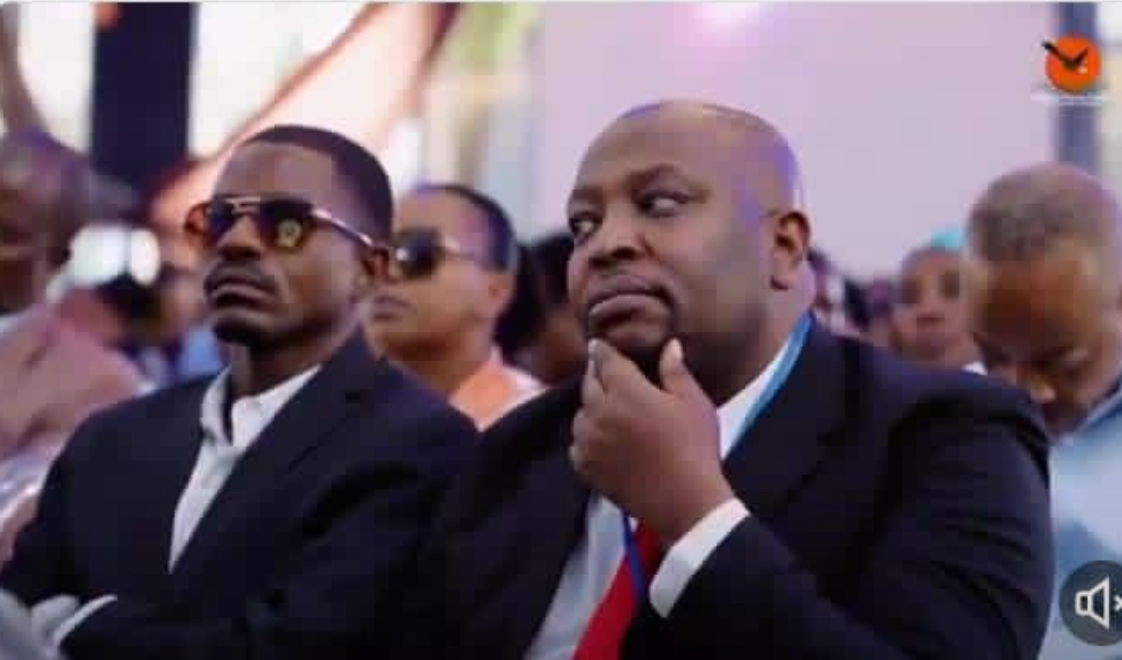
On the night of August 13-14, 2004, armed attackers descended on a transit centre at Gatumba in Burundi where Congolese refugees had sought protection after fleeing instability in South Kivu.
A joint investigation by the United Nations Mission in the Democratic Republic of Congo, the UN Operation in Burundi and the Office of the UN High Commissioner for Human Rights subsequently established that the Banyamulenge section of the camp had been deliberately targeted.
The UN investigation recorded 152 Banyamulenge refugees killed, 106 wounded and eight missing. Other accounts and recent commemorations have cited 166 Congolese refugees killed, including 154 Banyamulenge and 12 Babembe.
Human Rights Watch concluded after field investigations that combatants from the predominantly Hutu Burundian FNL played the principal role in the attack. The FNL initially claimed responsibility, although competing accounts subsequently emerged concerning participation by other armed groups.
The UN investigation established important circumstances surrounding the attack but did not conclusively determine the entire chain of organisation, financing and participation.
That distinction remains important 22 years later.
There is substantial documentation of the massacre, but there has never been a judicial process capable of conclusively establishing the complete chain of responsibility and delivering accountability proportionate to the gravity of the crime.
It is precisely that vacuum that Kitambara attacked.
“We want the truth, we want justice, we want dignity,” he told the gathering. His strongest criticism was directed at Burundi, where the massacre occurred.
Kitambara argued that more than two decades without meaningful accountability amounted to more than an administrative or judicial failure. In his analysis, prolonged impunity creates political space in which ethnic hatred can survive and eventually regenerate.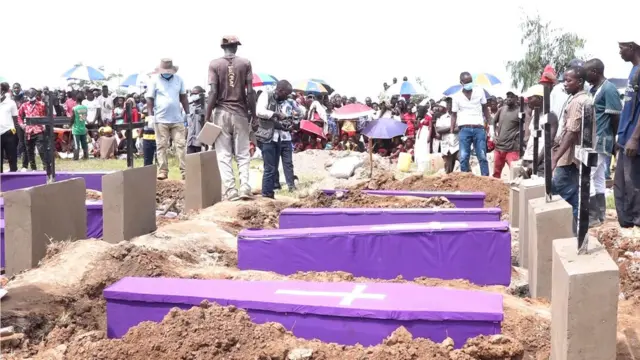
Burundi established a judicial investigation following the massacre, but the case failed to produce the comprehensive accountability demanded by victims and their families.
That makes Gatumba an extraordinary unresolved case in the Great Lakes region: an attack on refugees under international protection, extensively investigated internationally, commemorated annually and yet still without a judicial conclusion proportionate to the scale of the crime.
Kitambara’s speech, however, went considerably further.
He argued that the real danger is the continuity between the language surrounding Banyamulenge communities today and the political environment that preceded previous episodes of ethnic violence.
“Silence in the face of hatred is not a policy of peace; impunity is not reconciliation,” he said.
This is where the speech becomes politically consequential. The Banyamulenge question now sits close to the centre of the struggle over eastern Congo.
For decades, disputes surrounding their Congolese nationality, land, political representation and perceived relationship with Rwanda have intersected with armed conflict in South Kivu.
In contemporary Congolese politics, those disputes have become inseparable from the wider confrontation involving Kinshasa, AFC/M23, Rwanda, Burundi and numerous armed groups operating across the region.
Kitambara’s warning is that political disagreement becomes exceptionally dangerous when it migrates from arguments about governments and armed movements into arguments about whether an entire population legitimately belongs in a country.
He therefore identified denial of identity, stigmatization, dehumanising political discourse and incitement as early warning indicators rather than merely offensive rhetoric.
That argument corresponds with a central principle of atrocity prevention: mass violence rarely begins with the physical attack itself. It is frequently preceded by the progressive normalisation of exclusion, collective blame, discrimination and dehumanisation.
Kitambara consequently appealed directly to the United Nations, African Union, regional organisations, foreign governments and human rights institutions not to wait until another mass atrocity occurs before responding.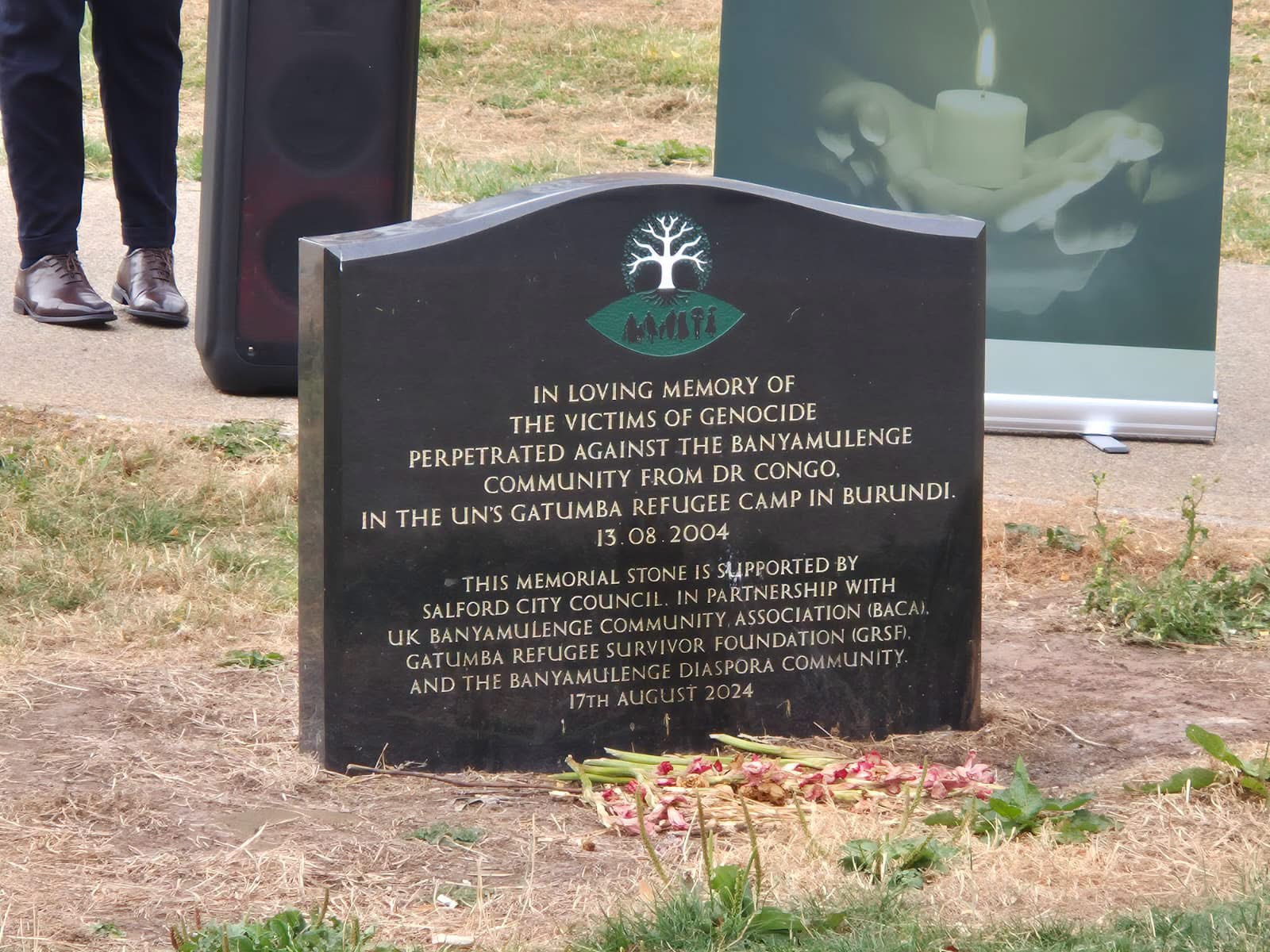
His message was essentially preventive: international intervention after victims have already been killed cannot substitute for atrocity prevention.
The timing gives that argument additional significance.
The 22nd anniversary comes as eastern Congo remains deeply divided by war, competing regional interests and increasingly polarised narratives over ethnicity, citizenship and security.
Gatumba itself now exists within that intensely contested political environment. Kinshasa and its opponents offer radically different interpretations of the Banyamulenge security question, AFC/M23, Rwanda’s role in Congo, the FDLR and the causes of continuing violence.
That makes factual and political distinctions particularly important.
Remembering civilians who were targeted because of their identity should not require endorsing the political programme of any government or armed movement.
Conversely, disagreement with AFC/M23, Rwanda or any other regional actor cannot legitimately become justification for hostility towards Banyamulenge civilians or questioning their right to exist as a Congolese community.
That distinction lies at the heart of Kitambara’s speech. He repeatedly rejected revenge and instead framed justice as the alternative to another cycle of retaliation.
“Revenge perpetuates tragedy; justice helps prevent it,” he said. It is perhaps the most consequential line in the address.
The Great Lakes region has repeatedly experienced atrocities becoming justification for subsequent atrocities. Communities preserve memories of victimisation, political movements mobilise those memories, perpetrators sometimes portray themselves as victims, and new generations inherit conflicts whose origins precede their own births.
Gatumba therefore presents governments in Burundi, Congo and the wider region with a test extending far beyond reopening an old criminal file.
The question is whether institutions can demonstrate that ethnic violence eventually produces legal accountability rather than political accommodation, institutional silence or historical ambiguity.
For the Banyamulenge Diaspora, 22 years without justice is already an indictment.
He made a closing warning deliberately stark: a person’s identity should never become “a death sentence.” Behind that statement lies the larger significance of the 2026 Gatumba commemoration.
Gatumba is no longer only a question about what happened during one night in August 2004.
It is increasingly a question about whether the Great Lakes region has learned enough from that night to recognise—and act upon—the warning signs when they appear again.